






 Portuguese
  Spanish
  4 min of reading
  0 comments


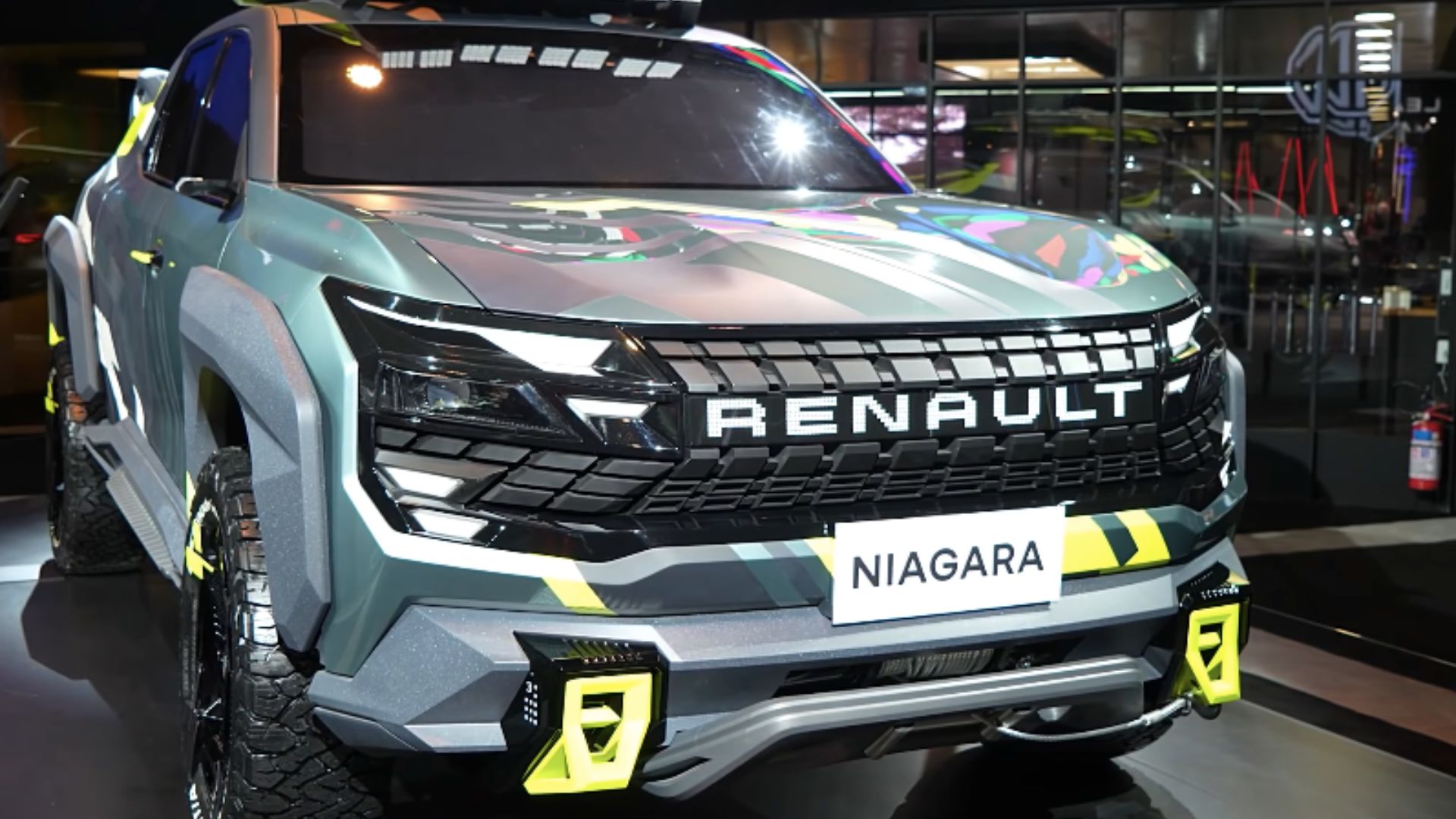
Imported Model From Argentina Arrives In The Second Half Of 2026, Bets On Modular Platform, Robust Visual, And May Even Gain Hybrid Versions To Compete In The Crowded Mid-Size Pickup Market
After the launch of the Boreal SUV, Renault is already working behind the scenes to expand its presence in one of the fastest-growing segments in Brazil: the mid-size pickups. In this context, the French brand is preparing for the arrival of the Renault Niagara 2027, a new truck directly derived from the Boreal, which will be imported from Argentina and is expected to debut in the second half of 2026. The proposal is clear: to face head-on Fiat Toro, Ram Rampage, Chevrolet Montana, Ford Maverick, and other strong names in the national market.
The information was disclosed by specialized portals in the automotive sector and reinforced by projections published by the AUTOO website, which closely follows future launches in the industry. According to recent analyses, the Niagara represents a strategic move by Renault to compete in a range below traditional mid-size pickups, but above the compact ones, offering more comfort, technology, and performance.
Already, the model emerges as a natural evolution of the old Oroch, but with a clearly more sophisticated positioning, targeting an audience that seeks versatility for everyday use but does not compromise on status, modern design, and a good technology package.
-
Uber Faces Shareholder Scrutiny as Board Accused of Ignoring Safety, Compliance, and Harassment Warnings Amid Over 3,500 U.S. Lawsuits

-
Ferrari’s First Electric Car Divides Fans, Priced at $630,000, Amid Concerns Over Limited Editions; Brand Clarifies It’s Not Just for Future Perks
-
BYD Dolphin Mini: The Electric Car That Defies Depreciation, Losing Only 3.58% in a Year and Becoming the Best-Selling Retail Model Under $22,000

-
Electric Car JAC E-JS4 Loses $19,000 in Value in One Year, Leading Record Depreciation of Used Cars in Brazil Due to Expensive Battery and New Models


Boreal’s Modular Platform Ensures Mechanical Flexibility And Space For Hybrid Versions
Like the Boreal SUV, the Renault Niagara 2027 will be built on the RGMP (Renault Group Modular Platform), a foundation launched with the Kardian and developed to be modular, flexible, and global. According to Renault itself, this architecture allows for the adoption of multiple types of powertrains, including hybrid systems, something increasingly relevant in the Brazilian market.
Initially, the pickup is expected to arrive equipped with the well-known 1.3 TCe Turbo Flex engine, capable of delivering 163 horsepower, the same used currently in the Renault Duster. This engine will be combined with a dual-clutch automated transmission, a system that recently debuted in the Kardian lineup and promises faster shifts and greater energy efficiency.
Additionally, there are expectations that the Niagara will feature 4×2 and 4×4 drive versions, increasing its appeal for both urban use and off-road situations. In a second stage, industry sources indicate the concrete possibility of a hybrid version with all-wheel drive, aligning the model with global electrification trends.
This mechanical set places Renault’s new pickup on equal footing with direct rivals, offering competitive performance and balanced operating costs, which are essential to win over the Brazilian consumer.

Robust Visual, More Refined Interior, And Premium Segment Technology
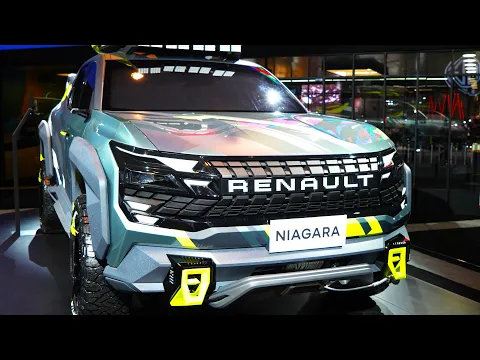
Recently spotted testing on the roads of Santa Catarina, the Renault Niagara drew attention even under strong camouflage. Still, it was possible to identify several visual elements that directly reference the Boreal, reinforcing the kinship between the models.
The front set is expected to feature a nearly vertical hood with deep creases, LED headlights, more streamlined separate DRLs, and a trapezoidal lower grille, creating a modern and robust identity. These details place the Niagara in tune with Renault’s new design language, already seen in the brand’s recent launches.
Inside, expectations are for a significant leap compared to the Renault Oroch, which will continue in production but with a focus more geared towards the working public. The Niagara, in turn, will have superior finishing, with a fully digital instrument panel, large multimedia center, better acoustic insulation, and more connectivity features.
Another expected highlight is the adoption of foldable rear seats, allowing direct access to the cargo area from the cabin, a solution already seen in competitors like the Fiat Toro. This increases the model’s versatility and reinforces its urban and familial proposal, without giving up cargo capacity.
Larger Dimensions, More Generous Cargo Area, And An Increasingly Competitive Market
In terms of size, the Renault Niagara 2027 is expected to slightly surpass the Oroch, which has 4,700 mm in length, 1,821 mm in width, 1,631 mm in height, and 2,829 mm in wheelbase. With larger dimensions, the expectation is that the new pickup will offer a cargo area with a volume exceeding the 683 liters of the old medium compact Renault.
For comparison purposes, the segment currently boasts impressive numbers. The Ram Rampage leads with 980 liters, followed by the Ford Maverick (943 liters), Fiat Toro (937 liters), and Chevrolet Montana (874 liters). The Niagara will need to position itself competitively in this regard to gain traction among consumers.
However, the scenario promises to become even more contested. Volkswagen is preparing its debut in the segment, with a new mid-size pickup that will be manufactured in São José dos Pinhais (PR) starting in the first half of 2026. Additionally, Hyundai, which has been developing this idea since the 2016 Auto Show, is also expected to launch its model by the end of 2026, using the same base as the new Creta.
In Hyundai’s case, the bet will be on a 1.6 Turbo Flex engine with direct injection, along with the possibility of hybrid versions, confirming that electrification is expected to spread rapidly across all pickup segments in the coming years.
Given this heated scenario, it will be up to Renault to balance price, technology, performance, and design so that the Niagara stands out and consolidates itself as a strong alternative against already established rivals.





-

-

-

-

-

32 people reacted to this.