






 Portuguese
  Spanish


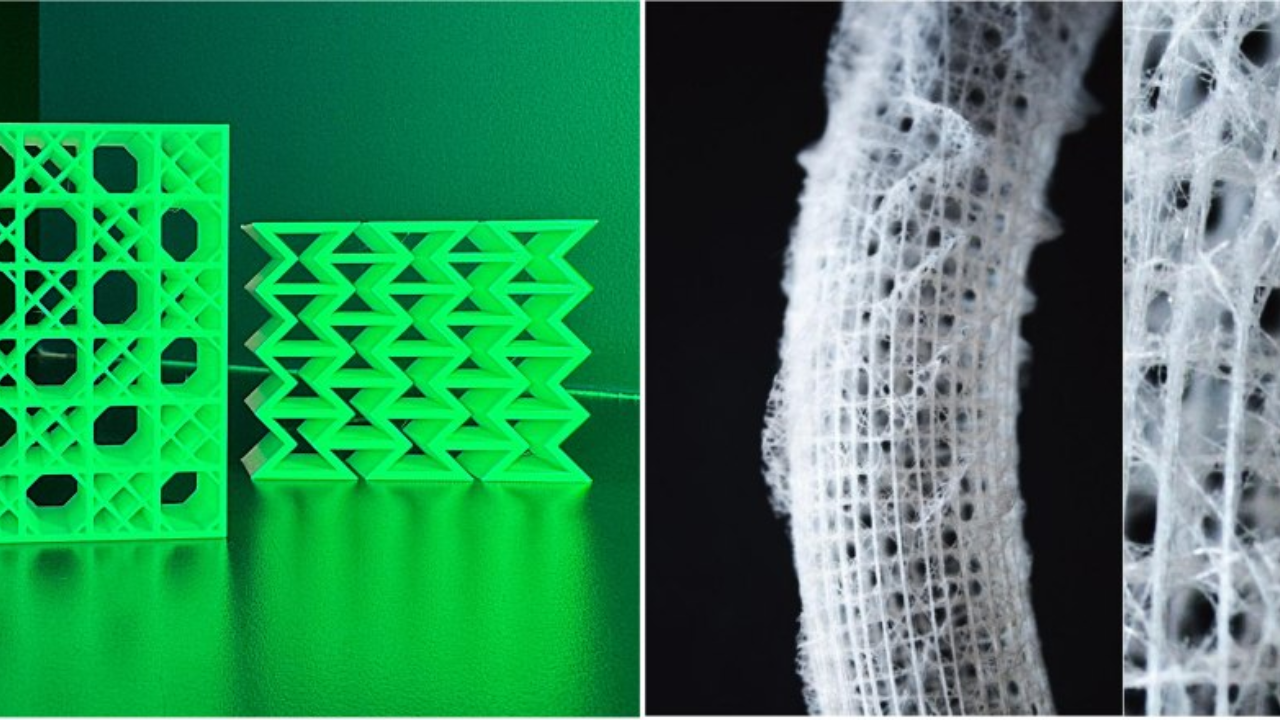


New Research Reveals an Innovative Material That Combines High Stiffness and Energy Absorption Capacity, Transforming Civil Engineering
A new innovation in the field of materials could transform civil engineering with the introduction of a super-strong compressible material, inspired by the skeleton of the marine sponge known as Venus’s Flower Basket. This material, termed auxetic, exhibits unique characteristics that set it apart from all other conventional materials.
What Are Auxetic Materials?
Traditionally, when an object is compressed, its thickness decreases in the area where pressure is applied and expands in other locations.
However, auxetic materials operate in a reverse manner: they expand laterally when stretched and contract when compressed.
-
China Develops Custom 140-Ton Electric Mining Truck with 770 kWh Swappable Battery, Deploys 290 Units in Xinjiang’s Largest Zinc Mine

-
Meta to Launch Arena, a New Prediction App Targeting 3.56 Billion Users, Competing with Polymarket and Kalshi

-
Scientist Challenges Famous Human Evolution Theory, Argues Homo Sapiens Evolved Gradually Over Thousands of Years
-
15-Year-Old American Builds Ocean Generator with PVC Pipe and 3D-Printed Propeller for $12, Wins National Prize, Presents at White House, and Makes Forbes 30 Under 30 List




This innovative property allows these materials to effectively absorb and distribute impact energy, making them extremely valuable in various applications, from structural engineering to medical devices, such as cardiac stents.
Inspiration from Nature
Researchers, led by Jiaming Ma from RMIT University in Australia, were interested in creating auxetic materials that not only imitate but also surpass the capabilities of existing models.
The solution was found in the intricate skeleton of the Venus’s Flower Basket sponge, which inhabits the Pacific Ocean.
Tests and optimizations revealed that the structure of this sponge offers an impressive combination of stiffness and strength, in addition to the ability to stretch when compressed.
Impressive Results from Laboratory Tests
The biomimetic structure developed from the marine sponge demonstrated superior results compared to previous computational simulations.
Using the same amount of material, the researchers managed to create a structure that is 13 times stiffer than traditional auxetic materials, which typically have a reentrant honeycomb design.
Furthermore, this new structure can absorb 10% more energy and maintains its auxetic behavior with a deformation range 60% greater compared to existing models.
Applications in Civil Engineering
This bioinspired auxetic lattice presents significant potential for civil engineering, allowing for the use of less steel and concrete while achieving results comparable to traditional reinforcements.
Ngoc Ha, a professor involved in the research, emphasized that this innovation could lay a solid foundation for the development of more sustainable construction.
The auxetic metamaterial, with high stiffness and energy absorption capacity, promises substantial benefits across various sectors, from building materials to protective equipment and sports.
Advantages of Auxetic Materials
Auxetic materials offer several advantages compared to conventional materials. In addition to their stiffness and energy absorption capacity, they are lightweight and adaptable, making them ideal for a variety of applications.
Their ability to expand and contract efficiently can lead to safer and more sustainable constructions, reducing material waste.
Future Perspectives
The discovery and development of nature-inspired auxetic materials represent a crucial innovation for civil engineering and other fields.
With the ability to provide greater strength and efficiency, these materials can not only transform how we build but also contribute to a more sustainable future.
SOURCE: INOVAÇÃOTECNOLÓGICA





