






 Portuguese
  Spanish


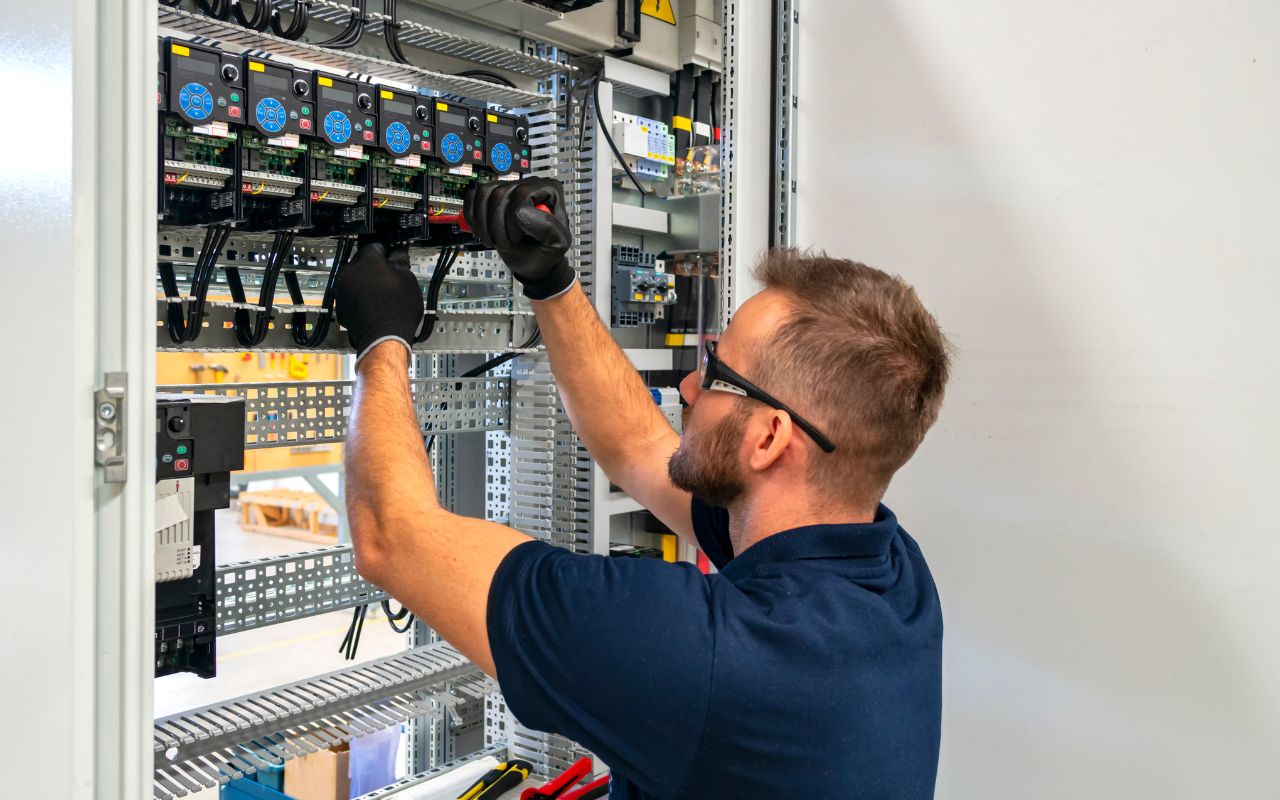

Electrician Salary in 2026: See What a CLT, Residential, Industrial and Automotive Professional Earns. Check Average Salaries, Variations by Area and Experience.
The routine of an electrician goes far beyond dealing with wires and outlets. The professional is responsible for ensuring that electrical systems operate safely, efficiently, and within technical standards, preventing failures that could compromise equipment, structures, and even the safety of people.
In a scenario of constant demand for specialized services, the career remains strong and offers various working possibilities.
Residences, businesses, industries, and energy distribution networks are among the main work environments.
-
Workers renovating a playground in northern England uncover 176 World War II bombs buried underground; training artifacts still contained explosives.

-
Brazilian Architect Transforms Waste into Sustainable Homes with Solar Power and Rainwater Systems for 40 Years

-
Security Guard Becomes Doctor at Louisiana Hospital Where He Once Worked, Studied Chemistry Between Shifts

-
Woman Rescued from Luxury Complex in Brazil Worked Without Pay for 55 Years, May Be Entitled to Over $300,000




Where Can Electricians Work?
The electrical field is marked by diversity. In the residential segment, the focus is on the installation and maintenance of systems in residential and commercial buildings.
In the industrial sector, the work involves machines, panels, and complex electrical systems present in factories.
Another branch is automotive electrical work, focused on diagnostics, maintenance, and repairs in vehicles.
There is also the field of general electrical maintenance, aimed at the prevention and correction of failures in different types of installations, in addition to activities related to public and private distribution networks.
In addition to these fronts, many professionals opt for freelance work, offering services independently.
How Is the Career in Practice?
The profession allows for different formats of work. The electrician can pursue a career with a formal contract (CLT), work as a freelancer, or provide specialized services for companies and residential clients.
On a day-to-day basis, activities include reading and interpreting electrical schematics, installing wiring, circuit breakers, outlets, and fixtures, as well as identifying and correcting technical issues.
Safety is a central element, requiring compliance with standards such as NBR 5410 and the use of Personal Protective Equipment (PPE).
Entry into the field generally occurs through technical courses, which are highly sought after in institutions like SENAI. With experience and qualification, the professional can advance to higher levels, such as specialist or consultant.
How Much Does an Electrician Earn in 2026?
According to the website Meu Tudo, electricians’ salaries in 2026 show significant variations, influenced mainly by professional experience, area of expertise, and geographic location.
In the CLT regime, the average monthly salary ranges between R$ 2,400 and R$ 2,900.
For those entering the career, the starting salary is usually around R$ 2,200.
On the other hand, electricians with more market experience or technical specializations can earn over R$ 4,700 per month.
Within the industrial sector, earnings tend to be more attractive. The salary range generally varies between R$ 2,800 and R$ 4,700, while the national average is concentrated between R$ 3,000 and R$ 3,500.
In large industries or in positions that include additional pay, such as for hazardous conditions, earnings can exceed R$ 5,000 monthly.
In the residential segment, the amounts tend to be more moderate. Monthly pay varies between R$ 1,700 and R$ 2,700, with national averages situated between R$ 1,900 and R$ 2,300 for 44-hour workweeks.
In the automotive area, electricians earn between R$ 1,878 and R$ 3,800 per month.
The median salary approaches R$ 2,661, potentially exceeding R$ 4,600 in cases of experienced professionals or those with additional qualifications.


Freelance Work: Risks and Opportunities
Working as a freelancer can increase earning potential since the professional sets values and schedules.
However, the lack of a fixed salary implies monthly variations, making financial planning essential.
Salary Expectations and Growth
Salary expectations in 2026 depend on the technical level and specialization. In general, they range between R$ 1,900 and R$ 2,500 monthly.
In the CLT regime, salaries can fluctuate between R$ 2,287 and R$ 3,777.
Highly experienced or specialized professionals may reach salary ranges between R$ 4,000 and R$ 9,000 per month.
With continuous qualification, it is possible to reach senior positions, lead teams, or work in more profitable niches.
Why Does the Electrician Career Attract So Many Professionals?
Among the main attractions are short training duration, high employability, and relatively low investment in training.
For CLT workers, additional benefits include FGTS, INSS, 13th salary, paid vacation, health plan, and food allowance.


