Portuguese
  Spanish


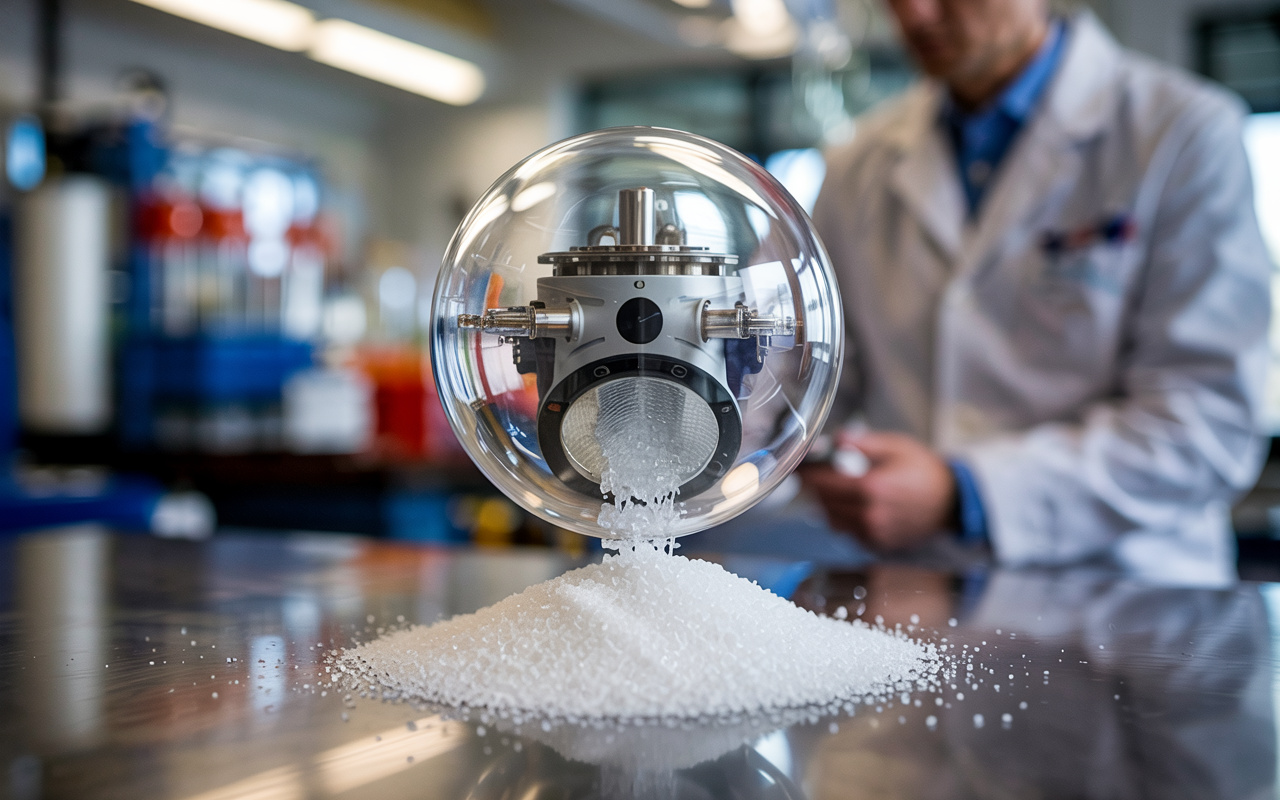

Chinese Researchers Create Sugar In Laboratory Using Methanol, Without Land, Water Or Sugarcane. Technology May Revolutionize Food Industry And Reduce Carbon Emissions.
Imagine a world where white sugar does not come from sugarcane or beets — but rather from a laboratory, using methanol and enzymes, without the need for plantations, irrigation or large areas of land. This is the bold proposal of a new technique developed by scientists in China, which could completely redesign the carbohydrate production model that supports the global food industry. Researchers at the Tianjin Industrial Biotechnology Institute, part of the Chinese Academy of Sciences, have created an innovative in vitro biotransformation (ivBT) process capable of converting methanol into sucrose, fructose, and even starch, with efficiency of up to 86%. This synthetic sugar is chemically identical to conventional table sugar, but without the environmental and production costs of agriculture.
How Does Sugar Without Plant Work?
Unlike fermentation or traditional agricultural crops, the new technology uses enzymes outside of living organisms to convert methanol — a simple alcohol — into complex sugars. Methanol, in turn, can be produced from industrial waste or even captured from carbon dioxide present in the atmosphere.
In other words, in addition to not requiring sugarcane, the process could also assist in carbon capture, acting as a negative emissions technology. This characteristic places the innovation at the forefront of bioeconomy, where waste and pollutants are transformed into high-value inputs.
-
Texas Teens Win $50,000 at World’s Largest Science Fair for Developing Non-Surgical Brain-Controlled Bionic Prosthesis with 98% Accuracy

-
Samsung Galaxy A27 Launches with 6.7-inch Super AMOLED Display, Full HD+ Resolution, Android 16, Six Years of Updates, Snapdragon 6 Gen 3, and Dust and Splash Resistance; Available for Pre-order in the US for $350

-
Five Brazilian Students Invent Drug Test Pen That Detects Date Rape Drugs in Seconds
-
Viedma Glacier Retreat in Patagonia Uncovers 900-Meter-Deep Basin, Making Viedma the Deepest Lake in the Americas


What Makes It So Revolutionary?
The majority of sugar in the world is produced from sugarcane, a plant that requires large volumes of water, fertile soils, and a lot of energy to process. In addition, the sugarcane sector is subject to climatic variations, pests, pesticide use, and environmental issues such as deforestation.
On the other hand, synthetic sugar created in the laboratory can be produced anywhere, year-round, at a controlled scale, and with drastically reduced environmental impact. Without the need for tractors, irrigation, pesticides, or manual harvesting, this innovation represents a quantum leap in the way we produce food energy.
Implications For The Food And Pharmaceutical Sectors
In addition to sucrose, the ivBT system also allows for the production of fructose and starch, basic components used in:
- Processed foods (candies, cookies, soft drinks, pasta)
- Pharmaceuticals (syrups, capsules, excipients)
- Bioplastics and industrial adhesives
This could lead to a complete disruption of the global carbohydrate supply chain. Countries that currently depend on sugar imports could produce locally.
Large food companies could install bioreactors in urban centers, reducing logistical costs and emissions. And new business models, such as vertical enzyme farms, could emerge.
The Next Frontier: Efficiency And Scalability
Despite success in laboratory tests, the researchers themselves admit that the technology is still not ready for industrial-scale production. The next challenges include:
- Improving enzyme efficiency, which still have limited lifespan
- Increasing system stability, to support continuous production cycles
- Reducing reagent costs, to compete with large-scale agricultural production
The study was published in the prestigious scientific journal Science Bulletin, and has already attracted interest from investors and biotechnology companies. According to the authors, the long-term goal is to integrate the system into carbon capture industrial plants, creating a kind of “sugar factory of the future,” powered by CO₂ and enzymes.
A Sweet (And Controversial) Future
Like any technological revolution, synthetic sugar also raises questions:
- What will be the impact on rural producers, especially in countries like Brazil, where sugarcane is an economic pillar?
- Will consumers accept a laboratory-created food, even if chemically identical?
- How will regulation and labeling of these products be handled in different countries?
On the other hand, the promise is enticing: a clean production, resilient to climate change and capable of supplying the world with food even in extreme contexts, such as deserts or regions without fertile soil.
If it can move from the laboratory to the real world, this technology could rewrite the rules of food production — placing methanol, carbon, and enzymes as new protagonists of our diet.