Portuguese
  Spanish


Explore Whittier, Alaska, the City of the Planet Where the Life of Approximately 471 Inhabitants is Concentrated in the Begich Towers, a Military Legacy Amid Isolation and Wild Nature.
Imagine a remote location in Alaska where the life of almost the entire population unfolds within a single 14-story building. Welcome to Whittier, a truly unique city on the planet. Of its approximately 471 residents, most live and, often, work in the Begich Towers.
Access to this isolated community is primarily via the Anton Anderson Memorial Tunnel, a 4-kilometer route with restricted hours. The daily life and challenges of this “vertical village,” a remarkable example of human adaptation.
The Surprising History of Whittier
The genesis of Whittier dates back to World War II, when the U.S. Army established the Sullivan Camp, a strategic ice-free port. The Alaska Railroad spur and tunnels for access were built. In the post-war period, the Hodge Building (which would become the Begich Towers) and the Buckner Building were erected.
-
When Do Brazil and Japan Face Off in the World Cup?

-
Three-Year-Old Fulfills Dream of Joining Garbage Collectors in Brazil, Captivates Thousands Online with Heartwarming Video

-
Nikon Project Uses Dog’s Heartbeat to Capture Photos, Revealing What Truly Makes Dogs Happy

-
In Los Angeles, Young Adult Opts for Garage Living with Bed, Kitchen, and Bathroom to Avoid Rent, Highlighting Comfort and Organization Challenges in Compact Housing



With the military withdrawal around 1960, the Buckner Building was abandoned. The Good Friday Earthquake of 1964 caused damage in the area, but the Hodge Building withstood it and was later transformed into the Begich Towers condominium. In 1973/1974, residents acquired the facilities, formalizing the transition to the current vertical city.
A Complete World Within a Single Building
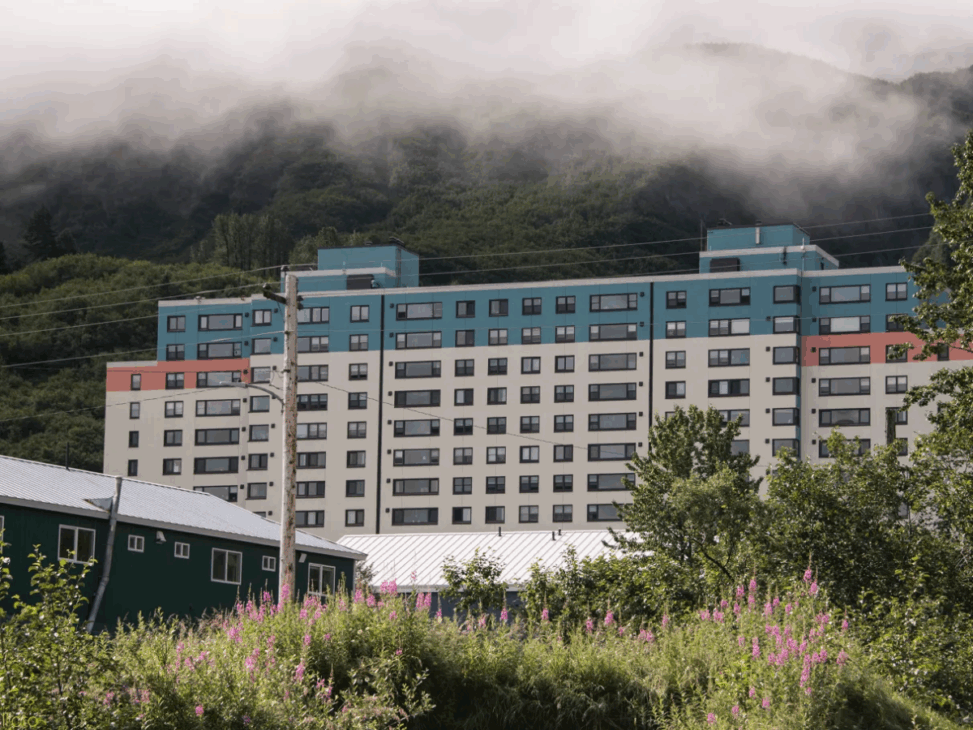
The Begich Towers function as an urban microcosm. Inside, there are a city hall, a police station, a post office, a grocery store (Kozy Korner Market), and a laundromat. There is also a medical clinic, a church, and even a Bed & Breakfast.
For children, an indoor playground and a subterranean tunnel leading to the local school ensure access and recreation even under Alaska’s harsh climate. The reinforced concrete building, with its 196 apartments, protects residents from snow, strong winds, and heavy rain, serving as a true refuge in this peculiar city of the planet.
Living and Working in Whittier, the Reality of Convenience, Challenges, and the Local Economy
The idea that everyone in Whittier lives and works under the same roof is partially true. Census data indicates that 44% of residents walk to work or work from home. Many services within the Begich Towers are operated by residents.
However, the economy of Whittier also depends on external activities, such as tourism (over 700,000 visitors annually in the summer), commercial fishing, and port operations. The convenience of having everything nearby is a benefit, but the isolation, lack of privacy, and limited resources (such as an expensive grocery store) are constant challenges.
The Gate to This Isolated and Peculiar City of the Planet
The Anton Anderson Memorial Tunnel, with its 4 kilometers of length, is the main and only terrestrial access route to Whittier. This single-lane tunnel operates with restricted hours for entry and exit, closing at night.
This feature sets the pace for local life, influencing everything from grocery shopping to emergencies. The tunnel is a symbol of Whittier’s isolation, but also of its vital connection to the outside world.
Planning, Resilience, and the Legacy of an Unusual City of the Planet and Its Challenges


Whittier plans its future through the Economic Development and Waterfront Plan (WEDP), which aims to identify economic opportunities, protect the environment, and improve infrastructure, such as the reconstruction of the port waterfront.
The limited availability of land (most of it belongs to the Alaska Railroad) and dependence on a 70-year-old building are challenges. Climate resilience is also a priority. Whittier remains a fascinating case study on adaptation, concentrated community living, and the challenges of sustaining such a unique city of the planet.