Portuguese
  Spanish


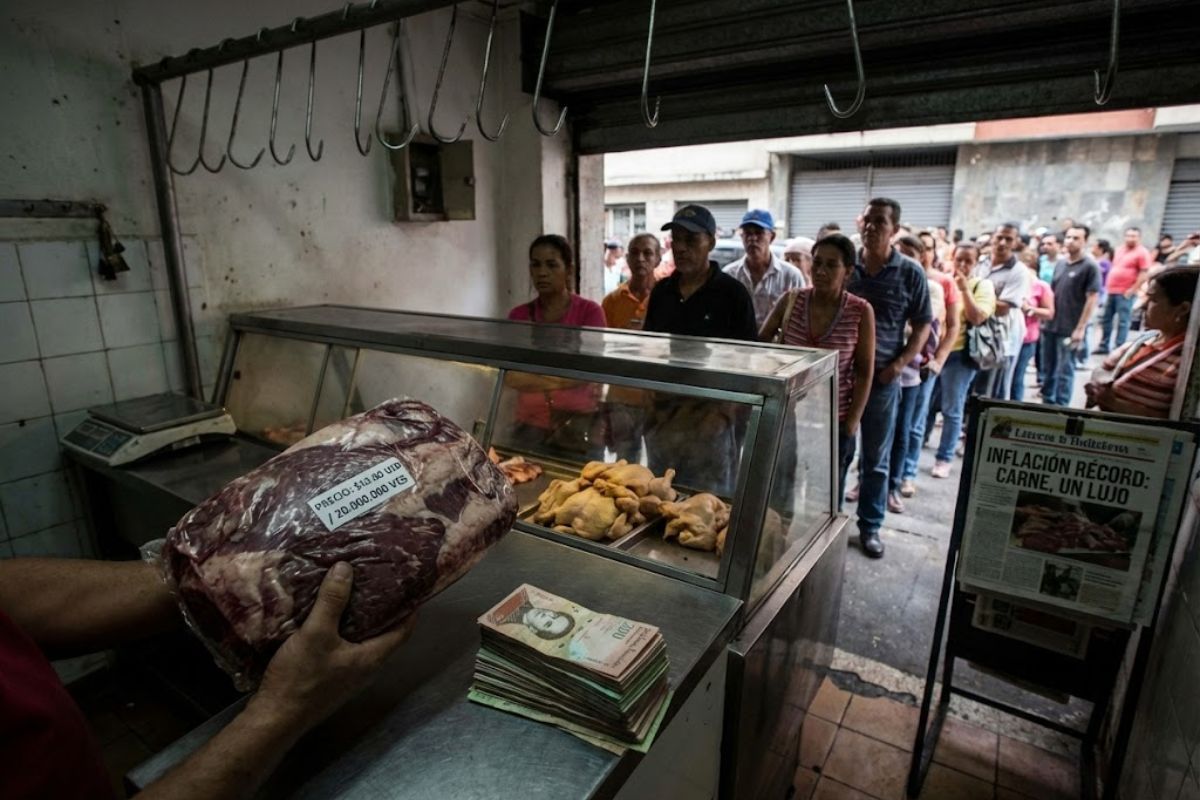


In Caracas And Other Cities In Venezuela, The Price Of Meat Has Become A Thermometer Of Chaos: Between September And October 2025, It Reached US$ 13.80, Then Jumped To US$ 16 In The Center. With Persistent Inflation And A Falling Bolivar, Families Are Shifting To Chicken And Eggs In Their Daily Routine
In Venezuela, the price of beef has ceased to be a reference point and has become a symbol of exclusion. Between September And October 2025, the price reached US$ 13.80, while the devaluation of the bolivar and inflation continued to exert pressure on salaries and consumption within the country.
In Caracas, the capital of Venezuela, the escalation became even more visible after a political shock associated with the removal of Nicolás Maduro from power by U.S. forces. In Downtown Caracas, a butcher shop displayed US$ 16 per kilo of meat for steak, in a scenario where chicken and eggs have taken the place of beef at the table.
How Much Did The Price Of Meat Cost And Why Did It Become Prohibitive
The price of beef reached US$ 13.80 between September And October 2025 in Venezuela, a level described as incompatible with the budgets of most families.
-
Major Appliance Manufacturer Closes Factory in Argentina, Shifts Production to Brazil, and Restructures in Latin America with Mexico Closure, Investing Up to $165 Million

-
China to Revive $3.6 Billion Mega-Dam Project in Myanmar, Stalled Since 2011, Promising 6 GW Capacity and Completion in Eight Years

-
Foreign Company Wins Auction for Brazil’s First Immersed Tunnel, a $1.3 Billion Project with $14 Million Contract Under Federal Investigation

-
China’s Century Megaproject Wows the World: Massive Water Transfer Network Moves Water from Wet South to Arid North, with Ambitious Plans in the Tibetan Plateau Involving Giant Tunnels at Altitudes up to 4,000 Meters



The local view is that the jump did not come from a single factor, but from a combination: persistent inflation and devaluation of the bolivar.
Even when the price in dollars seemed less aggressive, the real cost increased within the country.
In the first quarter of 2025, cuts were sold between US$ 8.80 and US$ 9 per kilo, but the price in bolívares continued to rise daily, amplifying the feeling of continuous loss.
Bolivars Rising Every Day And The Devaluation That Pushes The Bill
In the same first quarter of 2025, the Venezuelan currency devalued 24.6% against the dollar, which increased the cost of purchases for those who earn and pay in bolívares.
In practice, the price of meat may seem stable for those looking only at the dollar value but becomes more distant for those living day-to-day in Venezuela.
This disconnect helps explain why the crisis appears at the counter before it shows up in statistics.
Consumers feel the price “moving” on the label and respond by reducing volume, switching cuts, or simply not buying.
Butchers Emptying, Consumption Plummeting, And Chicken Replacing Beef
Since June 2025, with the rising price of beef, establishments have reported a drop in demand.
With fewer buyers, the market has reorganized out of necessity: chicken and eggs have become more accessible alternatives, and beef is now considered a rare purchase.
On the butchers’ side, the response has been defensive.
Owners reported reducing orders to suppliers to avoid losses, in a cycle where inventory shrinks because demand shrinks, and the display reflects a declining consumption.
Caracas After The Political Shock And The Jump To US$ 16
In Caracas, the pressure on food and basic items increased after the U.S. military intervention and the removal of Nicolás Maduro from power, as described in the report.
In this context, in Downtown Caracas, a butcher sign announced US$ 16 per kilo of meat for steak, bringing the macro crisis into everyday life.
A dance teacher from Caracas summed up the real-life impact by saying she can’t afford to buy food with the benefit she receives and has to ask friends for help.
In the report, she compares the before and after: a large box of eggs cost US$ 6 and increased to US$ 8, reinforcing the feeling that when everything goes up, the most expensive protein becomes a luxury first.
In Venezuela, the price of meat has become a marker of rupture: on one side, inflation and a falling bolivar shorten budgets; on the other side, consumption is shifting to chicken and eggs, while butchers reduce orders to avoid losing stock.
In Caracas, the figure of US$ 16 at the counter crystallizes the point at which basic protein ceases to be basic.
In your city, if the price of meat reached this level, what would be the first swap you would make in your diet to maintain protein on your plate?