






 Portuguese
  Spanish


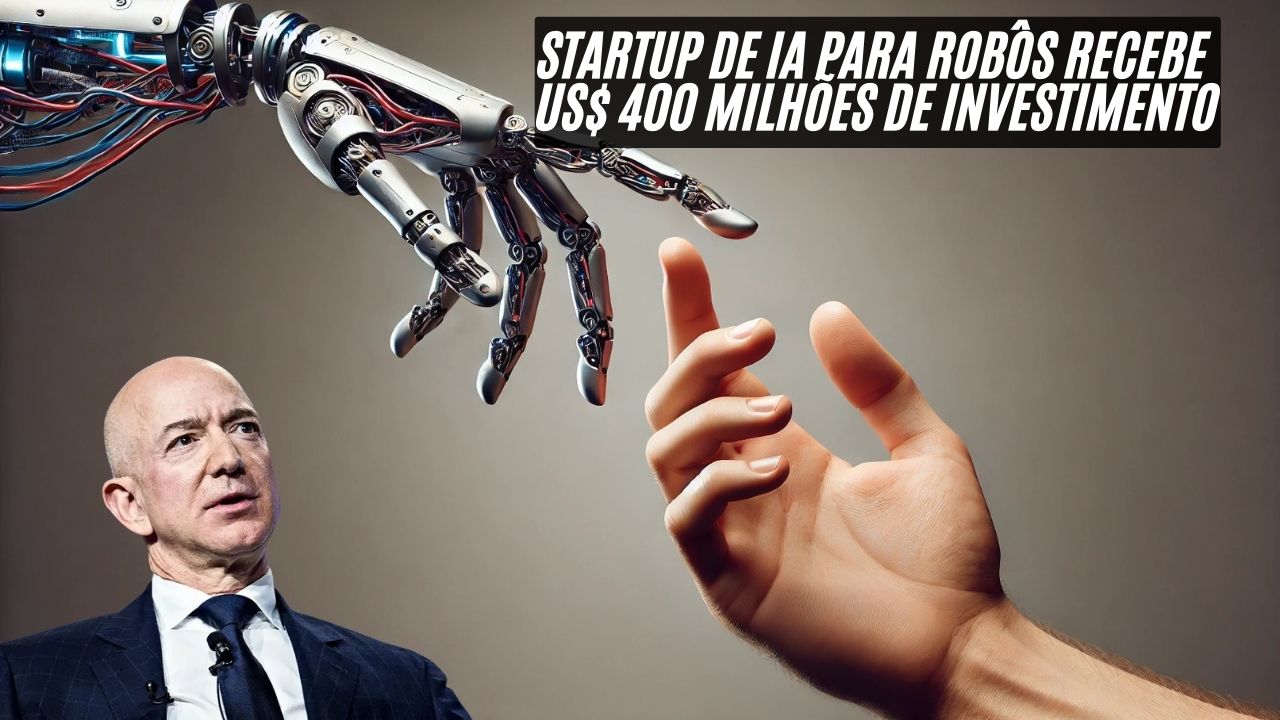

Have You Ever Imagined Robots That Can Do Any Task of the Day-to-Day Without Being Reprogrammed for Each One? It Seems Like Something Out of a Sci-Fi Movie, But It Is Becoming Reality. On Monday, the 4th, the American AI startup for robots, Physical Intelligence, Received a Massive Investment of US$ 400 Million, an Investment from Jeff Bezos and OpenAI, as Well as Other Large Venture Capital Firms Like Thrive Capital, Lux Capital, Redpoint Ventures, and Bond.
Physical Intelligence, founded this year, is creating what they call “Universal Brains” for robots. These artificial intelligence (AI) software are designed to work on any type of robot, allowing them to perform tasks ranging from simple household chores, such as folding clothes, to more complex functions. The technology is in its early stages, but the founders believe it could reach a level of sophistication similar to that of language models like ChatGPT, bringing a true revolution to the field of robotics, and attracted high investment from Jeff Bezos and OpenAI.
The “P0” of Physical Intelligence and the Plans for the Future
The software developed by the startup, which Jeff Bezos is keeping an eye on, named p0 or pi-zero, aims to eliminate the need for specific programming for each function that a robot needs to perform. The idea is that, with this system, any robot can understand the environment and carry out the tasks for which it is assigned independently.
In a recent article, Physical Intelligence explained how p0 enables, for example, robots to organize groceries or fold clothes without any manual intervention in the programming.
-
China Develops Custom 140-Ton Electric Mining Truck with 770 kWh Swappable Battery, Deploys 290 Units in Xinjiang’s Largest Zinc Mine

-
Meta to Launch Arena, a New Prediction App Targeting 3.56 Billion Users, Competing with Polymarket and Kalshi

-
Scientist Challenges Famous Human Evolution Theory, Argues Homo Sapiens Evolved Gradually Over Thousands of Years
-
15-Year-Old American Builds Ocean Generator with PVC Pipe and 3D-Printed Propeller for $12, Wins National Prize, Presents at White House, and Makes Forbes 30 Under 30 List




This concept of universal brains is what is attracting the attention of technology giants and heavyweight investors. Now valued at an impressive US$ 2 billion, the AI startup for robots, Physical Intelligence, has already far surpassed its initial valuation of US$ 70 million.
This financial surge shows the growing interest in AI applied to robotics and promises to open doors to new possibilities in the field, especially in sectors that require complex automation and efficiency.
The Importance of Jeff Bezos and OpenAI’s Investment
This investment from Jeff Bezos and OpenAI in the AI startup for robots, Physical Intelligence, signals a powerful bet on the future of autonomous robots. Amazon, for example, is already extensively using robotics in its operations to streamline the organization and delivery of orders. With the support of companies like Thrive Capital, Redpoint Ventures, and Bond, the startup now has financial and strategic backing to accelerate the development of its technology.
Who Is Behind Physical Intelligence?
In addition to investors like Jeff Bezos, the founding team of Physical Intelligence is made up of prominent names in the industry. Karol Hausman, CEO of the startup, brings experience as a former robotics scientist at Google. Sergey Levine, a professor at the University of California, Berkeley, is also a co-founder and is recognized for his research on generalist software, one of the pillars of the technology developed by the startup. Rounding out the trio is Lachy Groom, former executive at Stripe, with extensive experience in the online payments sector.
The Future of Robotics with Universal Brains
The innovation proposed by the AI startup for robots, Physical Intelligence, and the investment from Jeff Bezos and OpenAI are a significant step toward robots moving away from being machines programmed for specific tasks and evolving into assistants with generalist capabilities.
This is a field with the potential to transform industrial, domestic, and even healthcare sectors, where robots that learn and adapt independently can bring revolutionary advances.
In the world of robotics, every cent of this investment in universal brains points to a future where human-machine interactions will become increasingly sophisticated, personalized, and present in our daily lives.






