Portuguese
  Spanish


A Super Magnet With Unmatched Force Promises to Bring Humanity Closer to Viable Solutions for the Advancement of Clean and Sustainable Nuclear Energy
The search for a clean and limitless energy source has gained new momentum with the recent achievement of Commonwealth Fusion Systems (CFS), one of the largest private nuclear fusion companies in the world. Last week, CFS reached a historic milestone: it successfully tested the Central Solenoid Model Coil (CSMC), an essential component for its fusion reactor project SPARC, which created a very strong magnetic field.
Nuclear fusion technology, which aims to replicate the process occurring in stars, could be the key to producing energy without carbon emissions and radioactive waste, promising to revolutionize the energy sector.
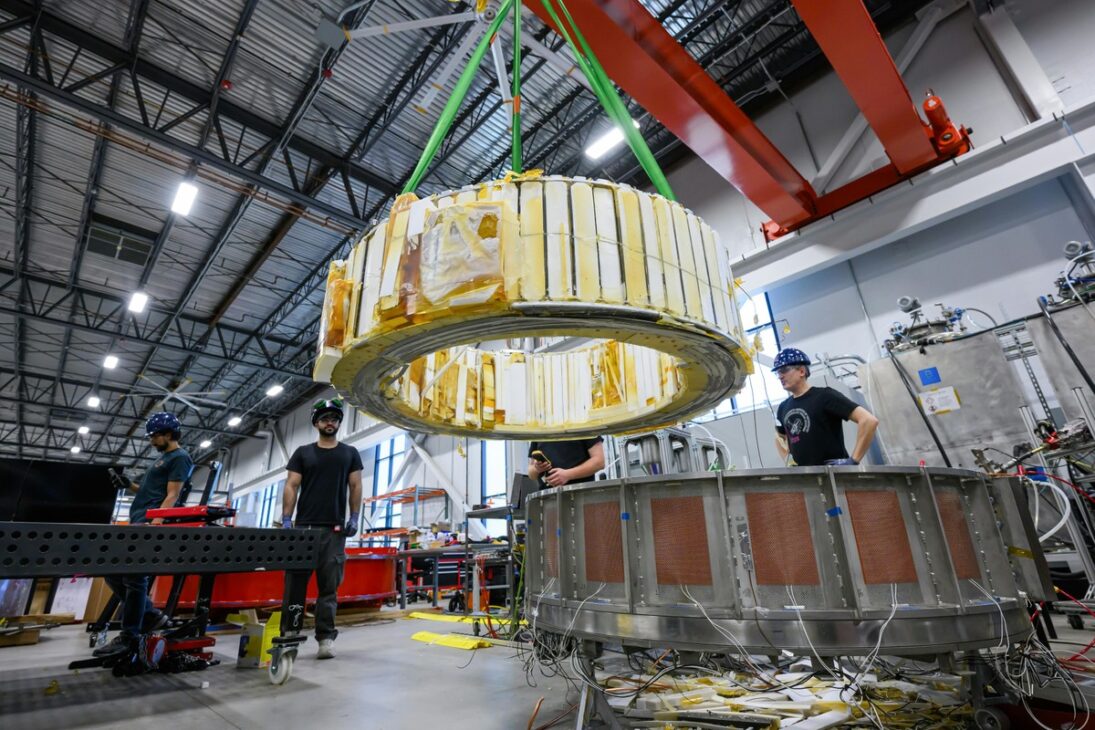
Nuclear Fusion Technology – Incredibly Strong Magnetic Field
Nuclear transfer is a highly promising technology but extremely demanding. Replicating the conditions of the cores of stars on Earth is not simple, and scientists have faced significant obstacles. However, recent advancements are encouraging.
-
14-Year-Old Girl Develops Solar-Powered Water Purification System for India, Eliminating Need for Electricity or Chemicals

-
Forgotten Canadian Machine Harnessed Waterfall Power to Supply Mines with Compressed Air for 70 Years Without Motors or Electricity
-
Berries, Strawberries, and Blueberries Could Transform Agriculture in Northeastern Brazil, New Tests Reveal

-
Danish Resident Discovers Six Viking Gold Bracelets Weighing 762.5 Grams, Third Largest Gold Treasure in Denmark



CFS, founded in 2018, has already raised US$ 2 billion and is leading a race to commercialize nuclear fusion. With the help of government grants and funding from investors, fusion companies have raised over US$ 7 billion so far. This financial support, combined with technological innovation, has brought nuclear fusion closer to reality.
The success of CFS with the CSMC represents a significant advance, as it was able to generate a magnetic field of 5.7 Tesla, about 100,000 times stronger than Earth’s.
This field is essential for controlling the fusion plasma in the reactor, one of the biggest challenges of this technology. Moreover, the test demonstrated that a CSMC can operate with electric current pulses, a crucial feature for efficient reactor operation.
The CSMC Milestone: A Step Toward Commercialization
The successful test of the CSMC is not only a technical milestone but also an advance in the direction of transforming nuclear fusion.
The company had previously tested a Toroidal Field Model Coil (TFMC) in 2021, another fundamental component of SPARC. Both devices use high-temperature superconductors (HTS), which work together to control the plasma inside the reactor.
In an impressive demonstration, the CSMC achieved an electric current of 50,000 amperes, which is equivalent to the maximum that SPARC was designed to operate. This means that, in the future, the reactor could generate enough energy to power up to 250 homes.
“When we hit the button and put current into the magnet, it performed like a champion and hit all of its key test objectives,” said Brandon Sorbom, co-founder and Chief Scientist of CFS.
This kind of performance brings CFS closer to making nuclear fusion a viable energy source.
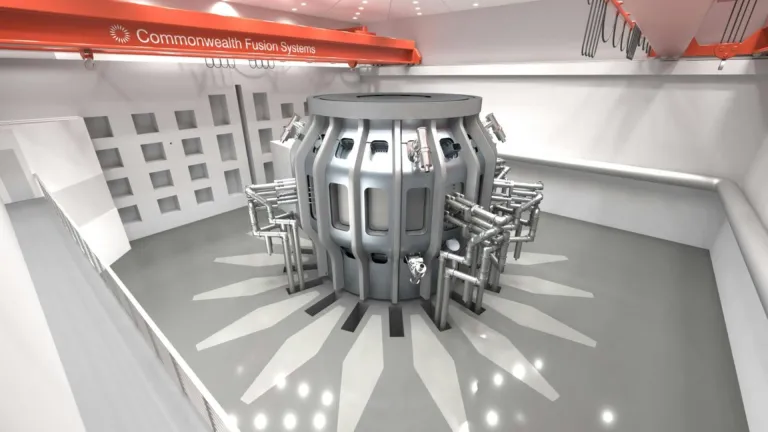
Commonwealth Fusion Systems
Innovations on the Horizon
In addition to its advancements with the CSMC, the CFS team has also innovated in other areas. During testing, the use of an optical fiber system was demonstrated, which can detect overheating in the magnets, preventing damage to the equipment. This system is essential, as controlling the temperature of the magnets is one of the main challenges of nuclear fusion.
Another important aspect was the development of HTS cable technology to support pulsed energy magnets. The CFS team created a design called PIT VIPER, which uses internal insulation to reduce heating when current is rapidly increased. This innovation helped avoid thermal issues, ensuring system stability.
The Future: Fusion Energy on the Horizon
With these advancements, CFS now has SPARC reactor construction equipment at its facility in Devens, Massachusetts. The goal is to achieve stable plasma by 2026, with the aim of providing fusion energy to the power grid in the early 2030s.
This ambitious journey promises to transform the global energy sector, offering a clean, safe, and virtually inexhaustible energy source.
CFS is undoubtedly writing a new chapter in the history of energy, and if its plans succeed, we could be on the brink of an energy revolution.
The company’s progress is not just an advancement in fusion science but also a great step toward a more sustainable and carbon-free future.
However, there are still challenges ahead. Nuclear fusion may be the solution that the world needs, but only time will tell if we can master this powerful technology safely and efficiently. For now, CFS’s success is a positive sign that we are on the right track.