






 Portuguese
  Spanish


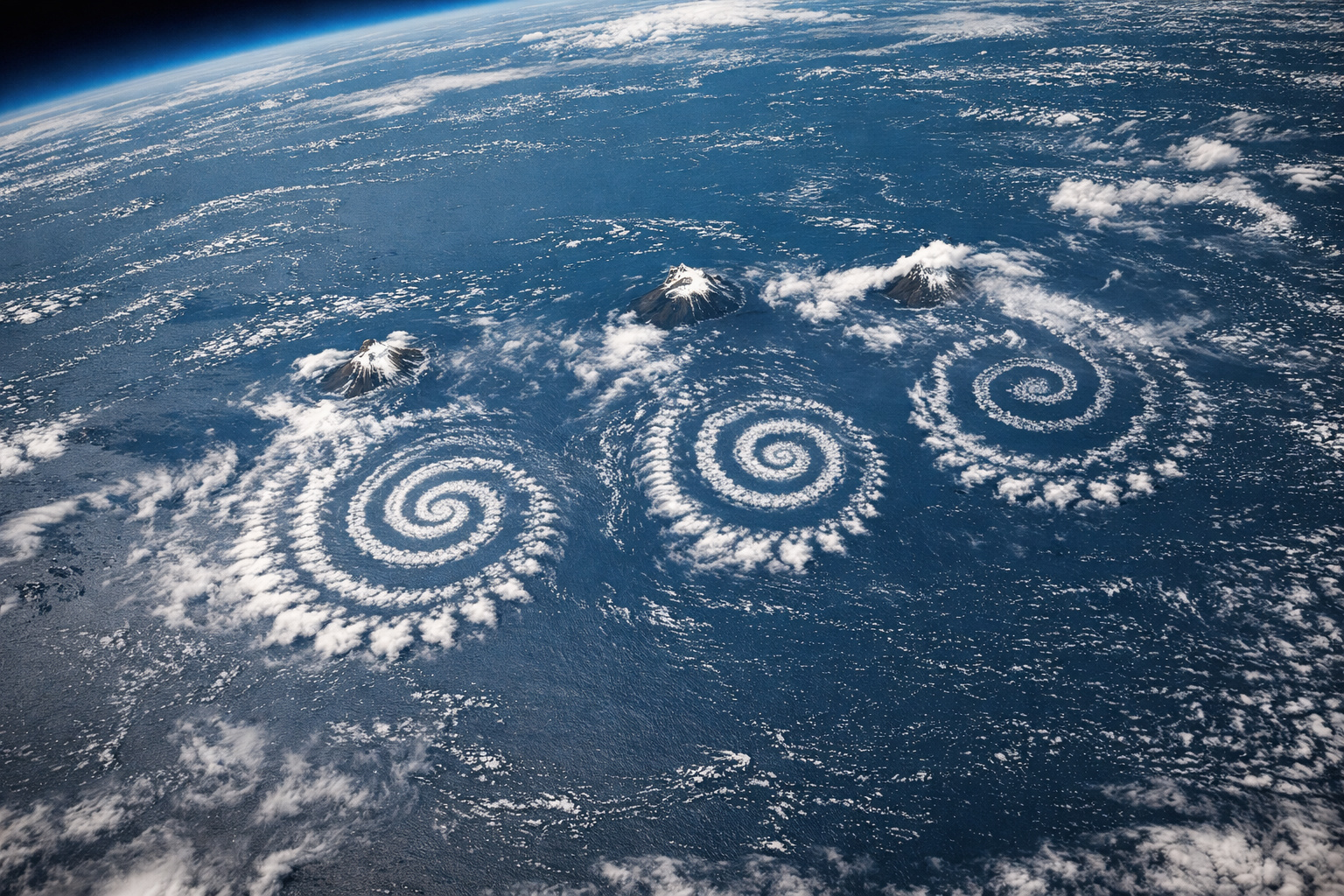


NOAA-20 satellite recorded in 2025 perfect cloud spirals in the Southern Atlantic formed by volcanic islands that disrupt the wind flow.
In February 2025, the NOAA-20 satellite, equipped with the VIIRS sensor, recorded one of the most impressive atmospheric patterns seen from space: an almost perfect sequence of cloud spirals forming behind Visokoi, Candlemas Island, and Saunders, in the remote archipelago of the South Sandwich Islands. The scene was published by the NASA Earth Observatory, which identified the phenomenon as a classic example of the so-called von Kármán vortex streets, structures that arise when persistent winds flow around tall, isolated obstacles.
Located in the southern Atlantic, within the Scotia Sea region, these remote volcanic islands transformed the invisible flow of air into a design of rare symmetry, visible on an orbital scale. According to NASA’s own explanation, the vortices formed when westerly winds passed over the steep slopes of the islands under stable atmospheric conditions, creating alternating rows of whirlpools that appear computer-generated but are a direct result of the interaction between topography, marine clouds, and atmospheric dynamics.
Rare atmospheric phenomenon entitled “von Kármán vortex street” forms cloud spirals with almost perfect symmetry
What the satellite captured is not just a visual curiosity. It is a physical phenomenon described by fluid dynamics known as the von Kármán vortex street, a repetitive pattern of alternating whirlpools that forms when a continuous flow, such as air, encounters an obstacle.
-
A 17-year-old student created an artificial intelligent trash can that moves by itself through schools and parks, finds trash, separates waste with 90% success, and turns recycling into an automatic, mobile task that is harder to ignore in busy public spaces.

-
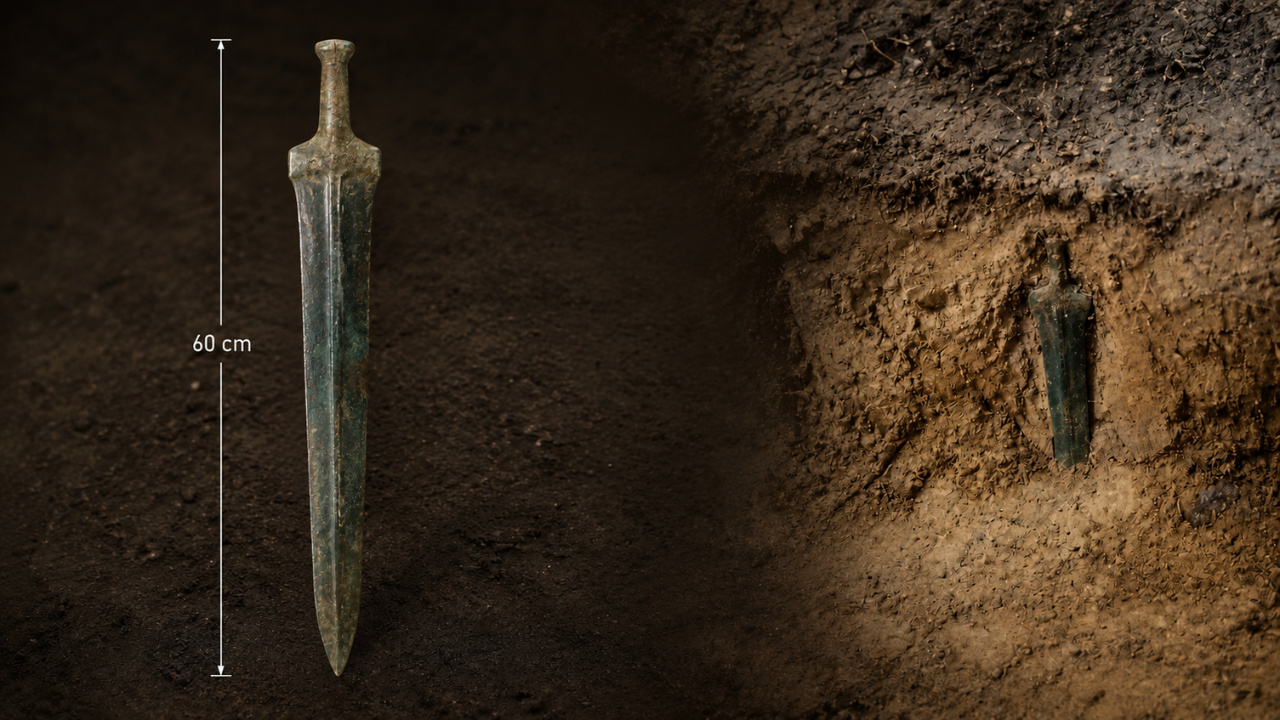
Detectorist finds 2,700-year-old bronze sword embedded vertically in forest in Poland; artifact may reveal ancient Bronze Age ritual
-
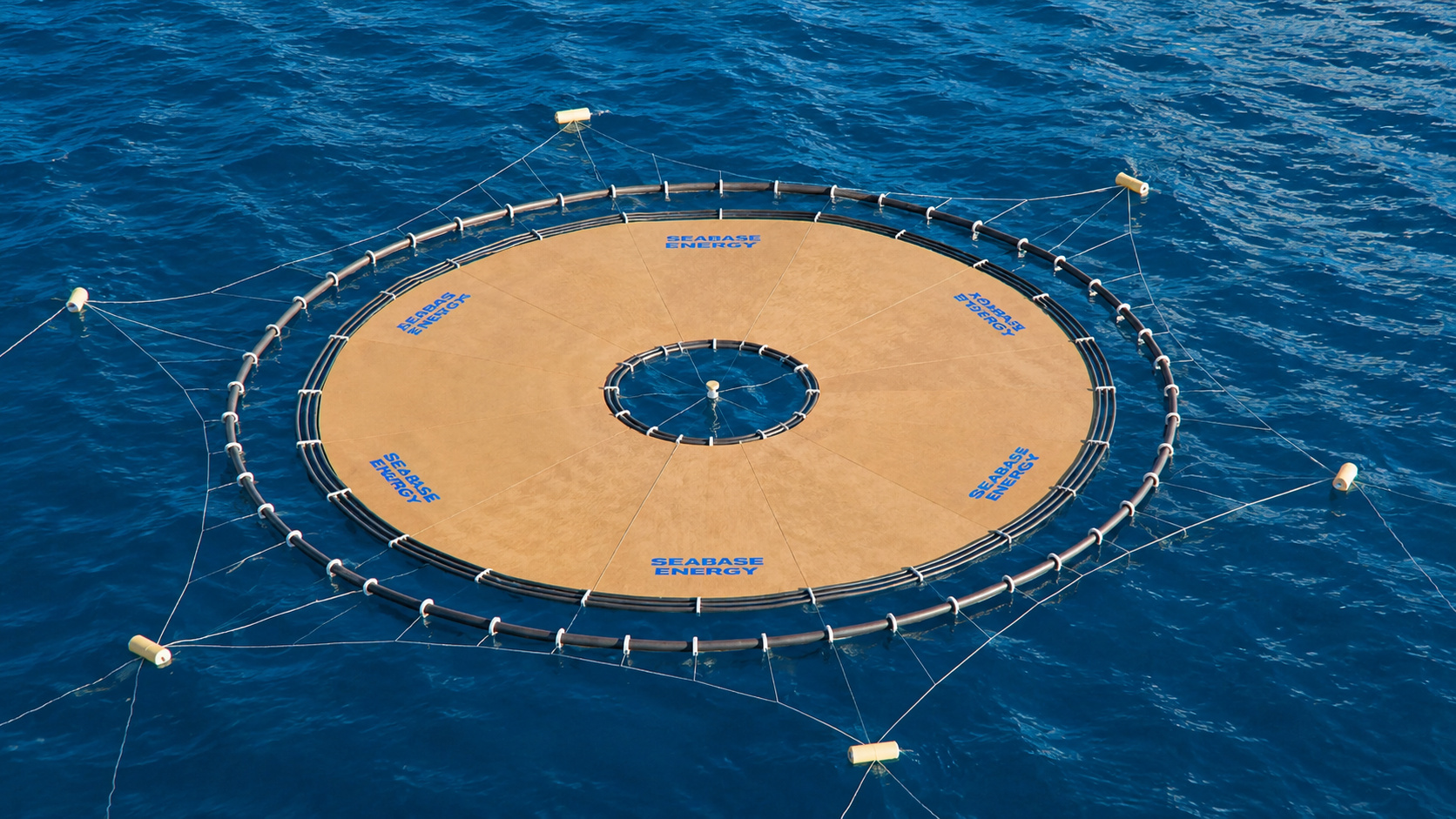
At the bottom of the Mediterranean, Italian engineers have sunk a “plant” in the shape of a giant donut that uses the ocean’s own weight to store energy, storing electricity generated by wind and sun at the sea floor and returning it to the grid without dams, mountains, or chemical batteries.

-
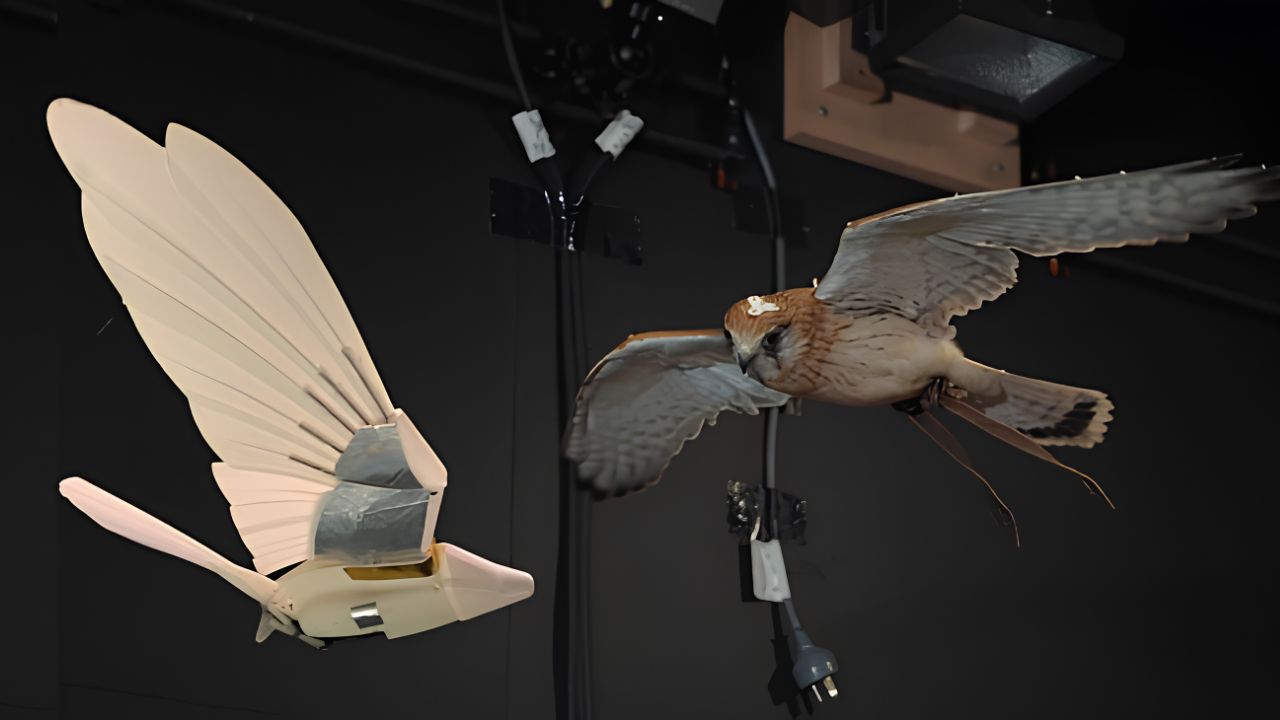
Scientists create robotic bird that uses articulated wings to maintain balance, mimicking hawks and flying with stability where common drones fail.

According to NASA, when wind-driven clouds reach isolated islands or mountains, the airflow is forced to split and go around these structures. In this process, the air separates in an unstable manner and begins to generate alternating whirlpools on opposite sides, creating an organized sequence of spirals that can extend for hundreds of kilometers.
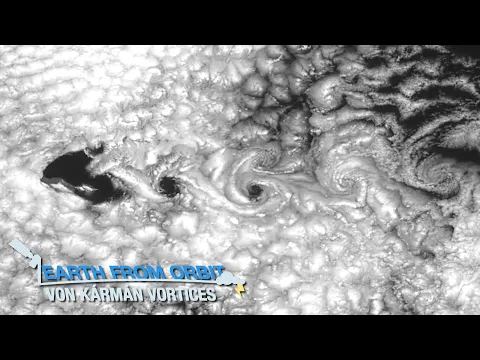

These structures are called “streets” because they form a kind of continuous trail of vortices, similar to the wake left by a boat in the water. In the case of the South Sandwich Islands, the phenomenon stands out for its regularity and visual clarity, something relatively rare even on a global scale.
Isolated volcanic islands act as triggers for the von Kármán vortex phenomenon
The determining factor for the formation of these structures lies in the combination of geography and atmospheric conditions.
The islands of Visokoi, Candlemas, and Saunders have specific characteristics that favor the phenomenon: they are relatively high, with well-defined volcanic peaks, and are surrounded by a vast ocean area without other interferences. This creates an ideal scenario for the wind to flow steadily before encountering the obstacle.

When this constant flow reaches the islands, it is forced to rise and go around the peaks. At this point, the so-called flow separation occurs, a process in which the air stops following the surface and begins to form turbulence zones behind the obstacle. It is at this moment that the alternating vortices emerge.
Moreover, the presence of a cloud layer at the right altitude is essential for the phenomenon to become visible. Without clouds, the whirlwinds continue to exist but remain invisible to the human eye and the optical sensors of satellites.
NOAA-20 satellite records patterns that can extend for hundreds of kilometers
The record made on February 24, 2025, was captured by the instrument VIIRS (Visible Infrared Imaging Radiometer Suite) aboard the NOAA-20, a sensor capable of mapping the Earth’s surface and atmosphere with high resolution.
This type of equipment allows for the observation of phenomena that cannot be perceived from the ground. In the case of the von Kármán vortex streets, satellites are essential, as the patterns develop on a large scale and only become fully visible from space.
According to NOAA data, these vortex systems can extend for dozens to hundreds of kilometers, depending on the wind intensity and the size of the obstacle.
In the case of the South Sandwich Islands, the captured image shows a long and well-defined sequence of whirlwinds, indicating extremely stable and uniform atmospheric conditions at the time of recording.
The name of the phenomenon comes from one of the greatest names in aeronautical engineering
The phenomenon was named after Theodore von Kármán, a Hungarian-American engineer and physicist considered one of the pioneers of modern aerodynamics.
He was the one who mathematically described this type of behavior in fluid flows in the early 20th century, demonstrating how the alternation of vortices arises naturally when a flow encounters an obstacle of relatively simple geometry.
Today, the concept is widely applied in engineering, meteorology, and even in industrial projects, as the formation of these vortices can influence everything from the stability of bridges to the behavior of aircraft.
The phenomenon occurs in other places on the planet, but rarely with such perfection
The von Kármán vortex streets are not exclusive to the South Sandwich Islands. They have been observed in various regions of the planet, such as:
Cape Verde, in the Canary Islands, in the Guadeloupe archipelago, on Jeju Island in South Korea, and even in areas near the Arctic.

However, not all locations produce patterns as clean and symmetrical as those recorded in the South Atlantic. This is because the formation depends on a specific combination of factors:
constant and uniform wind, absence of nearby interferences, well-defined topography, and the presence of clouds at the appropriate altitude.
The South Sandwich Islands stand out precisely for meeting all these conditions simultaneously, which explains why the images captured there often appear among the most impressive ever recorded of this phenomenon.
Invisible structures shape the behavior of the global atmosphere
Although the phenomenon draws attention for its visual aspect, it also has scientific importance. The vortex streets are a classic example of how the atmosphere responds to obstacles and disturbances. They help scientists better understand processes such as:
energy transfer in the air, cloud formation, particle dispersion, and the behavior of weather systems on different scales.
Moreover, studying these patterns contributes to the development of mathematical models used in weather forecasting, climate simulations, and even in the engineering of structures exposed to wind.
A phenomenon that transforms invisible wind into visible patterns in space
The record made by NOAA-20 in 2025 reinforces a central idea of atmospheric science: even invisible phenomena, such as air flow, can produce highly organized structures when interacting with the right environment.
In the case of the South Sandwich Islands, what exists is a rare combination of factors that transforms a complex physical process into something visually simple and impressive. The spirals that appear in satellite images are not just beautiful. They are the direct manifestation of fundamental laws of physics acting on a planetary scale.
This type of formation raises an interesting question: how many other invisible processes are happening around us at this very moment without us being able to perceive them?
The von Kármán vortex streets show that the planet is constantly producing complex and organized patterns, even in remote and practically inaccessible places.
Did you already know about this phenomenon or did you imagine that isolated islands could literally “draw” the wind in the sky?





I’ve never seen anything like that. It’s so cool looking 😃😲❤️
This is an AI image. The real spirals are nowhere near as perfect.