






 Portuguese
  Spanish


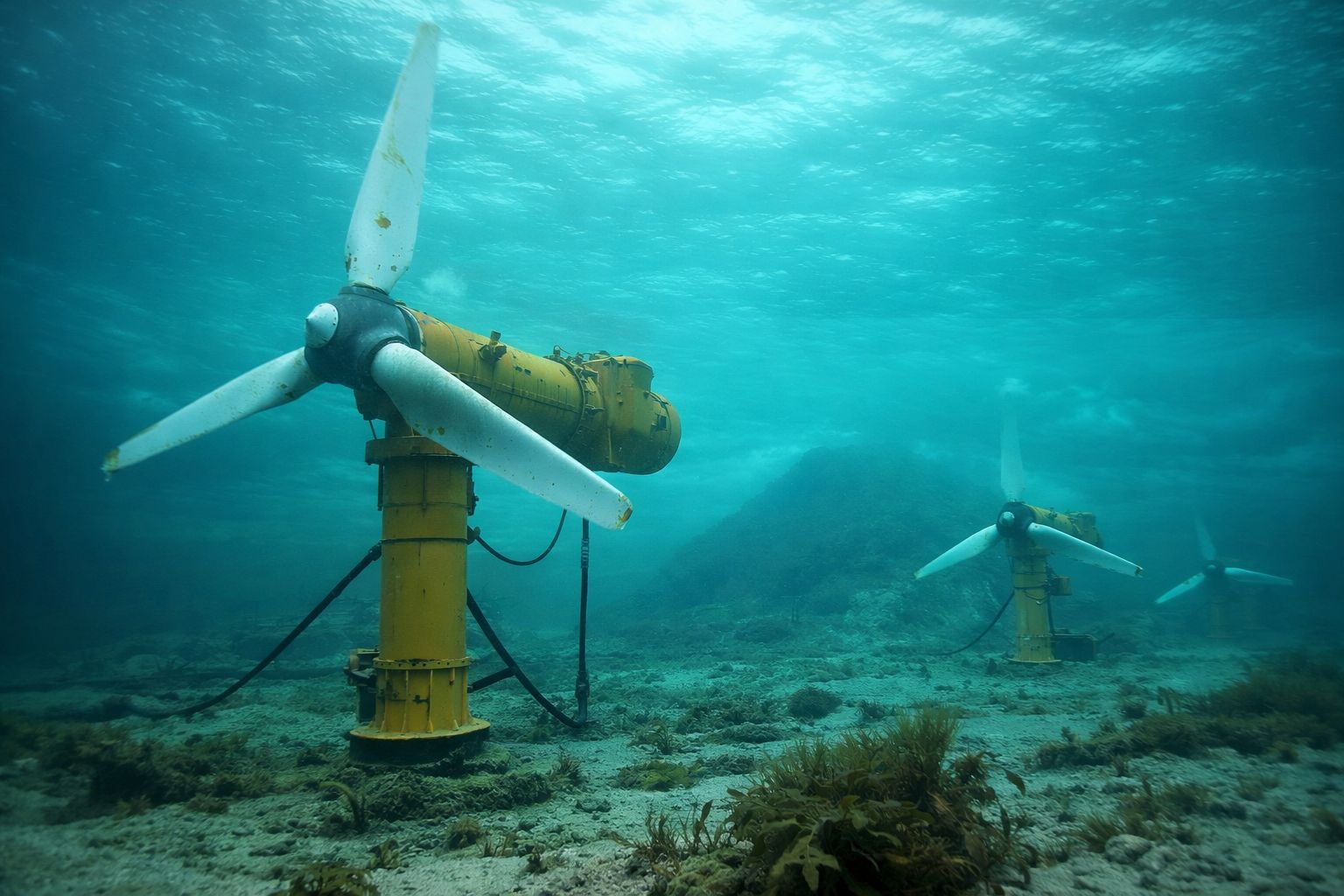


Giant submerged turbines in northern Scotland have been generating electricity from the tides for seven uninterrupted years, exceeding more than double the expected lifespan. Tidal energy is predictable, unlike solar and wind, and projections indicate that costs could fall to $0.10 per kWh by 2030. France plans 250 MW and the coast of Patagonia appears as one of the most promising regions in the world.
Giant turbines installed on the seabed of the North Sea, in Scotland, have been generating clean electricity from tidal currents for nearly a decade, and the results are exceeding all expectations. The company SIMEC Atlantis Energy has been operating its underwater turbines since 2018, and what was planned to last three or four years has already been running continuously for seven. The giant turbines have generated about 90 GWh in total, enough energy to power approximately 3,500 homes per year, and the reason why governments and investors are paying attention is not just durability, but an advantage that no other renewable energy can offer: predictability. Unlike the sun and wind, tides are calculable with mathematical precision, and that changes everything.
Solar and wind energy face a problem that billions in investment have not solved: intermittency. The sun does not shine at night and the wind does not blow when you need it, which forces governments to keep fossil fuel plants on standby to cover periods of low generation. The giant turbines on the seabed of Scotland circumvent this problem because the tides are governed by the gravity of the Moon, a phenomenon that occurs with absolute regularity twice a day, every day, without climatic variation. Amanda Smith from the University of Oxford summarizes: tidal energy is available consistently and reliably because it is known when and in what quantity it will be generated.
How giant turbines work on the seabed
According to information from the channel DW Español, the principle is simple: tides move colossal volumes of water twice a day, and this movement carries kinetic energy that can be converted into electricity. The giant turbines are fixed to the seabed in areas where currents are particularly strong, such as the Scottish North Sea, and function as submerged versions of wind turbines, but with one fundamental difference: water is about 800 times denser than air, which means that smaller turbines can generate the same amount of energy as their wind counterparts.
-
Iraq floats and sinks under an arm of the Euphrates 10 giant concrete boxes of 46,000 tons and 125 meters each to assemble a 2.4 km submerged tunnel and open a new land route between Asia and Europe.

-
Scientists use more than 20,000 artificial birds and solar speakers to “trick” seabirds, reactivate nesting routes, and revive a colony on an island that seemed abandoned.

-
She spent 73 years breathing inside an iron lung, survived the aftereffects of polio, and became the last woman in the United States dependent on the equipment before dying at 78 years old.
-
Brazilian students created a $1 filter using pine bark, cotton, and 3D-printed parts to clean cassava wastewater, reduce the toxicity of a hazardous waste, and transform contaminated water into biofertilizer.


The electricity generated by the giant turbines is transported to the coast by submarine cables and injected into the power grid. The turbines from SIMEC Atlantis Energy underwent inspection after years on the seabed and, apart from some barnacles attached to the structure, were in good condition with no damaged parts, needing only the replacement of a connector. The proven robustness significantly reduces operational costs and allows the installations to remain submerged for surprisingly long periods without intensive maintenance.
Why the predictability of giant turbines changes the renewable energy game

The great competitive advantage of giant tidal turbines over solar and wind is not the amount of energy, but the certainty of when it will be produced. The tides are caused by the gravity of the Moon, which pulls the Earth’s water creating two bulges that circulate the planet as it rotates, producing high and low tides approximately twice a day with precision that can be calculated decades in advance.
This predictability has direct economic value. With giant tidal turbines, it is no longer necessary to maintain as much backup capacity in fossil fuels, because power system operators know exactly when energy will be generated. This reduces the need for gas or coal plants that remain on just to cover periods when the sun isn’t shining or the wind isn’t blowing, a hidden cost of solar and wind energy that is rarely discussed publicly.
The cost of giant turbines and why it could drop drastically
Today, tidal energy is three to four times more expensive than wind and solar in the UK. While the price of wind and solar energy hovers around £70 per megawatt-hour, electricity from giant submarine turbines costs significantly more, which explains why the technology has not yet scaled up. But the track record of other renewables shows a clear pattern: the more is installed, the more costs fall.
Projections are optimistic. By 2030, the price of electricity generated by giant tidal turbines could drop to just $0.10 per kWh, making it competitive with other renewable sources. Next-generation turbines are already being developed with longer blades that generate more energy, AI-enhanced designs for better alignment to currents, and more durable materials that reduce maintenance frequency. The same cost-reduction cycle that transformed wind energy from niche to mainstream could repeat with giant submarine turbines.
The two models of giant turbines competing in Scotland
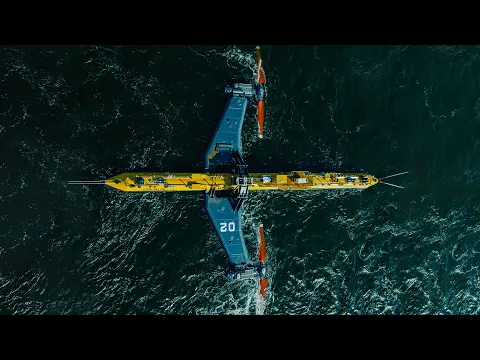
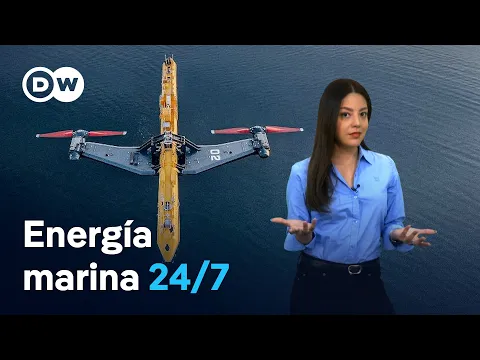
In Scotland, two different technological approaches are competing for the future of tidal energy. The giant turbines from SIMEC Atlantis Energy are fixed directly to the seabed, while Orbital Marine Power has developed a floating system called O2 that is anchored to the seabed but operates at the surface, with turbines that can be lifted for maintenance without the need for specialized vessels.

Each model has its advantages and disadvantages. The giant turbines on the seabed are more discreet and less vulnerable to surface storms, but maintenance requires ideal weather conditions and specialized vessels.
Orbital Marine’s floating system is easier to maintain, but it is exposed to the elements. Orbital generates 2 MW with its O2 system, enough energy to power about 17 homes per year, and already considers the model ready for commercialization.

The impact of giant turbines on marine life in Scotland
A legitimate concern about giant turbines on the seabed is the impact on marine fauna. Seals, fish, and seabirds inhabit the same waters where the turbines operate, and the risk of collisions with the moving blades needed to be investigated. A turbine from SIMEC Atlantis Energy was monitored by sonar for six months to record the presence of animals in the vicinity.
The results were encouraging. No collisions between marine animals and the giant turbines were observed during the monitoring, and the data indicates that animals use three strategies: passing between the blades, going around the turbine, or changing direction before approaching. The turbines are also being developed to operate at lower speeds to be more fish-friendly. Still, long-term research on the effects on habitats, sediments, and ecosystems is needed.
Where giant tidal turbines can expand in the world
Scotland leads, but it won’t be alone for long. France plans to install 250 MW of tidal capacity, enough energy to supply approximately 400,000 people, and has been operating the historic Rance power plant since 1966, which still produces electricity cheaper than solar and nuclear. The United Kingdom continues to invest, and among the most promising regions in the world are the east coast of Canada, northeastern Australia, and the Patagonian shelf in South America.
The fundamental requirement is to have sufficiently strong currents, which do not exist along all coastlines. The giant turbines need areas with high current speeds and consumers close enough for energy transmission to be viable. For Brazil, with over 7,000 kilometers of coastline, the potential exists in specific stretches, but no large-scale projects have been announced so far. Meanwhile, the giant turbines in Scotland continue to spin on the seabed, proving that tidal energy works and that the only obstacle between pilot projects and global scale is cost, which is decreasing.
Giant turbines on the seabed of Scotland have been generating clean energy for seven years nonstop. Do you think Brazil should invest in tidal energy? Can this technology compete with solar and wind? Leave your opinion in the comments.




I cannot understand why this technology has not been developed with serious investments before now. The advantages are so obvious. Britain is an island with some of the highest tidal ranges in the world but we have spent so much time worrying about the environmental impact of tidal barrages instead of looking under the waves.
Having a floating base, isn’t it vulnerable to the potential massive storms you can get in these sea lanes.