






 Portuguese
  Spanish
  7 min of reading
  2 comments


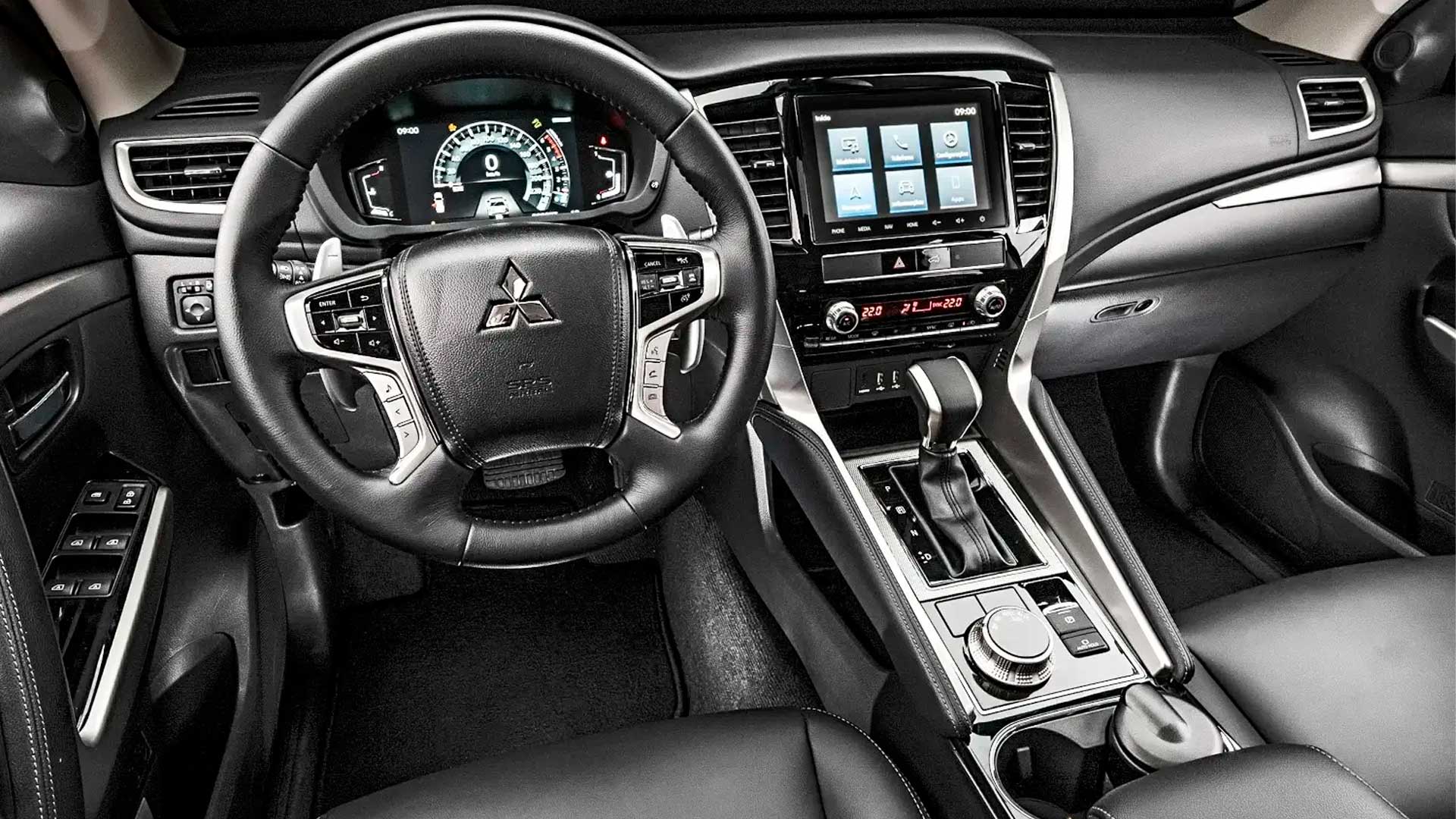


Pajero Sport HPE 2.4 Turbo Diesel 2018 Appears Close to R$ 189 Thousand on the Fipe Table, Falling Below a Volkswagen T-Cross Extreme Zero Km and Drawing Attention from Families that Need Seven Seats and Seek Cost-Effectiveness in the Used Market.
The constant rise in prices of new cars in Brazil makes many consumers consider the used market more carefully. In this scenario, a large seven-seater SUV, such as the Mitsubishi Pajero Sport HPE 2.4 Turbo Diesel 2018, begins to compete directly with new compact models. In 2025, the equation started to look even more interesting for those who need space.
According to the Fipe Table from December 2025, the Pajero Sport HPE 2.4 4×4 Diesel Automatic 2018 has an average price of around R$ 189,388 in the Brazilian market. In practice, this value places the giant SUV below several zero-kilometer compact SUVs, which already approach or exceed the R$ 200 thousand mark.
One of the most cited examples is the Volkswagen T-Cross Extreme 250 TSI, the top-of-the-line version of the compact SUV from the German brand. Recent surveys from specialized websites show that the Extreme is already priced around R$ 198 thousand, potentially exceeding R$ 200 thousand with optional packages. This leads many buyers with a budget in this range to wonder if it’s not more worthwhile to go for a used large SUV.
-
Uber Faces Shareholder Scrutiny as Board Accused of Ignoring Safety, Compliance, and Harassment Warnings Amid Over 3,500 U.S. Lawsuits

-
Ferrari’s First Electric Car Divides Fans, Priced at $630,000, Amid Concerns Over Limited Editions; Brand Clarifies It’s Not Just for Future Perks
-
BYD Dolphin Mini: The Electric Car That Defies Depreciation, Losing Only 3.58% in a Year and Becoming the Best-Selling Retail Model Under $22,000

-
Electric Car JAC E-JS4 Loses $19,000 in Value in One Year, Leading Record Depreciation of Used Cars in Brazil Due to Expensive Battery and New Models


At the same time, the Pajero Sport is not only competing on price. The model offers a robust mechanical setup, permanent all-wheel drive, real seven seats, and an extensive list of safety and comfort features. For larger families or those who travel frequently, the package starts to look like a relatively rare opportunity in the used market in 2025.
Robust Mechanical Setup of the Pajero Sport 2.4 Turbo Diesel
The Pajero Sport HPE 2.4 Turbo Diesel debuted in Brazil with a 2.4 MIVEC aluminum engine, producing 190 hp and 43.9 kgfm of torque, paired with an eight-speed automatic transmission. This configuration is designed to deliver power at low RPM, which is important for both heavy urban use and trips with a full car and luggage. Even being an SUV that weighs over two tons, the model offers enough performance for safe overtaking.
The permanent 4×4 drive, with specific modes for different types of terrain, brings the Pajero Sport closer to what many call a “true SUV,” with a real focus on off-road capability and not just adventurous looks. Technical sheets and evaluations from specialized magazines highlight that the model maintains Mitsubishi’s tradition of mechanical robustness, which is valued by those who drive a lot on dirt roads or in areas with poorer pavement.
When it comes to fuel consumption, the numbers are surprising for a vehicle of this size. According to data from tests and technical sheets based on measurements from Inmetro, the Pajero Sport HPE 2.4 Turbo Diesel records around 8.9 km/l in the city and up to 11.7 km/l on the highway, results considered good within the segment of large diesel SUVs. With a 68-liter tank, this translates to a driving range that can approach 800 km, which is very helpful for those who often face long trips with family.
Interior Space and Trunk of a Large Seven-Seater SUV
In terms of dimensions, the Pajero Sport clearly shows that it plays in a different category compared to compact SUVs. The model measures about 4.785 m in length, 1.815 m in width, and 1.805 m in height, with a wheelbase of 2.80 m. These numbers help explain the good leg and headroom for occupants, especially in the second row of seats. For those who often carry adults in the back, the comfort gain compared to smaller SUVs is significant.

Another relevant point is the third row of seats, which ensures capacity for seven occupants. Unlike some models that have extra seats just to “make do,” the Pajero Sport offers a third row that is minimally usable for children and teenagers on short or medium trips. For larger families, this reduces the need to bring two cars for the same trip or to opt for a minivan, a segment that is becoming increasingly rare in Brazil.
With all seven seats in use, the trunk space is limited, which is expected in SUVs of this type. Still, when folding down the third row, the volume increases significantly, allowing the car to be used as a true utility vehicle for long trips, large shopping or equipment transport. Those who need flexibility of use often see this type of configuration as a major differentiator when compared to compact SUVs.
Safety and Comfort Features that Rival Zero Km SUVs
One of the concerns of those thinking about buying a used SUV is the lag in safety and technology compared to newer cars. In the case of the Pajero Sport HPE 2018, however, the list of items is quite current even by 2025 standards. The model offers front, side, and curtain airbags, ABS brakes, stability and traction controls, hill start assist, and ISOFIX anchorages for child seats, meeting the main family safety demands.
Additionally, many units come equipped with advanced driver assistance systems, such as adaptive cruise control, front collision warning, and automatic emergency braking, depending on the equipment package. These features bring the older SUV closer to more modern models in terms of accident prevention, which is increasingly valued in evaluations by safety agencies and in comparisons by specialized magazines.

In terms of comfort, the Pajero Sport does not fall short. It is common to find units with leather seats, electric adjustments for the driver, dual-zone digital air conditioning, keyless entry, push-button start, and electric sunroof. The multimedia center may not be as fast or connected as the latest solutions, but it generally offers smartphone mirroring, Bluetooth, and navigation, which already meets a large part of the audience.
For daily use, details such as power steering, rearview camera, front and rear sensors, and headlights with electric adjustment help with maneuvers in a large vehicle. In cities with tight parking spaces, these features make a difference, reducing the risk of minor bumps and facilitating cohabitation with an SUV that is nearly five meters long.
Considering the overall package, the level of equipment in the Pajero Sport HPE 2018 still aligns well with what is expected from a modern family SUV in 2025. This diminishes the feeling of “going back in time” that some consumers fear when trading a new car for a more sophisticated used one.
Is It Worth More to Get a Used Pajero Sport or a Zero Km T-Cross?
The big question is whether a Pajero Sport HPE 2.4 Turbo Diesel 2018 for around R$ 189 thousand is more worthwhile than a T-Cross Extreme 250 TSI zero km priced at around R$ 198 thousand or more. From the perspective of space, power, and load capacity, Mitsubishi’s large SUV has a significant advantage, offering seven seats, a diesel engine, and heavy-duty capability.
On the other hand, the maintenance and insurance costs of a large, imported, and diesel SUV tend to be higher than those of a national compact flex SUV. Reports from publications like Quatro Rodas remind us that parts, maintenance, and potential repairs for models of this size may require a larger budget and heightened attention to the maintenance history of the used vehicle. Conversely, those who drive a lot on the highway may benefit from the lower fuel consumption per kilometer traveled with diesel and the greater range.
Also weighing in the equation is the fact that the Pajero Sport zero km 2025 starts at prices above R$ 320 thousand on the Fipe Table, which highlights even more the “discount” embedded in a well-cared-for 2018 model. Meanwhile, the T-Cross, even in its top versions, maintains usage costs closer to those of a compact hatch or sedan, as well as offering easier urban drivability and updated onboard technology, especially in connectivity and assistance packages.
In the end, the choice largely depends on usage profile. Those who need seven seats, load capacity, 4×4 traction, and robustness to tackle bad roads are likely to see the used Pajero Sport as a rational purchase and somewhat difficult to replace with a new compact SUV. On the other hand, those who primarily drive in the city, value factory warranty, and prefer a smaller car for parking may find it more logical to invest in a zero T-Cross.
For many experts, the balance lies in assessing each case, always checking reports, maintenance records, provenance, and financing conditions. What is certain is that, in 2025, the large SUV from Mitsubishi has firmly entered the radar of those looking for cost-effectiveness in the used market, precisely because it costs less than some zero-kilometer compact SUVs.
In your case, what matters more: having a used large SUV, diesel, with seven seats and higher maintenance costs, or a zero km compact SUV, smaller and more modern, but much tighter for the family? Let us know in the comments what choice you would make in this price range and if you think the 2018 Pajero Sport is an intelligent bargain or a risky bet in the used market in 2025.





No meu. caso, acho a aposta na marca( Mitsubishi) sendo boa; no meu caso , ainda , acho 07 lugares desnecessariamente um certo exagero; a precificao, levando em conta o ano de fabricação, a marca, e outros bons quesitos técnicos da marca, adicionalmente, a aquisição( SUV-Mitsubishi , ou Pajero), em geral, seria muito boa.
Sempre a mesma coisa. Faz a matéria a respeito de um carro e coloca imagens de outro mais novo.