






 Portuguese
  Spanish
  3 min of reading
  0 comments


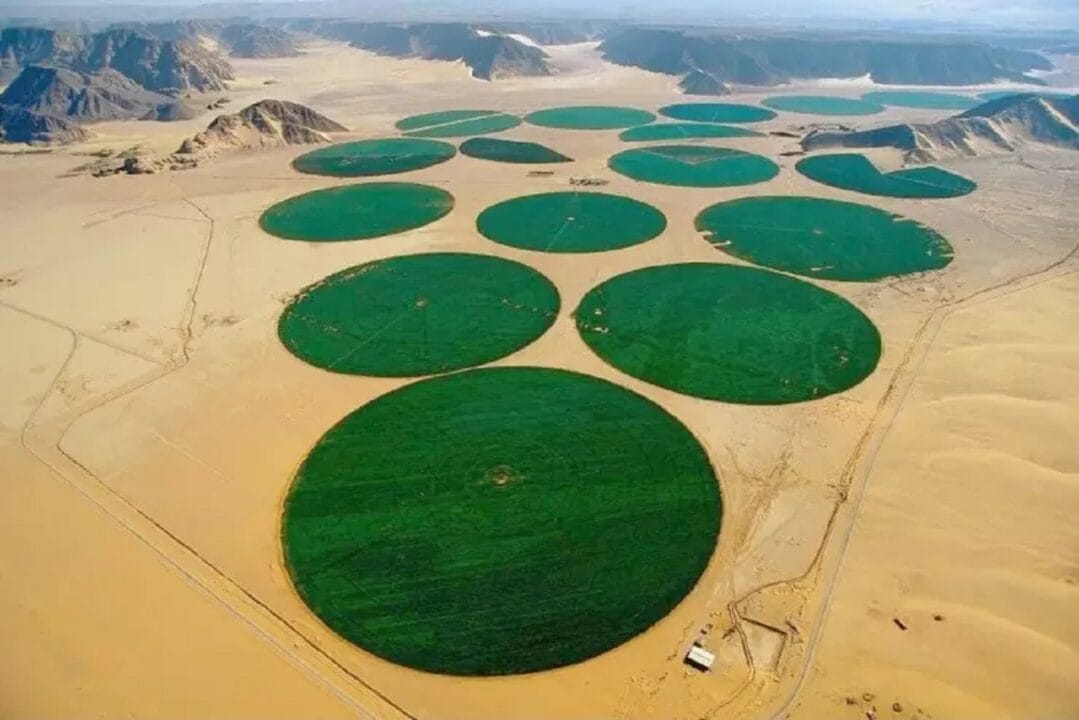
Saudi Arabia Develops Technology Capable of Transforming Deserts into Areas with Vegetation from Rainwater. Understand How This Can Help Brazil.
Brazil has set a record for the increase in average temperature in recent years, something that Brazilians have felt firsthand. However, more than just the heat, there is a silent catastrophe spreading across the northeast of the country that could affect everyone faster than expected. In this way, scientists from Saudi Arabia have sought to develop new technology to reverse the situation.


Remembering geography lessons, it is very likely that you have already heard in school that there are no deserts in Brazil, only semi-arid areas in the Northeast. However, things have changed now, as our climate is shifting. It is in the vast expanse of the northeastern Sertão, amidst the beautiful scenery of the Caatinga, that something unusual is happening.
Desert in Brazil Becomes a Reality
The region, known for being challenged by the sun to overcome heat and drought year after year, recently discovered that there is a new threat in that area. The northeast of Brazil has just inaugurated the first desert in national territory, and researchers are quite concerned about this new discovery.
-
A doctor from Minas Gerais warns that sleeping with the fan pointed at the body all night is not as harmless as you think; it dries out the respiratory tract, causes mucus buildup, spreads dust mites, and can even irritate the cornea of the eyes.

-
Ecuadorian volcano at 6,268 meters is more than 2,000 meters closer to space than Everest, which is 8,848 meters, because the Earth is wider at the equator.
-
Public school students in the hinterlands of Maranhão create a bioinsecticide with neem and castor to protect corn crops, transform rural waste into biogas and biofertilizer, and bring sustainable technology to producers at ExpoSertão.

-
Ötzi, the 5,300-year-old mummy found in the Alps, reveals a still active microbiome, and the Iceman’s yeast points to an energy-saving fermentation.


In 2022, researchers from the Ministry of the Environment reported the first arid location in Brazil, located in northern Bahia, which is the first Brazilian desert, covering approximately the area of the Federal District.
Although adapted to drought, the Caatinga region is not prepared for a completely arid climate. Over 20 years of monitoring, a vast area of desert has emerged. Moreover, it is also growing at an accelerated rate, putting not only wildlife at risk but everyone who calls this place home, which may explain why in recent years we have been observing the extinction and death of various forms of life in the northeastern region.
New Technology from Saudi Arabia That Could Change the Course of the Desert in Brazil
Despite the risks of this new problem in Brazil, the situation is not doomed to disaster. There are still several ways to be explored to control the deserts and keep them at their current size. Specialist from Inpe, Javier Tomasella, has a worried but more hopeful view of this problem.
He recommends participation from both the government and the private sector to solve this climate crisis with more efficient water use in irrigation and combatting the misuse of watersheds. Another important part of the solution for the desert is the fight against wildfires. The shade of forests that helps with the heat and the water retention that aids in drought should be the main tools to tackle this global warming in these specific areas.
The solution may not be simple or immediate, but there are ways for us to adapt to these changes. There are concrete examples of initiatives that have worked around the world. For instance, we have some desert reversal projects, that is, the transformation of deserts into areas of vegetation.
Saudi Arabia Is a Leader in New Technology to Reverse Deserts
With much effort and a massive amount of resources and research in technologies, Saudi Arabia has been combating and overcoming desertification in its few forest areas and expanding vegetation into the desert. Over decades, Saudi Arabia has been creating circular plantations and agricultural products while drawing water from 1000 meters deep in the desert soils to irrigate its crops.
Incredible as it is, it is not a permanent solution, as the aquifers may eventually dry up as well. On the other hand, there is another investment in a new technology known as the Al Baydha project. It involves regenerating the land using a flash flood system, that is, floods in the desert.
To explain in a simplified way, through the construction of dams and ditches, it is possible to retain the scarce rainwater in the soil, gradually reversing desertification. The small fauna and flora of the rare forests of Saudi Arabia are expanding and being saved from complete extinction.




Be the first to react!