





 Portuguese
  English
  Spanish
  3 min of reading
  0 comments


Villena Treasure Contains Meteoric Iron Objects, Highlighting Advanced Technology of the Bronze Age
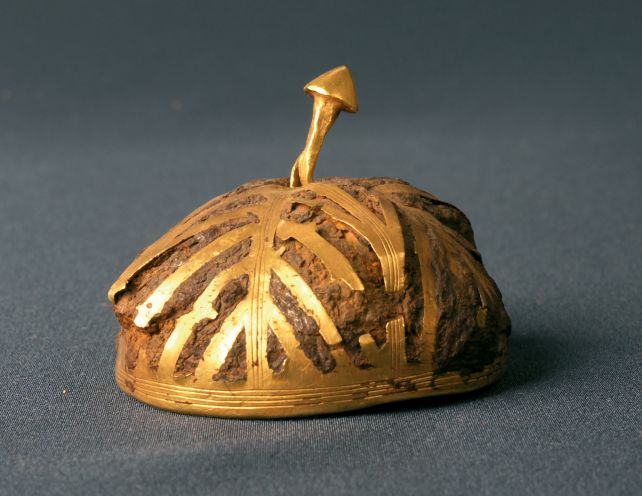
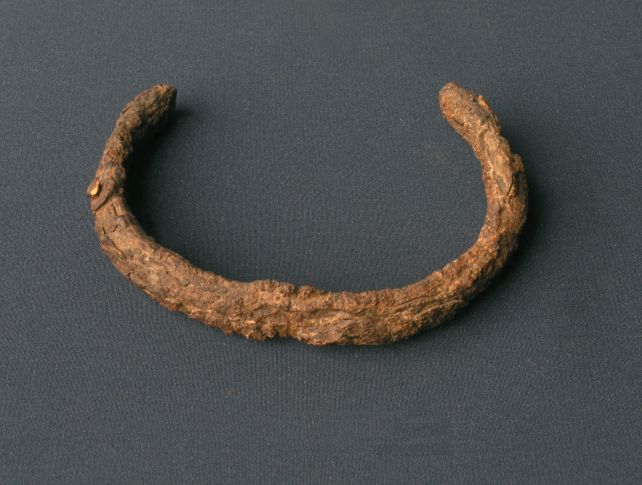
Among a stock of shimmering golden treasures from the Iberian Bronze Age, a pair of corroded objects may be the most valuable of all. Researchers have identified that an opaque bracelet and a hollow hemispherical object adorned with gold were shaped, not from metal sourced from the earth, but from meteorite iron that fell from the sky.
The Villena Treasure is one of the most important finds in Spain and all of Europe. Discovered in 1963 in the Alicante region, the treasure contains 66 objects, mostly in gold, and is an emblematic example of the craftsmanship of Bronze Age goldsmiths.
However, two objects in particular – a bracelet and a hollow hemisphere – have intrigued researchers due to their fascinating “ferrous” characteristics for the time.
-
Founded by 182 couples in 1750, this city in Santa Catarina surprises with a very high HDI, above-average quality of life, valued neighborhoods, and a preserved Azorean heritage that enchants residents and visitors.

-
This mysterious road stretches almost 80 km through the desert in a straight line and does not have an official name on Google Maps.
-
People born between 1945 and 1965 developed a rare emotional skill after going through wars, economic crises, historical changes, and decades without technology — and psychology now explains why this generation responds better to pressure.
-
Ilha Grande wakes up amid fires, boats blocking the pier, and revolt against the new tourism tax in Angra, while visitors face charges of up to R$ 100 and tension grows in the region.



Great Treasure of the Iron Age
In the Iberian Peninsula, the Iron Age, a period when cast iron became the dominant material, began around 850 BC. However, the objects from the Villena Treasure were dated between 1500 and 1200 BC, well before the onset of the Iron Age.
So, how can objects with a ferrous appearance be dated to a period prior to the arrival of terrestrial iron in the region? The answer, according to researchers, lies in a less conventional source of iron: meteorites.
Villena Museum )
Metalworking and Meteoric Iron
Historically, ancient cultures in various parts of the world used meteorite iron to create prestigious and high-value objects.
A famous example is the dagger of Tutankhamun, Pharaoh of Egypt, made of meteoric iron. This practice indicates that iron from meteorites was considered rare and valuable, given its luster and superior hardness.
To determine the origin of the objects, researchers collected samples from the artifacts and used mass spectrometry to analyze their composition.
They focused on the nickel content, an indicator of meteoric iron, as meteoric iron has a much higher level of nickel than terrestrial iron.
Villena Museum )
Surprising Results
Despite the advanced corrosion of the artifacts, the test results clearly indicated the presence of meteoric iron.
This positions the bracelet and hemisphere as two of the earliest objects made from meteoric iron in the Iberian Peninsula, reinforcing the idea that the use of this material was more common than we imagined during the Bronze Age.
Significance of the Discovery
The discovery not only challenges ideas about our techniques and skills in the Bronze Age but also highlights the value attributed to metallic objects derived from meteorites.
For ancient peoples, these objects carried a direct connection to the heavens, granting them a special and spiritual significance.
Moreover, the discovery sheds new light on cultural connectivity and knowledge exchange among societies of the time.
The use of meteoric iron suggests that Iberian artisans had an advanced understanding of metallurgy and were attentive to rare sources of raw material, even if they came from space.
The Continuation of Research
The research team confirms that while the results are promising, they are still inconclusive due to the significant corrosion of the objects.
However, more modern and non-invasive analysis techniques may be used in the future to provide additional data to confirm the exact composition of the artifacts.


Be the first to react!