






 Portuguese
  Spanish


After three years of floods, the Argenta family, from Barão, saw machines covered in mud and a loss of R$ 1.5 million. Now, the recovery comes with a harvest of 905 thousand tons, protected cultivation, and new grapes in Serra Gaúcha.
Mud invaded the property, covered machines, and destroyed part of the production of a farming family in the interior of Rio Grande do Sul. What seemed like the end of a family winery turned into the beginning of a reconstruction marked by millionaire losses, hard work, and a harvest that rekindled hope in Serra Gaúcha.
After the state’s biggest recent climate catastrophe, grape growers in the region are experiencing a moment of relief. The 2025/2026 grape harvest could reach 905,291 tons in Rio Grande do Sul, above the historical average, according to Emater/RS-Ascar.
Mud invaded the winery and left millionaire losses
In Barão, in the interior of Rio Grande do Sul, the Argenta family saw mud advance over their property in successive floods. Machines were covered, production in fermentation was lost, and the accumulated loss over three years reached about R$ 1.5 million.
-
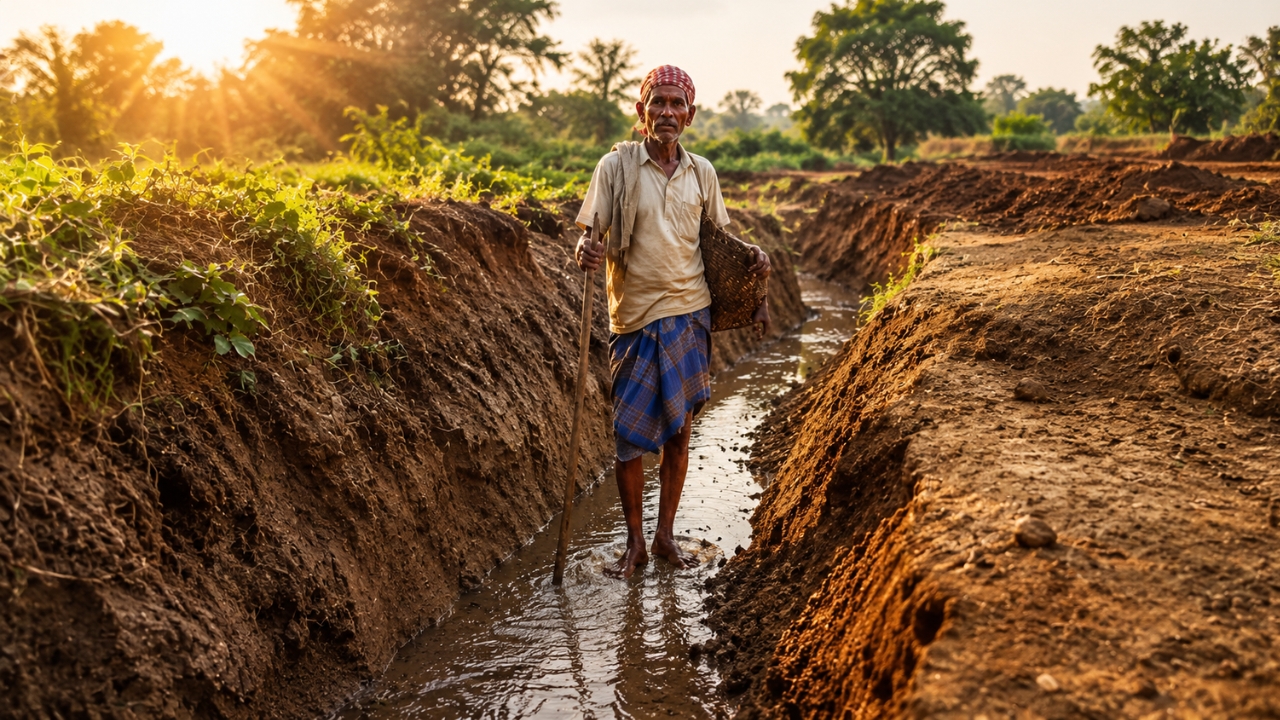
Elderly Man in His 70s Spends Nearly 30 Years Digging 3 km Canal to Transform Arid Land into Farmland in Rural India

-
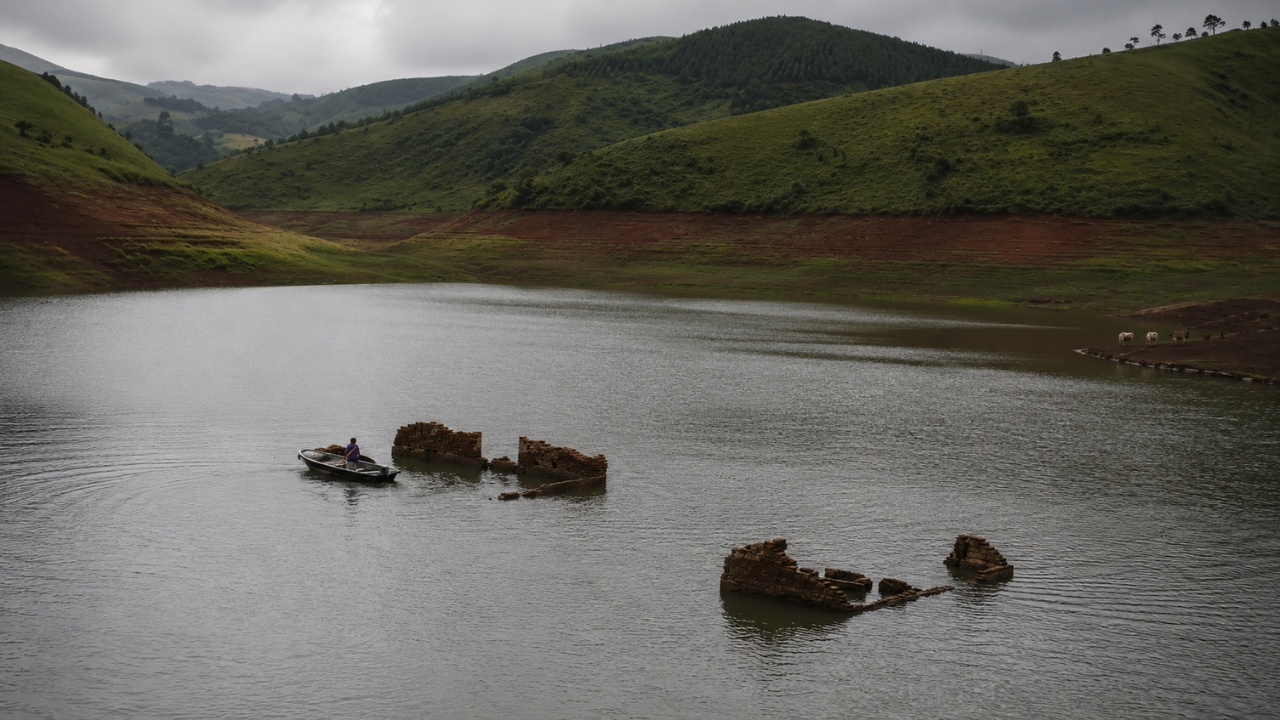
Submerged Town Reemerges in São Paulo as Reservoir Levels Drop, Revealing Ruins and Memories of Displaced Families
-
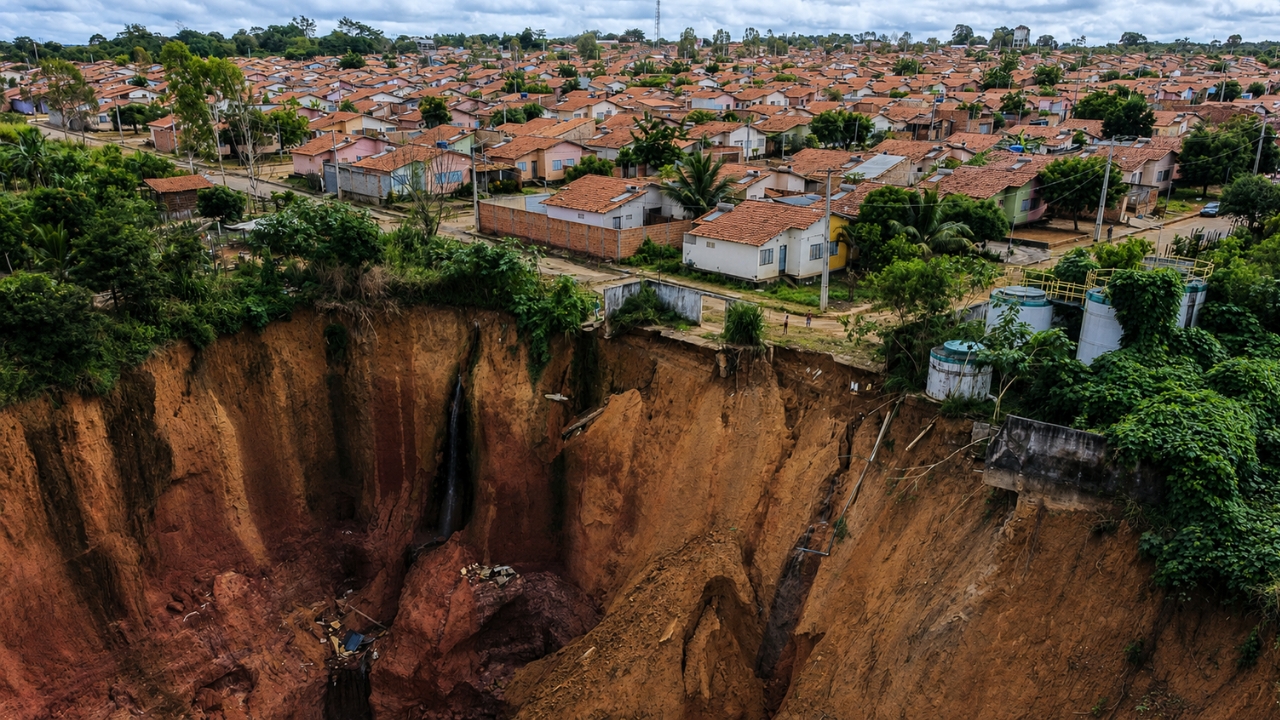
In Northeastern Brazil, 1,200 Residents Face a Silent Nightmare as Giant Sinkholes Threaten Entire Neighborhoods
-
Astronauts Returning from Space Show Altered Gut Bacteria and Loss of Protective Microbes, Highlighting Potential Risks for Mars Missions


The sequence of losses directly hit the heart of the business. What was being prepared to become wine ended up destroyed by the force of the water, while essential equipment remained under the mud.
Even in the face of destruction, the family decided to continue. Part of what remained of the tragedy was transformed into a product, while the producers tried to reorganize the winery and keep the activity alive.
From R$ 1.5 million in losses to a new beginning in the countryside

The financial impact was not small. In three years of floods, the property accumulated losses that compromised machines, production, and part of the structure used in daily work.
The recovery demanded more than courage. The family had to find ways to continue producing, recover what was possible, and face a reconstruction that is still expected to take years.
The turnaround began to gain momentum with the new harvest. After so much loss, the above-average harvest brought a breath of fresh air to producers who spent months living with mud, losses, and uncertainty.
Serra Gaúcha tries to rebuild after the worst climate tragedy in RS
The reconstruction of the Argenta family is not happening in isolation. Viticulture in Serra Gaúcha was also affected by one of the toughest periods in Rio Grande do Sul’s recent history.
The state has about 15,000 families directly involved in grape cultivation, mostly family farmers. Approximately 42,400 hectares are planted, with 36,600 hectares concentrated in Serra Gaúcha.
This region supports a large part of the state’s wine, juice, and sparkling wine chain. Therefore, when the mud hit rural properties, the impact was felt far beyond the wineries.
Harvest of 905 thousand tons becomes a sign of turnaround after years of losses
After years marked by losses, the new harvest arrived as an answer to the fear that many producers would not be able to recover. The production estimated by Emater/RS-Ascar could exceed a considered normal harvest by 5% to 10%.
The winter of 2025 helped the performance of the grapevines. In several regions, there were more than 400 hours below 7.2 °C, an important condition for uniform budding and good cluster formation.
Even with a 10 to 15-day delay at the start of the harvest, initial analyses indicated good quality of the grapes received by the wineries. For families punished by the mud, each harvested bunch gained the weight of reconstruction.

Technology becomes a shield against extreme weather
Reconstruction also involves technology. Producers have been investing in protected cultivation, a system that covers vineyards to reduce damage caused by intense rain and decrease fungal diseases.
The technique can reduce the occurrence of fruit diseases by up to 90%, in addition to allowing direct irrigation of the soil. But this advancement comes with a heavy price: implementation can cost up to R$ 450,000 per hectare, precisely in a region where many producers are still trying to recover after millionaire losses.
Even expensive, the system has become a bet in the face of increasingly unpredictable weather. For many farmers, protecting grapes has ceased to be a luxury and has become a matter of survival.
New grapes enter testing to save production
In addition to covering vineyards, producers are also seeking new grape varieties. In Santa Teresa, João Paulo Berra’s family maintains an experimental area with about 50 European varieties.
Among them is Palava, a grape originating from the Czech Republic. Being early, it helps to better distribute the harvest and avoids excessive pressure on the industry during peak periods.
The new varieties entered the field as an attempt to protect production, stagger the harvest, and reduce risks in a region increasingly pressured by extreme weather.
Tragedy affected almost the entire state
The 2024 floods left deep marks on Rio Grande do Sul. Official data from the Civil Defense indicate 478 affected municipalities, over 2.3 million people impacted, and 185 confirmed deaths in the balance updated in August 2025.
The water destroyed homes, roads, crops, businesses, and memories. In the countryside, the mud didn’t just take production: it took months of work, family income, and part of the security of those who depend directly on the land.
Even after the destruction, the Serra Gaúcha returned to harvest. The new crop arrived as a direct response to the fear that many producers would not be able to get back on their feet after the mud.
Tradition that runs in the blood
Viticulture in the Serra Gaúcha has deep roots, linked to the arrival of Italian immigrants in 1875. In many families, grape cultivation passed from father to son and became more than an economic activity.
For producers like João Paulo Berra, returning to the property during harvest is keeping the family’s history alive. Even working in the city, he returns every year to participate in the cycle that marked generations.
The grape, in this part of Rio Grande do Sul, is not just a product. It is heritage, identity, and sustenance for thousands of families.
Where does the wine that survived the mud come from?
Gaúcho wine is born mainly in the Serra, where the climate, relief, and family tradition have shaped one of the most important chains in regional agribusiness.
Most of the state’s production consists of American and hybrid grapes, which represent about 85% of the total. Vinifera grapes, used in fine wines and sparkling wines, occupy between 12% and 15% of the planted area.
After machines covered in mud, lost production, and millionaire losses, the Argenta family managed to keep the winery alive. The strong harvest in the Serra Gaúcha became the portrait of a recovery that seemed impossible at the height of the tragedy.
What almost disappeared under the water now helps tell the story of the reconstruction of a family that decided to stay in the countryside even after losing almost everything.
Do you believe a family can recover after losing production, machinery, and accumulating millionaire losses in the mud? Comment and share this story of reconstruction in the countryside.
With information from Globo.


