






 Portuguese
  Spanish
  5 min of reading
  0 comments


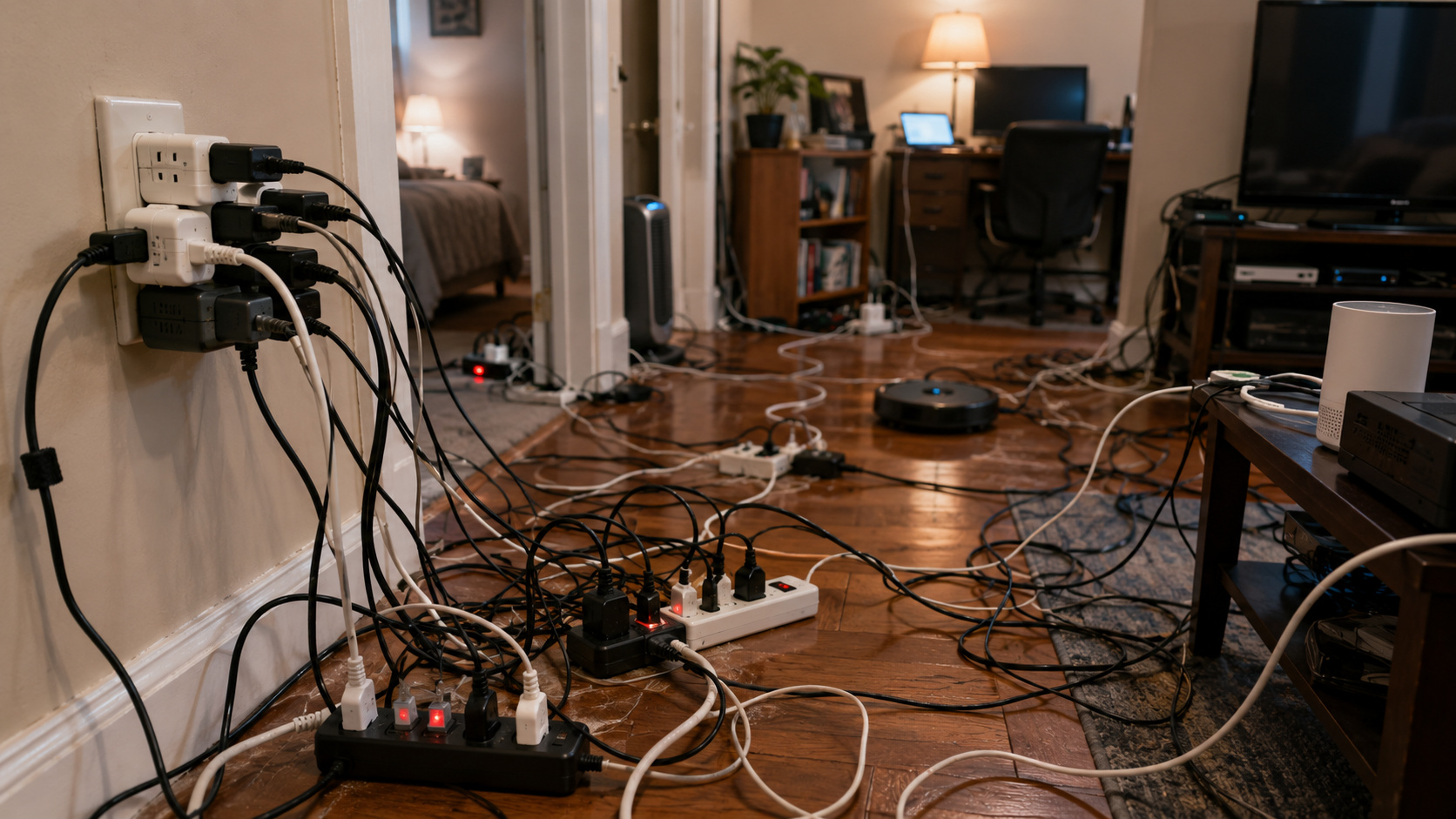
Overloading outlets with too many devices increases fire risk; electrical failures already cause 47.7 thousand fires per year in the US, warns ESFI.
Overloading the electrical network at home remains among the most dangerous and underestimated habits of domestic routine. The Electrical Safety Foundation International (ESFI) states, based on data from the National Fire Protection Association (NFPA), that electrical failures or malfunctions are linked to 47,700 residential fires per year in the United States, with 418 deaths, 1,570 injuries, and $1.4 billion in property damage. The ESFI itself highlights that overloaded circuits are among the main causes of these fires.
The risk increases because modern homes concentrate more electronics, chargers, appliances, and heating devices on an infrastructure that has not always kept up with this increased demand. When multiple devices compete for the same outlet, the sense of normalcy can last until excessive heating appears in the form of a burning smell, hot outlet, tripping circuit breaker, or, in the worst-case scenario, fire.
Power strips do not create extra power and can mask a dangerous overload
One of the most common mistakes at home is believing that power strips, surge protectors, extensions, or adapters multiply the electrical capacity of the wall.
-
Goodbye traditional laundry: Roborock launches washer and dryer with super hydrolysis, microbubbles, 99.99% sterilization, low-temperature drying, automatic detergent, app control, and cycles to remove stains, odors, mites, and bacteria from clothes.

-
It is now possible to generate energy without batteries: new flexible material transforms body heat into electricity and paves the way for more efficient, autonomous, and comfortable wearable devices, with the potential to revolutionize personal electronics in the coming years.

-
Leaving the charger plugged in without a phone consumes energy or is it a myth? Experts call the phenomenon “phantom consumption” and warn that dozens of devices on standby can add up on the bill over the year.
-
It accompanies Earth, but it is not a moon: Chinese probe reaches Kamo’oalewa and begins an unprecedented mission to investigate where the strange asteroid came from, what its internal structure is like, and whether its origin is linked to an ancient collision that launched fragments of the lunar surface into space.


The ESFI warns that these devices only add more connection points; they do not increase the amount of energy the circuit can safely provide.
Therefore, filling a single outlet with several high-load devices remains a risk scenario, even when everything looks visually organized.


The entity’s recommendation is straightforward: large appliances should be plugged directly into the wall outlet, without an extension or multiple converter.
The same guidance applies to devices that generate heat, such as portable heaters, electric kettles, hair dryers, fryers, and microwaves: the ESFI recommends plugging in only one heat-producing device per outlet at a time.
Hot outlet, burning smell, and tripping circuit breaker are warning signs of the installation
Overload usually gives signs before causing a major accident. On the page “Don’t Overload Your Home,” ESFI lists as indicators of an overloaded circuit flickering or dimming lights, circuit breakers frequently tripping, hot or discolored outlet plates, crackling, sizzling, or buzzing sounds in outlets, burning smell, and even mild shock or tingling in appliances, switches, or receptacles.

Correctly reading these signs is essential. ESFI explains that the circuit breaker exists precisely to interrupt the current when the level is no longer safe.
In another guideline on the residential electrical system, the entity states that a tripped circuit breaker is likely reacting to too many appliances overloading the circuit and that this problem should be corrected immediately, not ignored.
Excessive extension cords, power strips, and daisy chaining increase the risk inside the house
The constant reliance on extension cords is also treated as a sign of a structural problem. ESFI states that the heavy and continuous use of these accessories often indicates that the house has insufficient outlets for current needs, which requires evaluation by a qualified electrician and, when necessary, the installation of new power points.
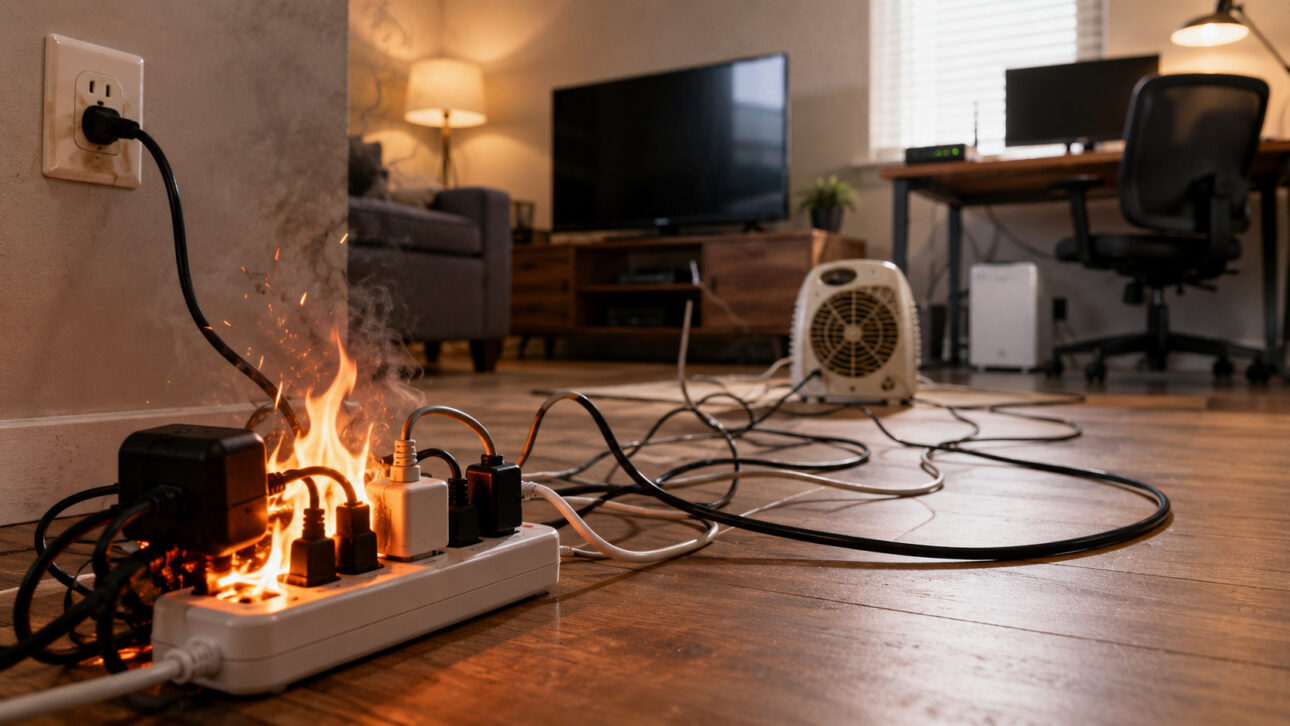
Another dangerous mistake is turning the extension cord into a permanent solution. In guidelines on extension cord safety, ESFI states that they should not replace the home’s fixed wiring, should not be used for more than one appliance, and should not pass through walls, doors, ceilings, or floors. The entity also warns that when the cord is covered, heat cannot escape properly, which can create a real fire risk.
This recommendation directly addresses a very common habit: hiding wires under rugs, carpets, or furniture. The problem is that the cord stops dissipating heat as it should and can overheat out of sight, prolonging the risk without the resident noticing.
Simple prevention reduces the risk of electrical fire and protects the installation
Prevention starts with basic, yet decisive measures. The ESFI recommends not using extension cords or multiple converters for high-power appliances, avoiding plugging multiple heating devices into the same outlet, and stopping the use of power strips as a definitive solution for the lack of electrical outlets.
In homes where this dependency has become routine, the guidance is to have the installation reviewed by a qualified professional.
Protection can also be enhanced with specific devices. In a document from the U.S. Consumer Product Safety Commission (CPSC), the agency’s technical team states that the inclusion of AFCIs, circuit breakers designed to detect electrical arc faults, could have prevented 50% or more of residential fires related to electrical distribution systems.
This does not eliminate all risks, but it shows that the combination of proper installation, correct use of outlets, and modern protection significantly reduces the chance of tragedy.
Electrical overload is silent until the moment it is not
The biggest problem with electrical overload is precisely that it seems harmless most of the time. The outlet continues to work, the power strip remains full of plugs, and nothing happens immediately.
This gap between habit and damage is what turns a common practice into a hard-to-detect threat. When signs appear, such as heating, darkening of the outlet, strange smells, or circuit breakers tripping repeatedly, the installation is already warning that the limit has been exceeded.
Therefore, the safest way to address the problem is not to wait for the defect to appear, but to reduce the load on the circuit before overheating progresses.
In residential electrical safety, the cost of prevention is always less than the price of a serious failure, the loss of appliances, and, in the most extreme cases, a fire inside the home.





Be the first to react!