Portuguese
  Spanish


With 673 kilometers in length and up to 1,470 meters in depth, Lake Tanganyika spans four countries, contains 16% of the surface liquid freshwater, and hosts more than 2,000 species, many of them endemic to the region
Lake Tanganyika, identified as the world’s largest lake by length among freshwater lakes, stretches 673 kilometers in Africa, reaches 1,470 meters in depth, and spans four countries.
Largest lake in the world holds 19,000 cubic kilometers of water
According to geopop, located in Africa, Lake Tanganyika has a narrow and elongated shape. According to the Guinness World Records, its maximum length reaches 673 kilometers, while its width varies between 16 and 72 kilometers.
This length would be enough to cover almost the entire Italian peninsula if it were projected between Milan and the outskirts of Bari. The comparison highlights the distance occupied by the lake in African territory.
-
In the Atacama Desert, engineers make a 3,500-ton structure rotate on a film of oil just 80 micrometers thick and even push by hand the largest optical telescope under construction on the planet.

-
Scientists drill 2.8 km of ice in Antarctica, retrieve a frozen capsule at least 1.2 million years old, and open the oldest archive of the atmosphere to discover why ice ages changed pace.
-
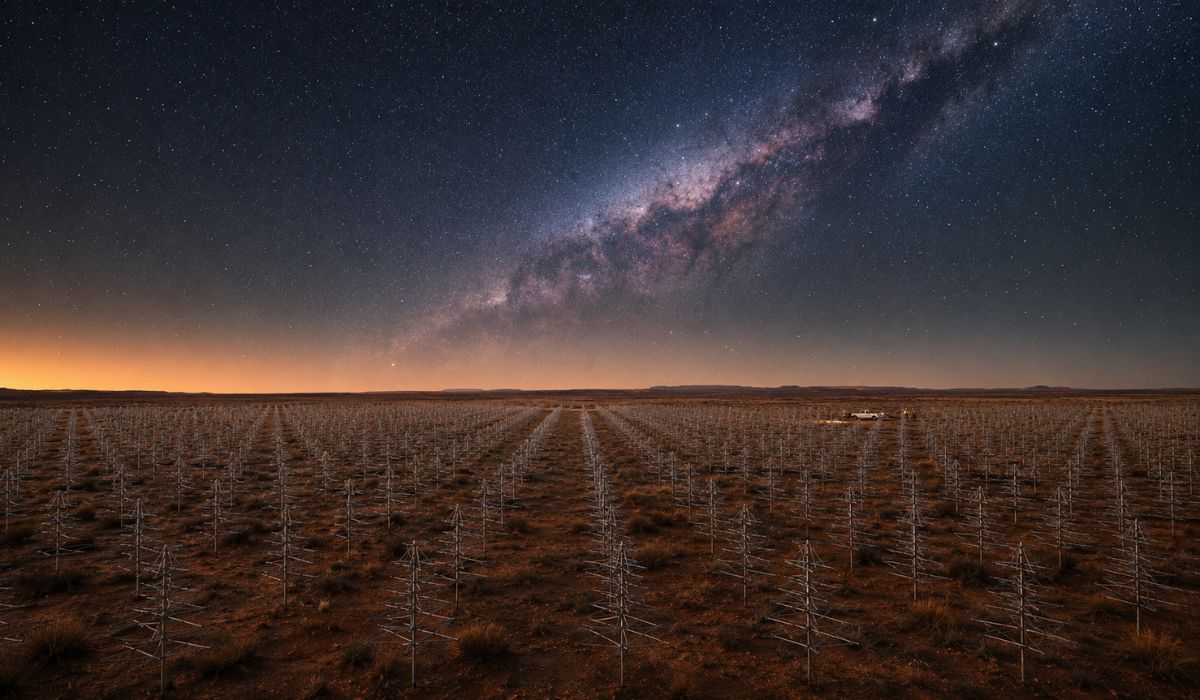
Australia begins to spread a forest of 131,072 antennas across the desert and, using only 1,024 of them, is already seeing galaxies billions of light-years away before the largest radio telescope on the planet is completed.
-
Man lives 105 days without a human heart after receiving a 650-gram titanium pump with a rotor that floats by magnetism, leaves the hospital in a world first, and gains time until receiving a transplant.



The depth is also among the most impressive numbers. The deepest point is approximately 1,470 meters, while the average depth is about 570 meters.
With this measurement, Tanganyika ranks as the second deepest lake on Earth, second only to Lake Baikal, located in Russia.
The basin contains almost 19,000 cubic kilometers of water. This volume corresponds to approximately 16% of all the liquid freshwater available on the Earth’s surface.
Currently, its waters reach four countries: Burundi, Democratic Republic of the Congo, Tanzania, and Zambia.
Formation began up to 12 million years ago
The shape of Lake Tanganyika is directly related to its tectonic origin. It is located at the southern end of the Western Rift Valley, an extensive rupture zone that crosses part of East Africa.
In this area, the Somali Plate is being pushed eastward, while the Nubian Plate remains to the west. The movement causes the stretching of the Earth’s crust and opens large cracks in the rocks.
This process began between 9 million and 12 million years ago. With the geological movement, central blocks of the crust sank and formed depressions known as grabens or rift valleys.
At the same time, the sides of these structures rose, creating steep cliffs. The combination of these movements produced a long, narrow, and very deep basin.
Over millennia, tropical rains and regional rivers filled the depressions with water. This process contributed to the formation of the chain of the African Great Lakes, of which Tanganyika is a part.
The geological fault continues to separate the Somali and Nubian plates, keeping active the dynamics responsible for the formation of the region.
Isolation favored more than 2,000 species
The depth and geological isolation of Lake Tanganyika created conditions for the development of a unique biodiversity over millions of years.
The ecosystem is home to more than 2,000 species of animals and plants. More than half of them are endemic, meaning they cannot naturally be found anywhere else on the planet.
Among the groups present are fish from the cichlid family. The lake hosts more than 250 different species, known for their varied colors and complex social behaviors.
The number of exclusive species makes Tanganyika a significant area for observing evolutionary processes developed under prolonged isolation conditions.
Climate change, fishing, and pollution threaten biodiversity
Despite its size and high volume of water, Lake Tanganyika faces threats that directly impact its ecosystem.
Among the cited problems are climate change, overfishing, and pollution associated with the rapid population growth in areas near the shores.
These pressures affect an environment that hosts thousands of species and concentrates a significant portion of the planet’s surface liquid freshwater.
Besides the numbers recognized by the Guinness World Records, the lake remains a record of African tectonic activity and the development of isolated species over millions of years.