






 Portuguese
  Spanish
  3 min of reading
  8 comments


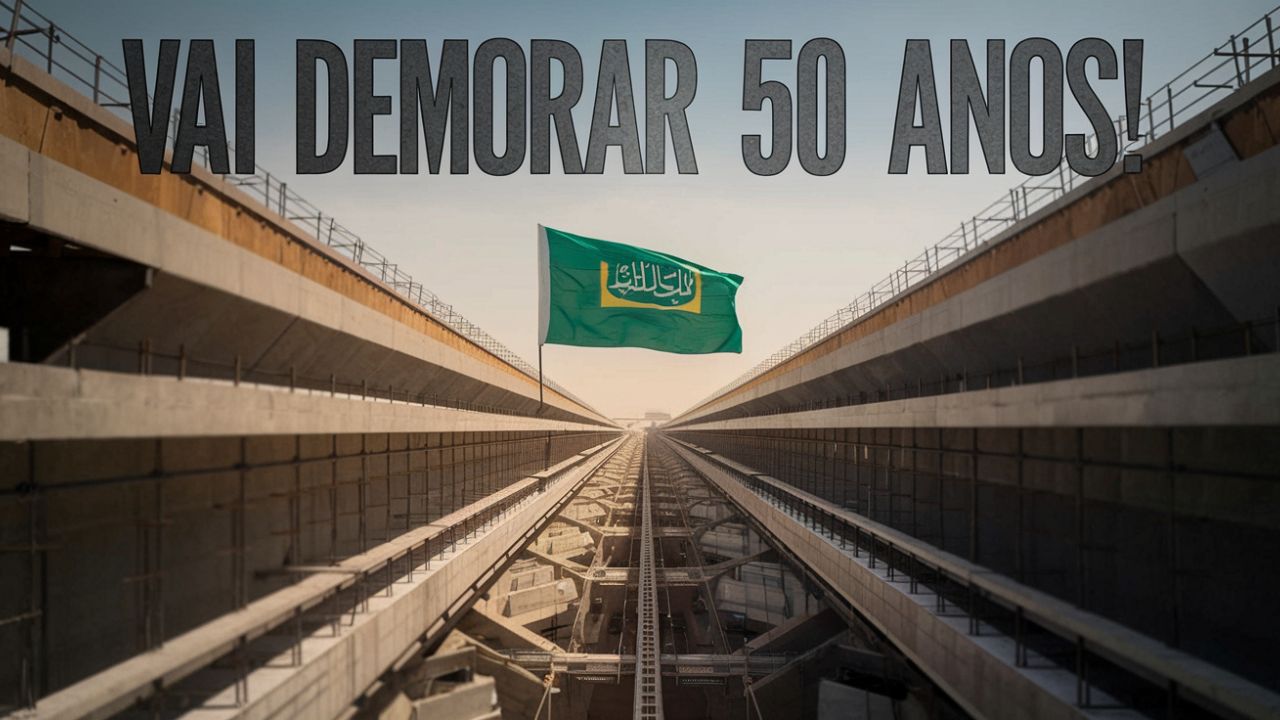


Planned to House 1.5 Million People over 170 km, The Line Faces Criticism for Delays, Investment Difficulties, and Reports of Over 21,000 Worker Deaths Since the Project’s Inception
Saudi Arabia has drawn global attention with ambitious projects, but few have generated as much curiosity as The Line, a planned megacity that promises to reinvent the concept of urbanization. However, the Saudi government recently admitted that the project will take at least 50 years to complete. The question remains: why the delay and what are the real challenges of this monumental endeavor?
What Is The Line and Saudi Arabia’s Vision
The Line is part of the Neom project, a key component of Vision 2030, which aims to diversify the Saudi economy, currently dependent on oil. With a length of 170 kilometers and only 200 meters wide, the city would be completely sustainable, housing 1.5 million people in a vertical structure covered by mirrors. Internally, luxury and cutting-edge technology would be at the forefront, featuring artificial intelligence systems and ultra-fast transportation.
The idea behind The Line is not just to create a city but a global symbol of innovation and modernity. By challenging traditional concepts of urbanization, the project aims to place Saudi Arabia at the center of the world stage. However, transforming a desert into a technological oasis is no easy task.
-
Without a mansion, without high investment, and without a traditional classroom, a teacher living in a 22 m² house taught students to build a 9 m² studio apartment with the equivalent of R$10,000.

-
Largest bridge in São Paulo reaches 75% completion and is expected to strengthen strategic connection in the interior of São Paulo.

-
Without her own home and pressured by rent, a 25-year-old bought a small 15-meter boat, gradually renovated the interior by herself, transformed the interior with paint, new flooring, a larger bathroom, and started living on the canals, paying much less per month.
-
Tired of seeing families sleeping on the street, São Paulo delivered 18 m² furnished microhouses and took 888 people off the streets: Vila Reencontro became the model social housing for the homeless population.


The Challenges Faced by The Line Project
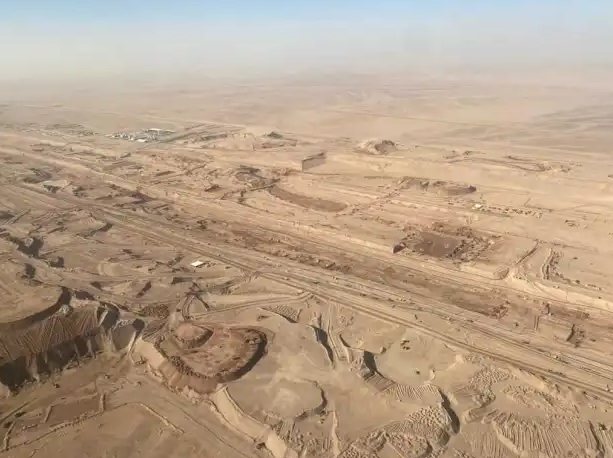
Initially, the government promised The Line would be operational by 2030. However, Finance Minister Mohammed Al-Jadaan revealed that the complete project will take more than 50 years. “We are not fools,” he said, highlighting that building a city of this magnitude requires long-term planning.
The lack of international investors has been another obstacle. Analysts suggest that skepticism regarding the feasibility of the project and the high costs involved deter potential funders. The dependency of the Saudi economy on volatile oil prices exacerbates the situation.
The Human and Ethical Impact of Construction
Behind the grandeur of the project lies an alarming human cost. Reports indicate that over 21,000 migrant workers have died since the beginning of Vision 2030, many in conditions that border on slavery. Claims of unpaid wages and exhausting work hours have tarnished the image of the endeavor.
Although The Line is promoted as a model of sustainability, critics warn about the ecological damage. Large-scale construction threatens unique ecosystems in the Red Sea, in addition to requiring exorbitant amounts of energy and water to maintain its operations.
A Long-Term Bet
With the new completion forecast set for 2070, the government hopes to deliver a city that will be a landmark in the history of architecture and urbanism. Nonetheless, experts point out that significant adjustments will be necessary to achieve the stated objectives.
Global perception of The Line remains divided. While some view the project as a visionary milestone, others consider it a risky bet, especially due to criticism regarding human rights and environmental impacts.
The Line is a project that blends innovation, ambition, and controversies in equal measure. While the idea of a futuristic megacity is fascinating, the human and environmental cost already raises difficult questions. The Saudi government insists it is not folly, but a long-term vision.


Parem para analisar, essa é uma cidade para milionários/bilionários se consideramos os custos. Mas nela não haverá ruas. Então não será possível ostentar ferraris ou outros super carros. Não será possível construir mansões e ostentar de outras formas. Os endinheirados não farão muita questão dessa proposta aí. E os menos abatados não terão condições financeiras para bancar isso. É questão de tempo para lermos a noticiar de que esse projeto vai virar nada.
Kkkkkkkkkkkkk
Bem feito!!
Planejam na verdade uma prisão, com as pessoas emparedados no luxo. Sem horizontes. Isso acarretará doenças em pouco tempo. É um mundo distópico.
Projeto foi abandonado no final de Novembro.