






 Portuguese
  Spanish


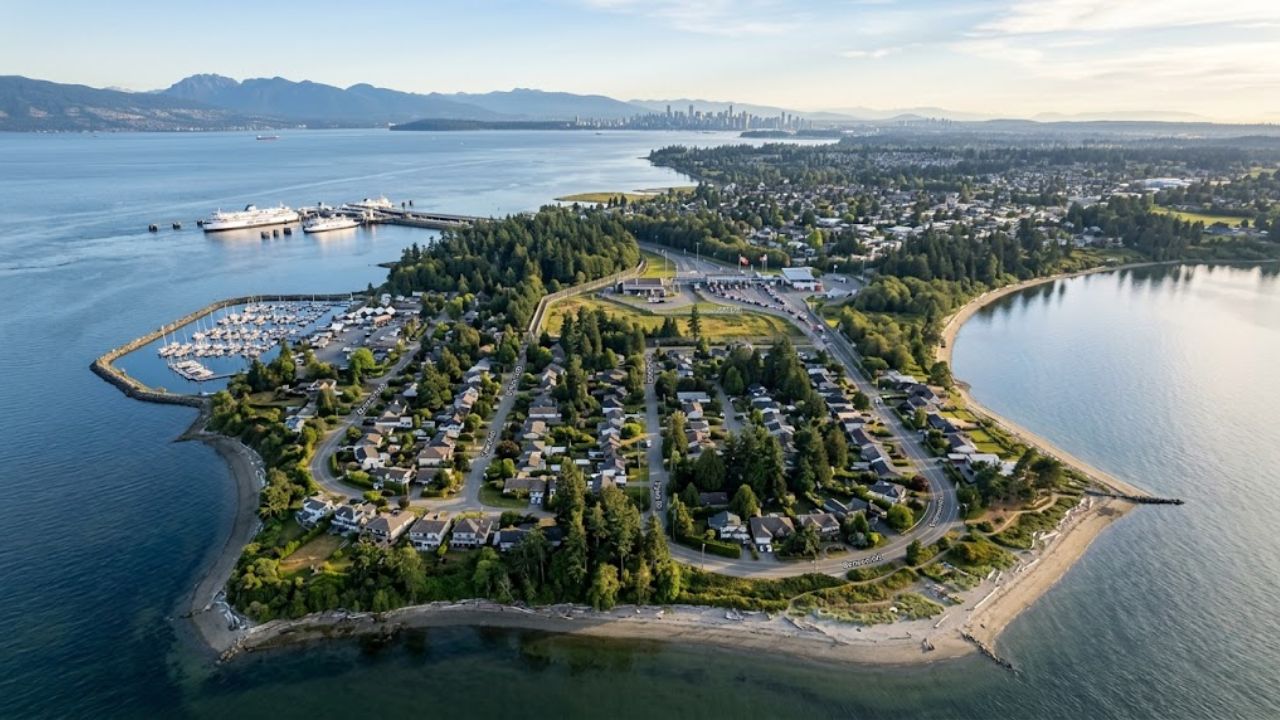

Point Roberts is a piece of the USA accessible only through Canada. Learn how an 1846 treaty created this enclave and how its residents live today.
In 1846, a treaty between the United States and the British Empire set the American border along the 49th parallel — a straight line that completely ignored the coastline’s shape. The result was a geographical accident that persists to this day: the small peninsula of Point Roberts, in the state of Washington, became physically connected to Canadian territory but politically belongs to the USA. Anyone living there who wants to reach any American city by land must, necessarily, cross Canada — and pass through two international checkpoints in each direction.


The routine of those living in Point Roberts: bureaucracy even for the basics
The isolation of Point Roberts is not just geographical — it translates into practical obstacles for daily life. Simple tasks, such as going to the supermarket, seeing a doctor, or taking children to school, require crossing the international border. This means documentation, queues, and the additional time that crossing demands.
Among the peculiarities that mark the lives of residents, the following stand out:
-
Workers renovating a playground in northern England uncover 176 World War II bombs buried underground; training artifacts still contained explosives.

-
Brazilian Architect Transforms Waste into Sustainable Homes with Solar Power and Rainwater Systems for 40 Years

-
Security Guard Becomes Doctor at Louisiana Hospital Where He Once Worked, Studied Chemistry Between Shifts

-
Woman Rescued from Luxury Complex in Brazil Worked Without Pay for 55 Years, May Be Entitled to Over $300,000




- Students attending American public schools need to cross four border checkpoints every day — two on the way, two on the return
- Basic products undergo customs screening before reaching residents, which increases the cost of everyday items
- Emergency services — such as ambulances and police cars — depend on international cooperation agreements to move between the two countries swiftly
- Monitoring of the region involves joint action by US immigration agencies, like CBP (Customs and Border Protection), and census bodies to ensure sovereignty over the territory
Why some still choose to live in Point Roberts
Despite logistical difficulties, the locality attracts residents who seek exactly what isolation provides: tranquility, low crime rates, and the slow pace of a small coastal community.

The distance from major urban centers functions, for some residents, not as a disadvantage — but as an attraction.
Therefore, Point Roberts is at the same time a historical anomaly, an administrative challenge, and a deliberate lifestyle choice for those who decide to stay — or move there.
With information from Revista Forum


