Portuguese
  Spanish




International Standard-Based Plug Design Brought Advances in Electrical Safety to Brazil, but Its Adoption Is Marked by Phases, Technical Differences, and Curiosities About the Diversity of Plugs Worldwide.
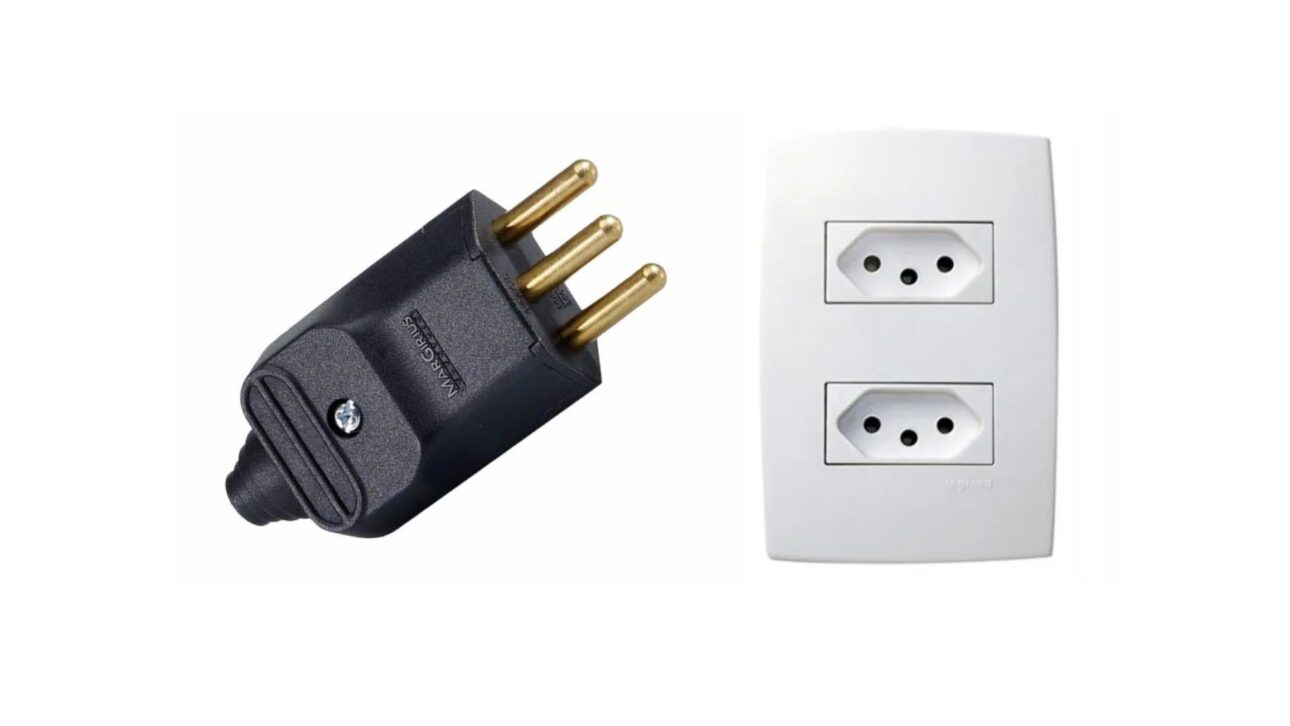
The three-prong plug, known nationally as the Type N standard, has transformed the electrical infrastructure of Brazilian homes over the past decades.
Since the publication of ABNT NBR 14136 in 1998 and its gradual implementation throughout the 2000s, Brazil has become a pioneer in the widespread adoption of this standard, which brought profound changes in terms of electrical safety and standardization for consumers, industry, and construction.
Contrary to what many believe, the Brazilian standard is not entirely exclusive, but part of a small group of countries that based their norms on IEC 60906-1, including Paraguay and, in transition, South Africa.
-
Six-Year-Old Brazilian Prodigy with IQ of 162 Joins Mensa, Surpassing Scores of Einstein and Hawking

-
Iowa Teen Turns Farming Simulator Success into Reality, Buys 250-Acre Farm for $1.8 Million with 1.3 Million YouTube Subscribers
-
Santos Transforms Brazil’s Largest Stilt Slum with $5.7 Million Project, Replacing Shacks with Elevated Homes and Infrastructure

-
Motorcycle Accident Inspires World’s First Fully Automated Cassava Biscuit Factory Producing 1,000 Tons Monthly




Timeline of the Mandatory Implementation of NBR 14136 in Brazil
The standardization of plugs in Brazil did not occur abruptly or limit itself to a single year.
The NBR 14136 was published by the Brazilian Association of Technical Standards (ABNT) in 1998, inspired by the international standard IEC 60906-1, and nationally introduced by the National Institute of Metrology, Quality and Technology (Inmetro) in 2002.
The mandatory implementation came in phases:
- In 2001, Inmetro determined that manufacturers and importers could only sell plugs and sockets within the standard starting in January 2005.
- Retailers were given until January 2006 to adapt their inventories.
- Plugs and sockets attached to electrical appliances were given an extended deadline until January 2010.
- In December 2006, Resolution Conmetro No. 11 made compliance with NBR 14136 mandatory throughout the country.
- The year 2011 marked the consolidation of the standard in the national market, but not the start of the obligation.
This gradual process allowed the industry to adapt, replace old stocks, and prepared consumers for the change.
Why Was the Type N Standard Chosen in Brazil?
The main technical reason for choosing Type N was to increase the level of electrical safety in homes.
The third prong, dedicated to grounding, helps reduce the risk of shocks and fires by diverting any potential currents to the ground, protecting the user in case of failures.
Additionally, standardization aimed to combat the proliferation of adapters and “benjamins,” which were common in Brazilian homes due to the former diversity of plug models.
According to Inmetro, the implementation of NBR 14136 helped reduce domestic accidents and made the quality control of electrical appliances more stringent.
Adoption of the Type N Standard in Other Countries: Paraguay and South Africa
Although Brazil is internationally recognized for leading the adoption of the Type N standard, other countries are also following this trend.
Paraguay approved a standard based on IEC 60906-1 (PNA-IEC 60906-1) in 2022, currently voluntary but expected to become mandatory in the future.
South Africa incorporated the SANS 164-2 standard (compatible with IEC 60906-1, locally referred to as Type N) in 2013, making it mandatory to have at least one Type N socket in new installations starting in 2018. However, other standards, such as Type M and Type C, remain legal and widely used in the country.
Therefore, the Brazilian standard is not exclusive but is part of a small pioneering group in adopting IEC 60906-1.
Technical Differences Between the Brazilian, International, and Swiss Standards
Although all “Type N” standards derive from IEC 60906-1, there are important technical differences.
In Brazil, NBR 14136 specifies two versions: one for 10 ampere current (4 mm pins) and another for 20 amperes (4.8 mm pins). The international standard specifies 16 amperes and 4.5 mm pins.
Another crucial point is the insulating sleeve on the phase and neutral pins: it is mandatory in IEC 60906-1 and the South African standard, but not required in the Brazilian standard, which implies a difference in safety.
The Swiss Type J standard, despite being visually similar to the Brazilian version, has different pin distances and arrangements, preventing direct physical compatibility between them.
These differences show that the Brazilian “Type N” is not fully compatible with other countries, even among those that adopted standards based on IEC 60906-1.
The Global Landscape of Socket Standards
Worldwide, there is a great variety of socket and plug standards, with types such as C (Europlug), E, F (Schuko), G (British), A and B (American), D, I, J, K, L, M, O, among others.
Type C is common in low-power devices in Europe, but grounded standards like E, F, and G predominate in various regions.
The enormous diversity complicates the universal adoption of a single system and makes standardization a global challenge.
Impacts of the Adoption of the Type N Standard in Brazil
The obligation of the three-prong socket brought clear impacts:
- Reduction of domestic electrical accidents, especially shocks and fires.
- Increased durability of electrical devices.
- Stricter control over the entry of imported products.
- Improvement in the traceability of equipment in the market.
- The need for adaptation of old buildings, with costs and initial resistance from consumers.
The Type N standard helped to elevate the level of electrical safety in Brazil, even facing criticism and resistance at the beginning of its implementation.
Today, the three-prong socket is seen as a symbol of this new phase of Brazilian electrification, but it still generates debates and curiosities—especially when compared to systems around the world.
Will more countries adopt the Type N standard in the future, or will Brazil remain a pioneer in a select group of nations that seek to advance electrical safety through standardization?