






 Portuguese
  Spanish
  3 min of reading


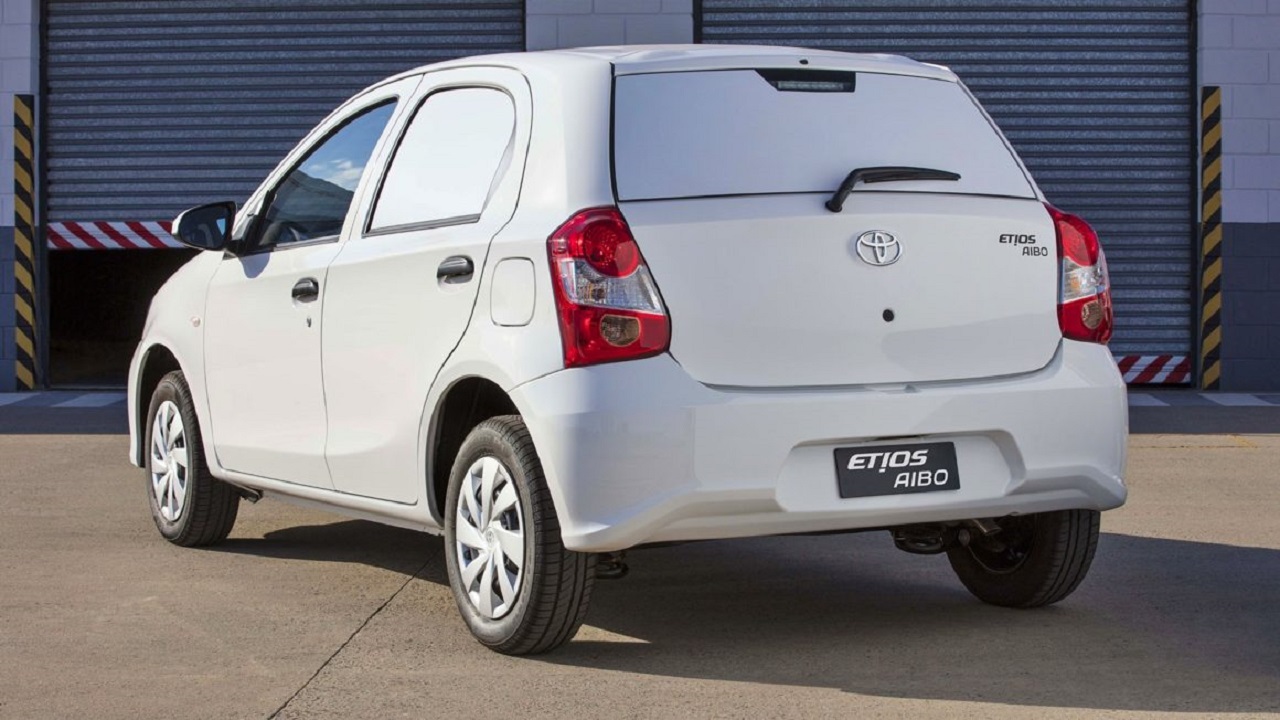
Toyota Is Converting Used Etios Cars Into Vans to Create a Kind of Recycling of the Model
The Japanese Toyota plans to transform all regular Toyota Etios cars into vans. The Aibo, for example, is the utility version of the model, sold in Argentina and produced in Sorocaba (SP). Although the model has not been on the national market since April, the Toyota Etios Aibo, in its van version, will also be sold in the country. The automaker’s idea is intriguing: to convert used cars from its rental service, Kinto, or purchased from its network of stores into vans. The conversions will occur according to the demand from the rental service’s clients, which is exclusive to corporate fleets.
Read Also
Used Toyota Cars Had Their Rear Ends Adapted for Trunk Expansion
The adapted version is part of a project that, according to the automaker, aimed to maintain most aspects of the original Toyota Etios, such as the suspension, which remains the same in the utility version. This happens because the Toyota Etios had its rear end adapted, losing seats and other components, making room for a “trunk” of 1,200 liters and 450 kg of payload.
The new cars sold in Argentina leave the plant with a 1.5 engine, which offers 103 horsepower and a torque of 13.9 kgfm, aiming for low gasoline consumption.
-
Uber Faces Shareholder Scrutiny as Board Accused of Ignoring Safety, Compliance, and Harassment Warnings Amid Over 3,500 U.S. Lawsuits

-
Ferrari’s First Electric Car Divides Fans, Priced at $630,000, Amid Concerns Over Limited Editions; Brand Clarifies It’s Not Just for Future Perks
-
BYD Dolphin Mini: The Electric Car That Defies Depreciation, Losing Only 3.58% in a Year and Becoming the Best-Selling Retail Model Under $22,000

-
Electric Car JAC E-JS4 Loses $19,000 in Value in One Year, Leading Record Depreciation of Used Cars in Brazil Due to Expensive Battery and New Models


The Japanese company did not specify whether the conversion of used cars affects the engine to adapt to the new models, or if they continue with the same engine. For now, the service of converting used cars into vans will be offered only in SP, and Toyota states that the price will depend on the package chosen by the customer.
Main Changes After the Conversion Process of the Toyota Etios Line Into Vans
To ensure that products are securely placed in the cargo area, Toyota installed a sturdy floor with metal grids that act as protection so that the products transported in the used cars do not slide or move out of place. To be even safer, the converted Toyota Etios also features a grill partition between the cargo and passengers.
The side and rear windows of the van have also been modified, receiving a kind of adhesive that hides the cargo compartment. As standard, the van version of the used cars is equipped with power steering, electric trunk release, air conditioning, as well as a radio with CD, Bluetooth, MP3, USB, and auxiliary input.
Regarding safety, it is equipped with ABS brakes and front airbags for both the driver and the passenger. In addition, it features a hill-start assist and traction and stability controls.
Toyota Etios Conversion Is Something Exclusive to Argentina
According to KINTO Brazil’s commercial director, Roger Armellini, Toyota guarantees that the prices will be very attractive, focusing on medium and small businesses.
By offering such a conversion level on a reliable hatchback like the Toyota Etios, the automaker is starting a new business phase with KINTO, generating a more personalized service focused on the real demands of the company’s audience.
The idea of transforming models into vans is not new. In 2013, Fiat developed a similar version for the Uno, and in 2015, Renault also presented a van version of the Clio. However, for the Argentine market, Toyota’s idea is entirely new.





Be the first to react!