





 Portuguese
  English
  Spanish
  4 min of reading
  1 comment


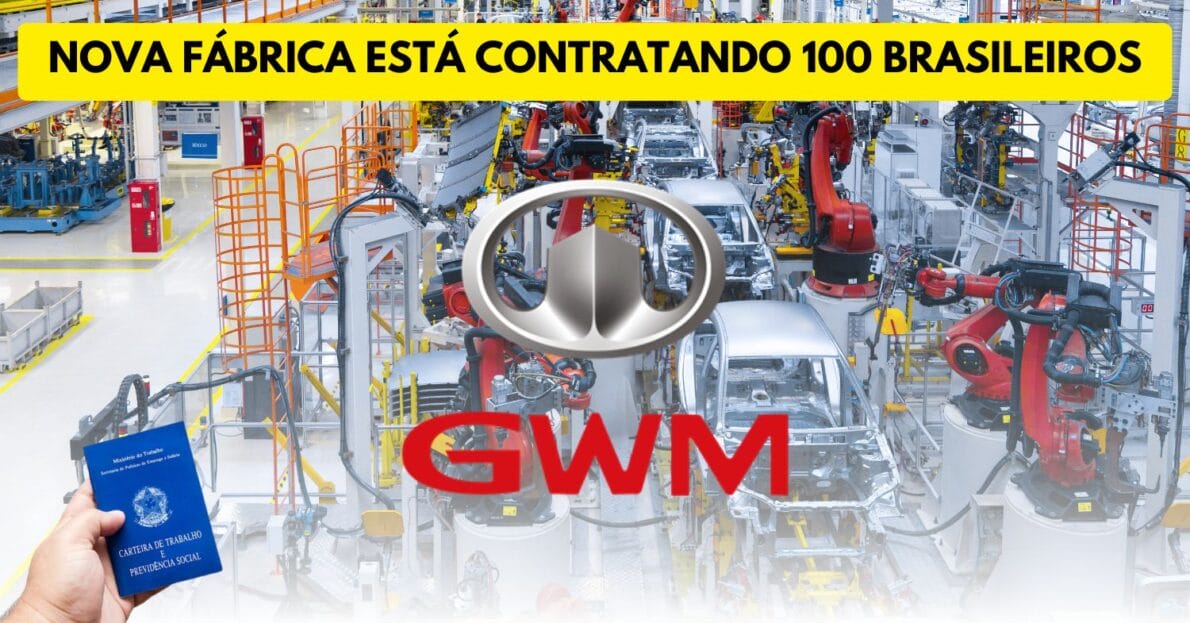

With an Investment of R$ 4 Billion by 2026, GWM’s New Factory Will Bring Hundreds of Job Openings and Promises to Revolutionize the Automotive Market with the Production of the Haval H6 Hybrid SUV.
GWM Brazil is taking a significant step in its operations in the country, with the start of hiring for its new factory in Iracemápolis (SP). The focus of this new unit will be the production of the Haval H6 hybrid SUV, with an expected start in the first half of 2025. GWM has already begun the selection process and plans to hire 100 new employees by the end of this year, aiming to reach 700 job openings by the beginning of production.
GWM Strengthens Presence in Brazil with New Job Openings and Investments
The arrival of GWM (Great Wall Motors) in Brazil is shaking up the automotive market. The Chinese company, one of the largest automakers in the world, has chosen Iracemápolis as the location for its new production unit, and the hiring process is already underway.
According to Ricardo Bastos, Director of Institutional Affairs at GWM Brazil, “the start of hiring marks an important advance for our operation in Brazil. We are committed to building a solid and highly trained team that will be essential for our production and growth in the region.”
-
Municipal Guard calls for applicants for a high school level position with a salary of R$ 7,000, benefits, bonuses, and additional payments that can increase earnings, more than 700 positions expected, and participation open to candidates from all over Brazil.

-
Work at Vale: mining company opens positions in roles such as industrial maintenance, equipment operation, and technical inspection in a new selection process with 206 opportunities, competitive benefits, and strengthening in the areas of mining, automation, and operational safety in Brazil.
-
Brazilian Army calls for professionals with higher education for a competition with 227 vacancies in the areas of Health, Law, Journalism, and IT
-
Samu calls for those interested in working one day and taking two days off in a new selection process with openings for mid-level positions, salary up to R$ 4,000, online registration, and opportunities open to candidates from all over Brazil.


The hiring for GWM’s new factory aims to form a technical and leadership team to set up production processes, expanding the assembly line and establishing a strong foundation for the start of production in 2025. The job openings at GWM are varied, with opportunities in several sectors, mainly for leaders who will be crucial in the development of production.
How Will GWM’s Selection Process Work?
The selection process has already begun, and the company is looking to hire the first leaders for the production sectors. The strategy is to form an experienced team responsible for implementing manufacturing processes and training the first employees. The training will be conducted internally, with the support of training programs provided by Senai, which is already working with GWM on training technicians for the brand’s dealership network.
As the project progresses, more job openings will be created, covering not only the production line but also areas such as administration, engineering, and logistics. GWM seeks qualified professionals and also plans to invest in the development of local talent, with opportunities for young people and those interested in entering the automotive industry.
Opening of GWM’s New Factory in 2025
The Iracemápolis factory is expected to open in the first half of 2025, with the initial production focused on the Haval H6 hybrid SUV, one of the most awaited models by GWM in Brazil. The inauguration ceremony is scheduled to take place in the middle of the semester, marking the official start of the company’s operations in the country.
The initial production capacity of GWM’s new factory will be 20,000 vehicles per year, but an expansion to 50,000 units is already planned within the next three years. This increase in production capacity is part of the automaker’s strategy to establish itself in Brazil and eventually begin exporting its models to other Latin American countries.
Nationalization and Focus on Sustainability
In addition to generating jobs at GWM, the new factory in Iracemápolis will have a strong focus on the nationalization of components used in vehicle production. Right from the start, the automaker intends to use a significant percentage of local materials, such as tires, glass, wheels, seats, and wiring harnesses. The goal is to achieve 60% nationalization within three years, which will open doors for exports and strengthen the factory’s competitiveness in the global market.
Another important aspect of GWM’s project is its alignment with sustainability policies. The factory has been approved by the Ministry of Development, Industry, Commerce, and Services for the Green Mobility and Innovation Program (Mover). This program is part of Brazil’s new industrial policy, which aims to encourage sustainable and innovative practices in the automotive industry. With this approval, GWM will be able to gradually transfer production processes currently carried out in China to the Brazilian unit.
Investment of R$ 10 Billion by 2032
GWM’s project in Brazil is part of an ambitious plan that totals R$ 10 billion in investments by 2032. In the first phase, which lasts until 2026, R$ 4 billion will be invested to modernize the Iracemápolis plant, increase production capacity, and ensure the use of cutting-edge technologies.
This investment will not only bring improvements to the infrastructure of the new GWM factory but will also enable the production of innovative and sustainable vehicles, aligned with the new global trends in the automotive sector. The company is determined to establish itself as one of the leaders in the hybrid SUV market in Brazil and Latin America.
Opportunities and Benefits of Job Openings at GWM
With the start of operations in Iracemápolis, GWM offers not only job openings but also opportunities for growth and professional development. The company is committed to creating an inclusive work environment focused on innovation and quality. Additionally, employees will have access to training programs and specialized training, which will be conducted both by the company itself and in partnership with Senai.
Benefits for those hired include competitive salaries, career development opportunities, and the chance to work in one of the most modern and technological factories in Brazil. GWM is also focused on sustainable practices, which includes the use of eco-friendly technologies in the production process.






100?!!! Nossa, é muita gente! Será que precisa de tudo isso mesmo?