






 Portuguese
  Spanish


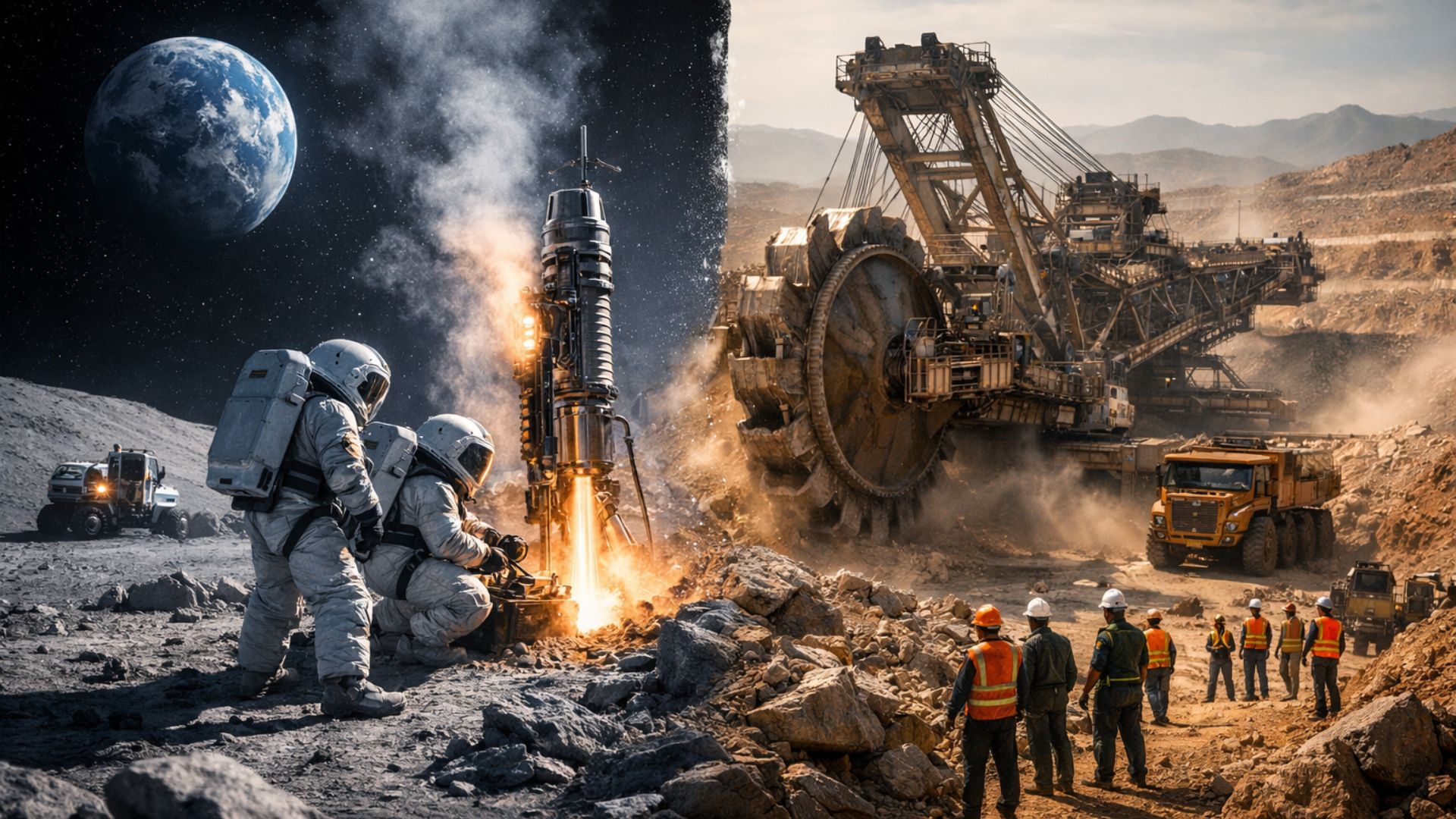

Strategic mineral reserve reignites global dispute over advanced nuclear energy and places China at the center of technology that still faces technical and economic barriers to leave the experimental field and reach relevant industrial scale.
China has placed thorium at the center of the debate over the next generation of nuclear energy after a geological survey cited by the South China Morning Post indicated that the Bayan Obo complex in Inner Mongolia may concentrate about 1 million tons of the element.
According to estimates, this volume would have the theoretical potential to supply the country for up to 60 thousand years, provided that the technology needed to exploit the ore on a large scale becomes viable.
The news gained traction because thorium has long been seen as a promise of a nuclear fuel more abundant than uranium and, in some projects, associated with systems that have a safety profile different from conventional reactors.
-
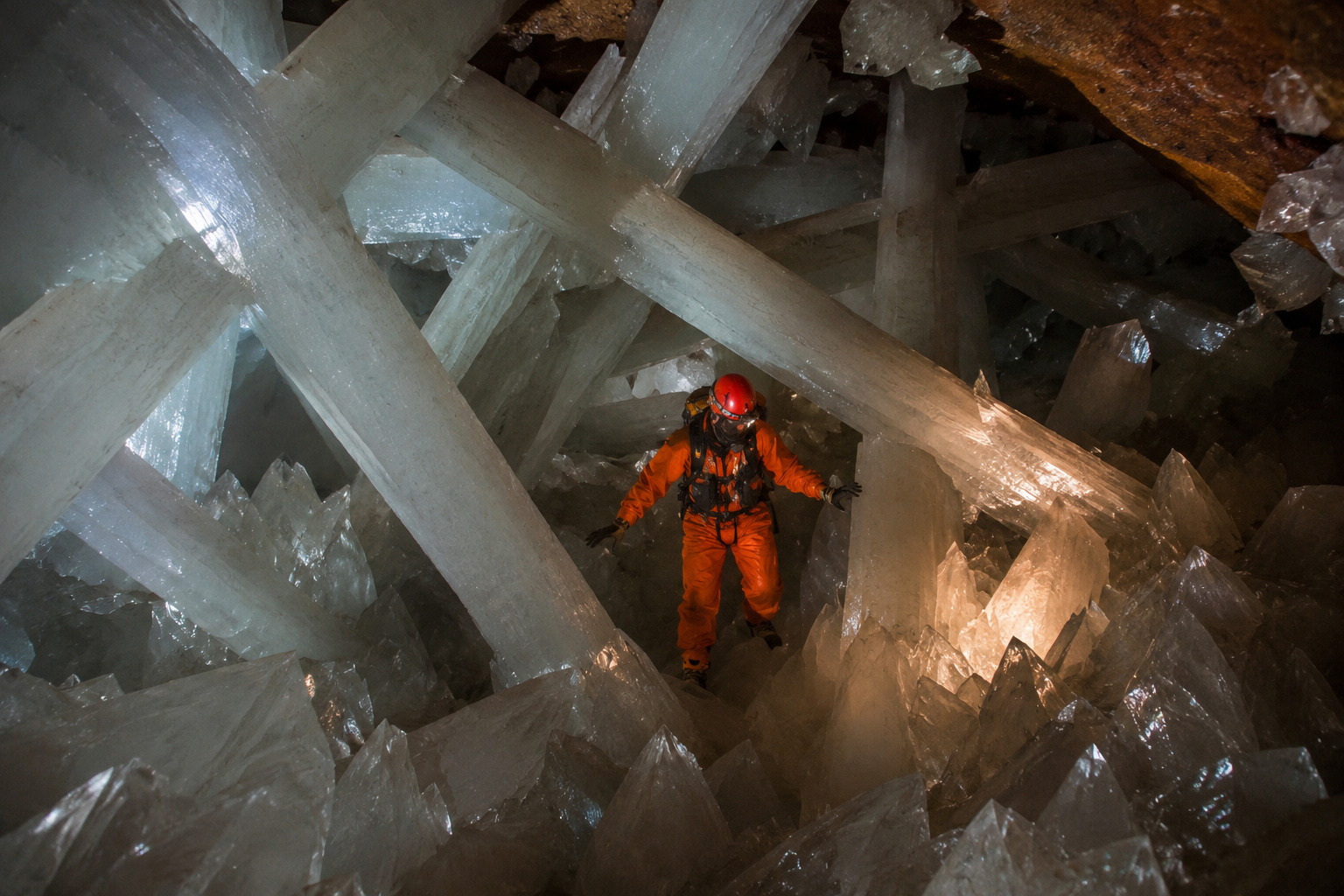
Mexico’s Giant Crystal Cave: A Deadly 58°C Underground Palace with 11-Meter Crystals Formed Over Nearly a Million Years

-
China Dominates Over 90% of Rare Earth Refining, Prompting Global Concerns: Canada and Japan Launch Billion-Dollar Plan to Reduce Dependency and Safeguard Batteries, Semiconductors, and Defense

-
Ancient Mines in Spain Reveal Tools and Metals That May Explain Bronze Age Trade with Scandinavia
-
XCMG Launches 240-Ton Mining Truck in Brazil, Promising Increased Productivity with Lower Fuel Consumption


At the same time, the figure of 60 thousand years needs to be understood as a projection linked to technical and industrial hypotheses that are still far from broad application.
Today, China already operates an experimental reactor linked to this line of research, but the conversion of this advance into relevant electrical production continues to be surrounded by challenges of cost, scale, and engineering.
Thorium reserves in Bayan Obo and energy impact
The starting point of this new attention is in Bayan Obo, an area known primarily for its reserves of rare earths, iron, and niobium.
It was there that Chinese scientists revisited the thorium present in tailings and mineralized structures already explored by mining.
The report states that the national survey identified 233 thorium-rich zones in China and highlights that, in Bayan Obo, the available material could change the dimension of the energy debate in the country.
The comparison made by researchers interviewed by the newspaper helps explain the impact of the data.
A geologist from Beijing, who spoke on condition of anonymity, stated that for more than a century nations have fought over fossil fuels and that the “infinite source of energy” would be underfoot.
This formulation draws attention but does not eliminate the difference between geological existence and industrial utilization.
Having relevant reserves is just the first step in a chain that depends on processing, suitable fuel, specific reactors, and strict regulation.
How thorium works in nuclear energy generation
Unlike uranium-235, thorium is not fissile on its own.
It is classified as fertile material, which means it needs to be converted, within an appropriate nuclear cycle, into uranium-233 to then sustain fission.
This point is central to understanding why thorium is of interest, but it has not yet replaced the fuels used today in most of the global nuclear fleet.
The appeal of the element lies in three fronts. The first is geological abundance, as thorium is more abundant in nature than uranium.
The second is technological, particularly highlighting molten salt reactors often pointed out as suitable platforms for this cycle.
The third involves waste and operational safety, with the expectation of reducing risks and generating less long-lived waste. Still, the history of the technology recommends caution.
Extracting the energy value from thorium in an economically competitive manner remains a challenge and requires significant investments in research and development.
Reactor in the Gobi Desert and Current Stage of Technology
The most concrete showcase of this strategy is in the Gobi Desert. China issued, in June 2023, the operating license for a thorium molten salt experimental reactor.
The project is led by the Shanghai Institute of Applied Physics and serves as a testing platform for a nuclear cycle that the country is trying to master before considering commercial scale.
This experimental reactor is not a conventional large-scale power plant.
It is a 2 MW thermal facility, primarily aimed at validating the technology.
In parallel, the country plans a larger demonstration unit with 10 MW electrical, with operation expected around 2030.
The difference between a prototype and a demonstration plant is crucial for measuring the distance between experiment and real application in the electrical system.
This advancement helps explain why China has come to be seen as the main reference on the subject.
Even so, the program involves uncertainties related to materials, costs, and industrial feasibility.
Global Energy Competition and the Strategic Role of Thorium
The interest in thorium is part of a broader competition for energy technologies and strategic minerals.
On April 30, 2025, the United States and Ukraine signed an agreement that granted Americans preferential access to new Ukrainian mineral deals.
The move exposed the geopolitical weight of raw material supply chains. In the case of the comparison made in the title, the scenario is different.
In the United States, the use of helium-3 present on the Moon appears in studies and research projects associated with nuclear fusion.
This field remains linked to long-term perspectives, with no immediate application in the electricity market.
Meanwhile, the Chinese front combines identified mineral reserve, active experimental program, and industrial planning.
This does not transform thorium into an inexhaustible source, nor does it guarantee an immediate solution to energy demand.
The available data indicates a significant advance, but still dependent on technological validation and economic viability.
For thorium to move out of the realm of promise, it will be necessary to demonstrate continuous operation, manageable cost, and safe expansion capability.
Without these factors, the discovery remains a strategic asset and a symbol of an ongoing technological race.


The Shanghai shipyard has plans for a 30 mw MSR to power a large container ship and there have been discussions about military ship applications. Further, I read somewhere that a 30 mw MSR was given the go ahead to build and test in China.