





 Portuguese
  English
  Spanish
  3 min of reading
  1 comment


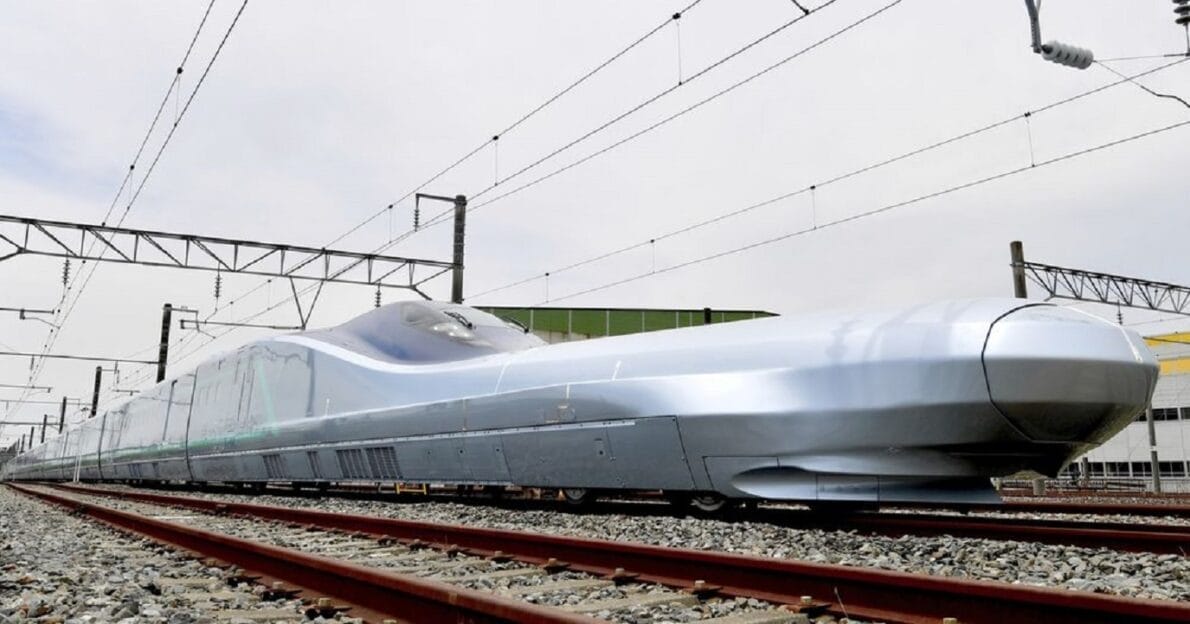

New Japanese Bullet Train Arrives In The Coming Years Promising To End Train Traffic In The Country. The Vehicle Will Have The Capacity To Easily Surpass A Formula 1 Car.
Japan is about to add another super bullet train to its impressive collection with the introduction of the Chuo Shinkansen. Surpassing a Formula 1 car, the Japanese bullet train is set to reach impressive speeds of up to 311 mph (500 km/h) and cover 226 miles in just 40 minutes when the colossal £67 billion project is finally ready to hit the tracks.
New Bullet Train Is Faster Than A Formula 1 Car
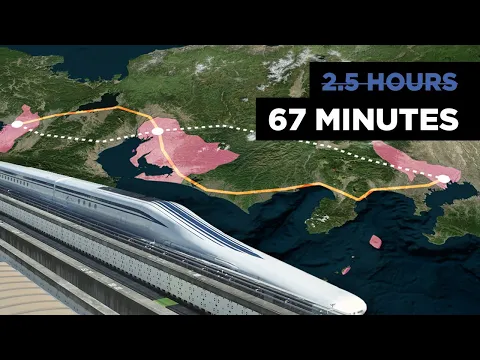

Japan has owned the bullet train since the first was manufactured in 1964, but the Chuo Shinkansen is set to be the most unique yet. Cutting through the landscape, the new Japanese bullet train reaches a speed exceeding 300 mph.
As such, the train is 100 mph faster than a Formula 1 car and nearly two and a half times faster than a typical British train at top speed. Nearly 90% of the journey will be inside tunnels, according to developers at Central Japan Railway Company (CJRC).
-
Yamaha sells the FZ-S FI V4 for around $6,200 in direct conversion, cheaper than the Yamaha Fazer FZ15, Honda CG 160 Titan, and Bajaj Dominar 160 in Brazil, with a 149 cc engine, 13-liter tank, ABS, connectivity, and traction control; the urban street bike shows a Yamaha equipped beyond its class in India.

-
Volkswagen breaks its own rule in China and launches the ID. Era 5S plug-in hybrid with a 2,000 km range to shake up the electric market.

-
Toyota launches Rumion cheaper than Chevrolet Spin, Citroën C3 Aircross, Honda City, Nissan Versa, and Toyota Corolla Cross in Brazil, with 7 seats, 1.5 K-Series engine, 6-speed automatic transmission, and fuel consumption of up to 26.11 km/kg; the family minivan showcases an affordable Toyota that Brazilians don’t have in India.
-
Onix Plus, Cobalt, and even Cruze: Chevrolet sedans dominate the used car market with trunks of up to 500 liters, economical engines, affordable maintenance, and versions that have become favorites among families and app drivers in Brazil.

The incredibly smooth journey of the new Japanese bullet train begins at Shinagawa Station in Japan’s bustling capital, Tokyo. It then makes just four stops along the 226 miles, passing through the prefectures of Kanagawa, Yamanashi, Nagano, and Gifu, before ending at Nagoya Station just 40 minutes after departure.
Conceptual illustrations of the new bullet train faster than a Formula 1 car show it with the most aerodynamic appearance possible, featuring a flat and slightly curved front. In style, it is quite similar to other high-speed trains currently used in Japan, such as the Series L0 magnetic levitation train.
Errors Delay The Arrival Of The New Bullet Train
The vehicle will also use the revolutionary superconductor magnetic levitation technology to achieve such speeds. Bullet trains are a phenomenon in Asia due to their super punctuality and safety. However, the company recently announced that plans have dramatically failed, with the deadline being pushed back to 2034 at the earliest.
Japanese media stated that even a seven-year extension could be quite optimistic, however. They claim that a senior executive from CJRC stated that the ten-year construction plan is ultimately a perfect but unrealistic scenario.
The president of CJRC, Shunsuke Niwa, stated at a meeting at the Japanese Ministry of Transportation: While we cannot project a new opening date, the company will continue to do everything it can to launch as quickly as possible.
Japan Government Gives Green Light For Train Construction
Many of the obstacles to the new bullet train faster than a Formula 1 car come from environmental activists protesting against the project. However, it has received the green light from the Japanese government, as it is set to help alleviate the serious train congestion in and out of Tokyo.
Another reason for the long wait comes from how the tunnels are being constructed. To avoid interrupting the current railway network in Japan, the new line, including the tunnels, will be developed beneath the country’s existing Shinkansen stations.
One of the tunnels will have to be built beneath the Southern Alps of Japan, making it the deepest tunnel constructed in the country. Other tunnels are to be built along Yamanashi and Shizuoka, with completion expected by 2025.
It is worth mentioning that other projects are also being constructed, such as a space-based train program planned to be built on the moon. The proposed railway system, backed by the U.S. Department of Defense, would be capable of transporting both humans and supplies into space.


O problema não é a velocidade e sim as forças G nas paradas e curvas na F1 se chega a até 06 Gs a 350kmh, com essa comparação seria interessante ao leitor essa informação.