






 Portuguese
  Spanish


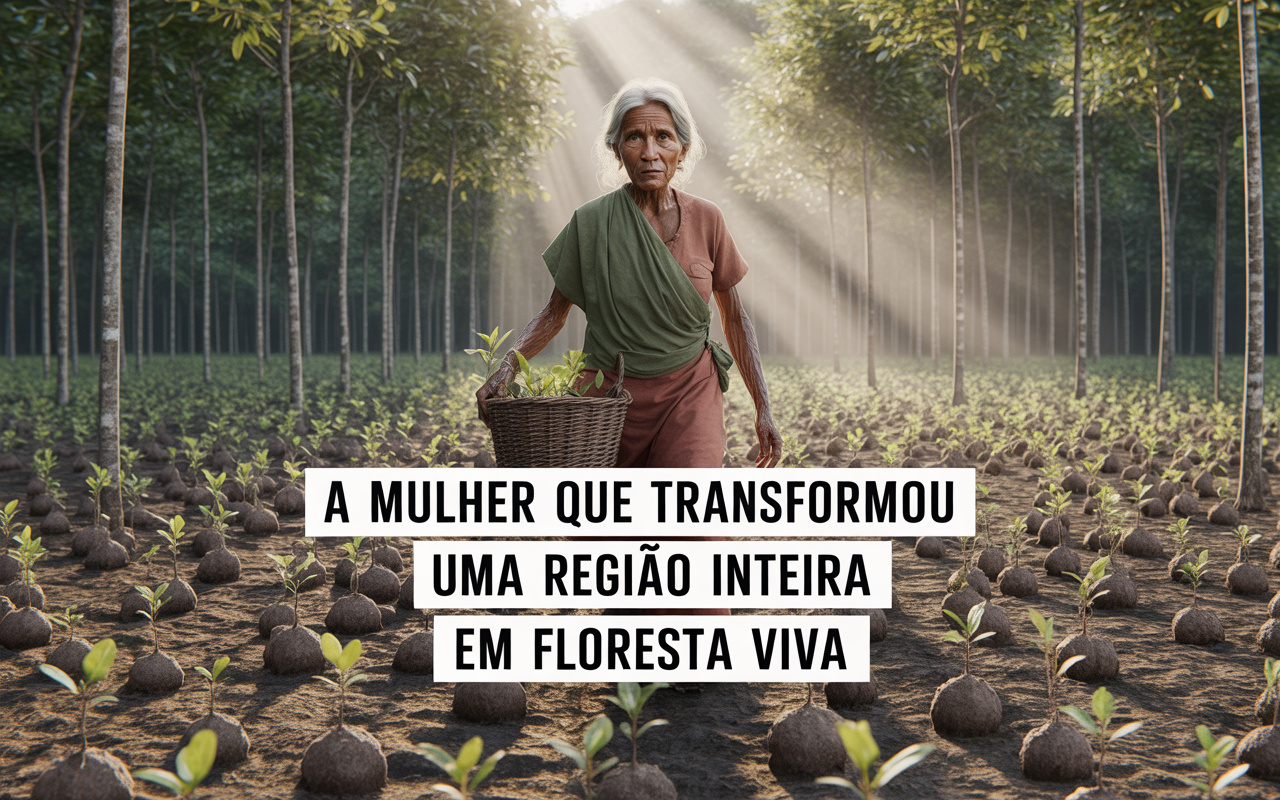


With Over 30 Thousand Trees Planted, Tulsi Gowda, Indigenous Indian Without Formal Education, Is Recognized as “The Encyclopedia of the Forest” and a Global Symbol of Environmental Preservation.
In southern India, among the dense forests of the state of Karnataka, lives a woman who has become a global symbol of environmental preservation. Tulsi Gowda, now over 80 years old, was born into the Halakki Vokkaliga indigenous community in a small village near the town of Ankola, and has dedicated virtually her entire life to a silent mission: to plant and care for trees with her own hands. It is estimated that she has participated in the planting of over 30 thousand seedlings, recovering devastated areas and transforming entire regions into ecological corridors.
Tulsi’s story began very early. Born into an extremely poor family, she never attended school and learned about the forest by observing the behavior of plants, winds, and animals. At the age of 12, she began working in nurseries of the Karnataka Forest Department, and her unusual ability to identify species and predict growth conditions quickly caught the attention of forest engineers. Even without academic training, Tulsi became recognized as a natural expert in native ecosystems, which is why she earned the nickname “The Encyclopedia of the Forest”.
Knowledge Passed Down by the Earth
Tulsi Gowda cannot read or write, but she possesses knowledge that scientists take years to acquire. She is able to recognize the ideal soil for each species, identify diseases in leaves, and predict the fruiting period of trees based on air humidity and temperature. For decades, she has volunteered in reforestation projects conducted by the Indian government, often without compensation, driven only by the desire to see the forest grow again.
-
Low-Cost Concrete Panel House Goes Viral: Investor Reveals Prefabricated Kit Structure for Around $1,500, Assembled in 30 Days, with Plans for Rental and Resale Income

-
Brazilian Lottery Winner Ordered by Court to Share $22 Million Jackpot with Ex-Partner, Sparking Major Legal Battle

-
Why Yellow is the Safety Color for Heavy Machinery: Origins and Benefits Since 1931

-
U.S. Channel Highlights 20 Brazilian Innovations Leading Latin America: From Açaí to Modular Homes and Biogas






Among the species she helped preserve are Indian sandalwood, teak, and red mangrove, all threatened by urban expansion and logging. In various districts of Karnataka, the reforested areas under her guidance have become refuges for birds, monkeys, and elephants.
National Recognition and Impact
In 2020, Tulsi received the Padma Shri, the fourth highest civilian award in India, granted by the President of the Republic. The ceremony in New Delhi attracted worldwide attention: Tulsi attended barefoot, wearing her traditional clothes, and received the award with a shy smile, representing the indigenous peoples who live in harmony with nature. Her image went viral on social media and was featured by outlets such as BBC, The Hindu, and Al Jazeera, which highlighted the simplicity and ancestral wisdom of this woman who has become a symbol of the fight against deforestation.
In addition to direct planting, Tulsi also dedicates time to environmental education for children in her village. She teaches about the rain cycle, the importance of roots, and the balance among species, passing on the knowledge she received orally from her ancestors. In statements to local newspapers, Tulsi often repeats a phrase that summarizes her philosophy: “Trees talk to us. You just have to know how to listen.”
The Forest as Heritage and Resistance
The legacy of Tulsi Gowda goes beyond the number of trees planted. Her work is linked to the preservation of Halakki Vokkaliga culture, one of the oldest tribal communities in southern India, which maintains matriarchal traditions and a strong spiritual bond with the land. At a time when India faces alarming levels of pollution and deforestation, Tulsi’s example shows that traditional knowledge is still a powerful tool to combat the environmental crisis.
Experts from the United Nations Environment Programme (UNEP) have already cited Tulsi’s case in studies on community reforestation, classifying it as an example of “individual action with collective impact.” The Karnataka Forest Department also keeps records of projects in which she participated, including Vana Mahotsava, an annual tree planting festival held in various regions of the country.
A Living Symbol of Wisdom and Humility
Tulsi Gowda remains active, even at an advanced age. Every day, she walks through sections of the forest she helped to rebuild, checking the state of the trees and collecting seeds that will be replanted. Her simple and dedicated routine summarizes a profound truth: environmental restoration begins with small repeated gestures over time.
Today, students, environmentalists, and volunteers from all over India visit her village to learn from her. In a country with over 1.4 billion inhabitants, the example of an illiterate woman who transformed the landscape around her has become a powerful reminder that environmental education does not depend on books, but on a commitment to the planet.
Tulsi Gowda does not talk about “climate change” or “sustainability” using technical terms. She simply plants — and teaches others to do the same. In times of devastation and rapid urbanization, her legacy proves that ancestral knowledge and love for the land are still the most transformative forces of the natural world.








Fui diagnosticada com doença de Parkinson há quatro anos. Por mais de dois anos, dependi da levodopa e de vários outros medicamentos, mas, infelizmente, os sintomas continuaram piorando. Os tremores se tornaram mais perceptíveis e meu equilíbrio e mobilidade começaram a declinar rapidamente. No ano passado, por desespero e esperança, decidi experimentar um programa de tratamento à base de ervas da NaturePath Herbal Clinic.
Sinceramente, eu estava cética no início, mas, poucos meses após o início do tratamento, comecei a notar mudanças reais. Meus movimentos ficaram mais suaves, os tremores diminuíram e me senti mais firme ao caminhar. Incrivelmente, também recuperei grande parte da minha energia e confiança. Tem sido uma experiência transformadora. Me sinto mais eu mesma novamente, melhor do que me sentia há anos. Se você ou um ente querido está lutando contra a doença de Parkinson, recomendo muito que você considere a abordagem natural deles. Você pode visitar o site deles em www. naturepathherbalclinic .com