






 Portuguese
  Spanish
 5 min of reading
  0 comments


Innovative Underwater Tunnel Construction Is Transforming Mobility on the Santa Catarina Coast with Sustainable Technologies and Strategic Partnerships.
A New Milestone for Urban Mobility on the Santa Catarina Coast: An ambitious project promises to transform the region’s infrastructure with the construction of a 29-meter deep underwater tunnel.
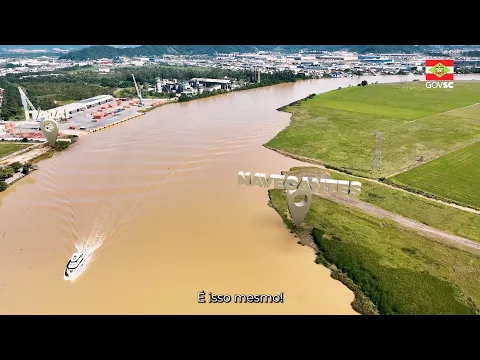
This tunnel will connect the cities of Itajaí and Navegantes, crossing the Itajaí-Açu River, as part of the PROMOBIS (Integrated and Sustainable Mobility Project for the Itajaí River Mouth Region).
With an investment exceeding R$ 1.9 billion, this venture promises not only to improve mobility but also to stimulate economic growth in the area.
-
Survivor of 1966 SS Daniel J. Morrell Shipwreck in Lake Huron Recounts 38-Hour Ordeal in Extreme Cold

-
The Greatest Hoax in World Cup History? The Film That Denied Brazil’s 1958 Victory and Exposed How Fake Evidence Can Seem Convincing on TV
-
Fake South Korean Online Stores Offer Shopping Thrill Without Spending Money or Receiving Products
-
Brazilian Joins Homeownership Consortium, Faces Decade of Dual Payments Totaling $141,000, Surpassing Traditional Mortgage


The PROMOBIS is designed to directly benefit 11 municipalities of the Association of Municipalities of the Itajaí River Mouth (AMFRI), including cities like Balneário Camboriú, Bombinhas, and Itapema.
This project, one of the largest in the history of transportation engineering in the state, will be made possible through a Public-Private Partnership (PPP) and aims to provide an efficient and sustainable transportation system.
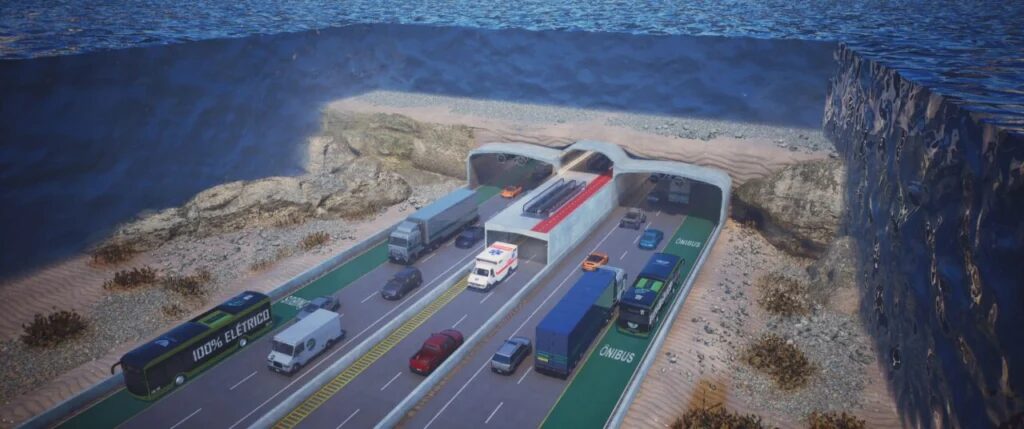
The works also include the development of a 100% electric public transportation system, exclusive corridors for pedestrians and cyclists, as well as important climate resilience actions.
Transformation of the Urban and Economic Landscape
The construction of the 29-meter deep underwater tunnel is a key point of the project.
When completed, it will allow for a faster and more efficient crossing between Itajaí and Navegantes, two cities that are vital for the region’s commerce and tourism.
The tunnel will be designed with multiple traffic lanes, including one exclusively for public transportation, others for passenger vehicles, and also passages for pedestrians and cyclists.
This innovative design aims to improve traffic flow, reduce travel time, and promote smarter mobility.
According to Santa Catarina Governor Jorginho Mello, the underwater tunnel represents a significant advancement for smart mobility in the region.
“We are talking about works with advanced engineering that will facilitate the day-to-day of thousands of people.
Moreover, it will attract more tourists and generate new business opportunities for the coast,” said the governor during the signing of the intention protocol with AMFRI at the end of October 2024.
The Santa Catarina Government has already committed a significant counterpart for the project, with US$ 24 million (R$ 136 million) allocated for expropriations and other necessary infrastructure actions for the execution of the tunnel and the other components of PROMOBIS.
The Importance of Public-Private Partnerships
The Public-Private Partnership (PPP) model was chosen to ensure the project’s viability.
This model has proven effective in large infrastructure projects, allowing both the public and private sectors to share responsibilities and costs.
The participation of the private sector, with the support of the government, is essential to ensure that the project is carried out efficiently and on schedule.
The underwater tunnel will be just one of several initiatives under PROMOBIS, which also includes the implementation of a 100% electric BRT system, mobility corridors, and climate resilience actions in cities like Balneário Camboriú.
Additionally, the project plans to construct exclusive corridors for public transportation, which will help improve passenger circulation, especially during peak hours, reducing dependence on private vehicles.
The Economic and Social Impact
The impact of the project goes beyond improving transportation infrastructure.
The construction of the tunnel and the implementation of other PROMOBIS elements will generate around 11 thousand new jobs, both direct and indirect, directly benefiting the region’s economy.
During the construction and operation phases, the project promises to boost sectors such as construction, transportation, and services, providing new business opportunities for local companies.
Another relevant aspect of the project is its potential to increase tourism in the region, attracting more visitors to the Santa Catarina coast, which is a renowned tourist destination in Brazil.
The improvement in mobility, with the electric BRT system and the fast connection between Itajaí and Navegantes, will facilitate access to tourist spots and promote sustainable economic development.

The Project’s Evolution and Completion Forecast
The project schedule has undergone some updates since its initial conception, released in 2021.
Although it was initially anticipated that the tunnel would be ready to operate by 2028, new estimates indicate that the project’s completion will depend on the conclusion of the detailed engineering phase, which should take about a year and a half to finalize.
The economic pre-feasibility studies for PROMOBIS began in 2019, with the partnership between the CIM-AMFRI consortium and the World Bank.
With the investment from the private sector and the support of the state government, the project has great potential to become a model of sustainable mobility in Brazil, combining cutting-edge technology and innovative urban planning strategies.
The Future of Urban Mobility in Santa Catarina
Together with the construction of the underwater tunnel, other technological and environmental innovations are part of the PROMOBIS planning.
The use of sustainable technologies, such as the implementation of electric public transport, reflects global trends in urban mobility that seek to reduce carbon emissions and promote less polluting transportation alternatives.
Furthermore, climate resilience will be an important focus of the works, especially in areas more susceptible to natural disasters, such as floods and landslides.
The Itajaí River Mouth region is known for its climate vulnerability, and the new infrastructures will focus on preventing and adapting to climate changes.
PROMOBIS is more than a transportation project; it is a key component for the sustainable and smart development of the region. The completion of the project is expected to become a model for other states in Brazil seeking to address urban mobility challenges with innovative and integrated solutions.
How the Underwater Tunnel Can Transform Mobility in Other Regions of Brazil?
Did you like the project and its possibilities for the Santa Catarina coast?
Do you believe that initiatives like this could be the key to improving urban mobility in other regions of Brazil? Leave your comment and join the conversation!





Be the first to react!