Portuguese
  Spanish



Adaptation of the Antonov An-28 as a drone carrier extends the range of Ukrainian interceptors, reduces defense costs, and shows how old aircraft gain new roles in a war marked by increasingly massive aerial threats
Ukraine has transformed the Antonov An-28, an old Soviet light transport plane, into an improvised drone carrier to launch interceptors from its wings, in an adaptation that reflects the pressure of a drone-dominated war.
Drone carrier born from a Soviet relic
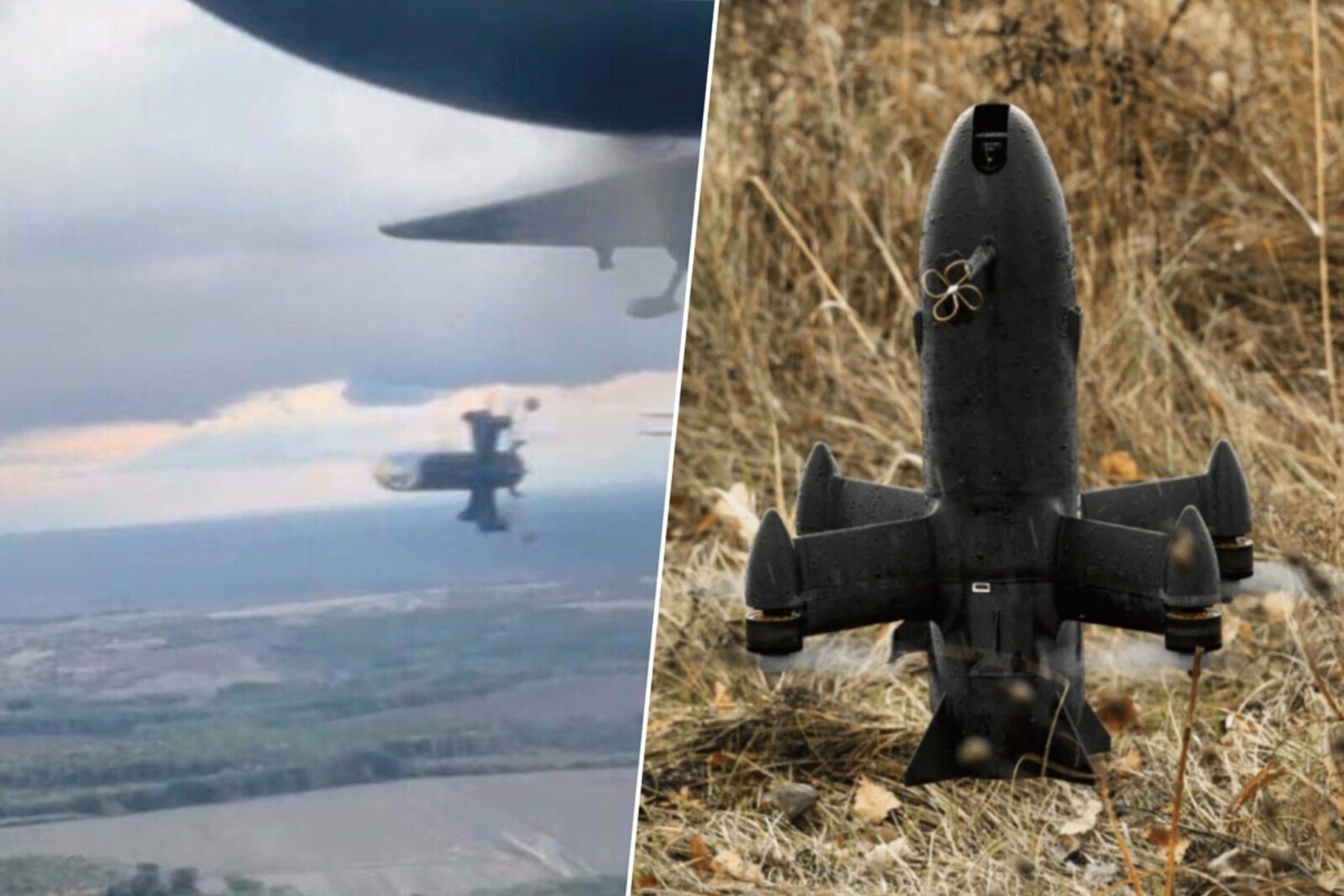
The An-28 ceased to act solely as a twin-engine transport and began to fulfill an offensive aerial role. The aircraft was “tuned” to carry interceptor drones under its wings, expanding its role in combat.
The change places an old piece of equipment within a new logic. Instead of relying solely on expensive missiles, Ukraine uses a simple platform to launch cheaper, flexible, and repeatable systems.
-
Ayatollah Ali Khamenei’s Funeral Draws 15 to 20 Million in Tehran, Calls for Revenge Against Trump After Joint Israel-U.S. Attack

-
U.S. Establishes Permanent Embassy in Jerusalem, Reigniting International Debate Over Israel’s Capital
-
The world has nearly 12,000 nuclear warheads, with the majority held by the United States and Russia; see the figures for China, France, and the United Kingdom.

-
Venezuela Faces UN Alert for Hunger, Disease, and Service Collapse After Earthquakes Cause Nearly 2,000 Deaths and $6.7 Billion in Damages


This solution is reminiscent of adaptations made by Soviet forces during the Afghan War, between 1979 and 1989. During that period, helicopters and transport aircraft were used in improvised roles for close support and armed surveillance.
The similarity lies in the response to necessity. Machines not originally designed for combat end up reinvented when the battlefield demands speed, improvisation, and the use of already available resources.
From machine guns to interceptor drones
Before the new adaptation, Antonov An-28 crews were already hunting enemy drones with machine guns fired from the aircraft itself. The tactic was rudimentary but had achieved hundreds of kills in battle.
The leap occurs with the integration of drones like the P1-Sun or the AS-3 Surveyor. These devices can autonomously or guidedly pursue and destroy targets.
With this, the plane ceases to be just a direct hunter. It starts to function as a range multiplier, launching “cheap missiles” in the form of drones against aerial threats.
The interceptors can hit the target or detonate near it. This capability expands interception possibilities and makes the An-28 a more versatile piece within the Ukrainian air defense.
Cost changes the logic of combat
The economic factor is central to this innovation. Enemy drones or missiles can cost tens of thousands of dollars, while Ukrainian interceptors are significantly cheaper, especially if produced on a large scale.
This difference alters the war’s equation. Defense does not need to spend more than the threat to neutralize it, as long as it can use accessible solutions with sufficient efficiency.
The Antonov An-28 also helps by bringing interceptors closer to the target. Launched from high altitudes and at high speed, they gain better attack conditions and reduce reaction time.
The aircraft, therefore, contributes to more sustainable air defense. The model combines the reuse of old equipment, cheaper aerial ammunition, and greater response capacity in the face of recurring attacks.
Operational advantages of the An-28
The use of the plane as an aerial platform offers clear advantages. It can patrol for long periods, quickly move to risk areas, and operate from improvised runways.
This capability comes from the An-28’s short takeoff, which allows use in less structured conditions. In a mobile war, this characteristic expands positioning options.
The twin-engine can also gather different tools on a single platform. Besides drones, it can employ light weapons and potentially other systems adapted to combat needs.
This combination creates an adjustable response against various types of threats. Flexibility becomes decisive in a scenario where Russia produces thousands of drones per month and develops increasingly faster models.
A sign of modern warfare
The improvised drone carrier shows more than a tactical adaptation. It indicates a direction for aerial combat, with old platforms serving as bases for smaller, cheaper, and distributed systems.
The idea of launching drones from planes, helicopters, or unmanned systems opens space for coordinated defense layers. In this model, various solutions work together against mass threats.
The military value is no longer just in sophistication or isolated power. The ability to combine simple, scalable, and economical resources starts to redefine air superiority.
In the Ukrainian case, a light transport aircraft gained a new function amidst the drone war. The Antonov An-28 became a symbol of improvisation, economy, and rapid adaptation in the face of a changing battlefield.
With information from Xataka.