






 Portuguese
  Spanish


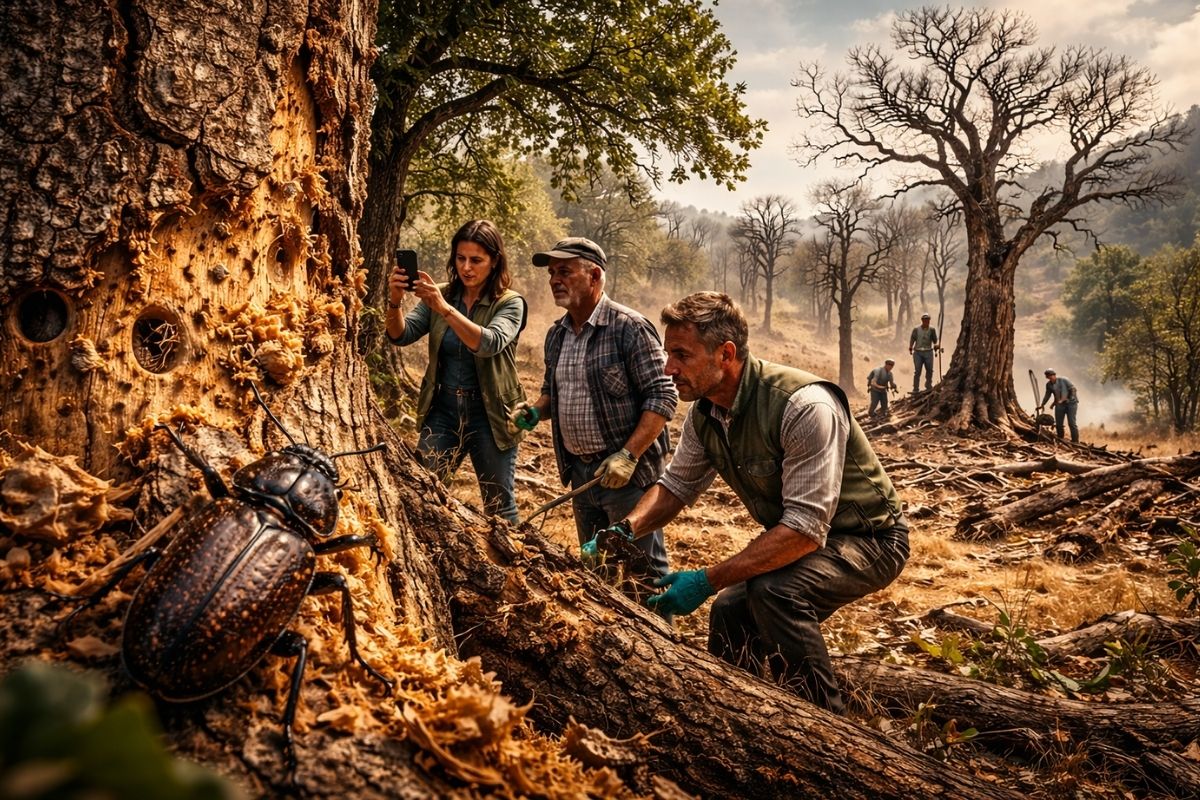

In The Dehesa Of Salamanca, In Western Spain, A Protected Beetle Borrows Into Weak Oaks And Holms Oaks, Weakens Trunks To Death And Exposes Decades Of Mismanagement. With Water Stress And Climate Change, Technicians And Producers See An Environmental, Economic And Political Problem Without A Simple Solution Now More Grave
A protected beetle is decimating holm oak groves in Salamanca, Spain, and the conflict has grown because the species has legal protection at the European level. The insect borrows into the wood, penetrates the oaks and weakens the trees until they die, in a scenario described as unsustainable after years of ecosystem weakening.
The crisis is intensifying because the dehesa is a complex agro-silvo-pastoral system, shaped by centuries of human use, and not an untouched environment.
With decades of mismanagement, abandoned preventive practices, and aggravated water stress, the beetle has ceased to be merely a component of the ecological cycle and has become a problem with social cost and political dispute.
-
China Develops Custom 140-Ton Electric Mining Truck with 770 kWh Swappable Battery, Deploys 290 Units in Xinjiang’s Largest Zinc Mine

-
Meta to Launch Arena, a New Prediction App Targeting 3.56 Billion Users, Competing with Polymarket and Kalshi

-
Scientist Challenges Famous Human Evolution Theory, Argues Homo Sapiens Evolved Gradually Over Thousands of Years
-
15-Year-Old American Builds Ocean Generator with PVC Pipe and 3D-Printed Propeller for $12, Wins National Prize, Presents at White House, and Makes Forbes 30 Under 30 List




What Is Happening In Salamanca

The focus of the alert is on the holm oak groves of Salamanca, in Castile and León, where the “battle” between green oaks and beetles has been dragging on for almost 20 years and is now worsening.
The mechanism is straightforward: the insect borrows into the trunk, opens a path through the wood and compromises the structure, reducing the trees’ resistance to collapse.
Concern is growing because the dehesa, although localized, has economic and symbolic weight in western Spain.
When the productive infrastructure relies on these trees, mortality ceases to be just a sight and becomes a risk to the local work base.
Why The Insect Is Hard To Combat

The insect in question is the Cerambyx cerdo, also known as the greater oak borer, recognized by its very long antennas.
It is protected by the Habitats Directive, which obliges European Union countries to maintain special areas for its conservation, limiting rapid responses and increasing friction between conservation and production.
In practice, this feeds a sense of paralysis, summed up in the complaint that “it cannot be sprayed against it.”
However, the impasse is not absolute: the logic of protection itself provides that more stringent measures can exist when necessary, as long as technically supported.
The Detail That Changes The Reading Of The Problem
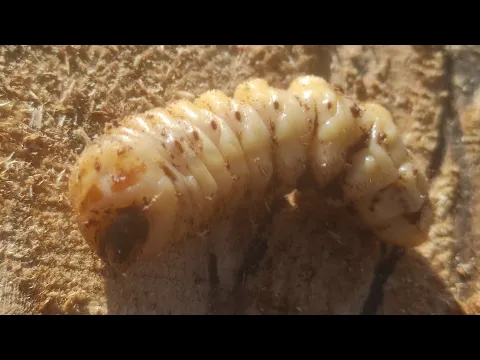

There is a point that technicians have highlighted for decades and that tends to be ignored in the public debate: the most susceptible trees tend to be the oldest or in worse physiological condition.
Historically, this placed the beetle in an almost functional relationship with the forest, eliminating weakened individuals and contributing to the renewal of the system.
The leap to the current crisis occurs when the entire ecosystem begins to accumulate vulnerabilities.
The phrase that organizes the diagnosis is simple: the problem is not just the beetle, it is the poor condition of the forests and pastures.
Poor Management, Weak Dehesa And Climate As Accelerator
The dehesa depends on continuous management, and the loss of traditional practices, replaced by industrial routines with little management and a lot of brute force, appears as part of the structural wear.
Added to this are climate change and severe water stress, creating the perfect environment for pest proliferation.
In this scenario, what is at risk of extinction is not just an isolated species but the ecosystem itself, with “hundreds of thousands of trees” described as in poor condition, vulnerable to successive collapses.
Other Focuses And The Political Weight Of The Issue
The debate is not restricted to Salamanca.
The account also mentions the Balearic Islands, where authorities allocate million-dollar budgets to protect the Serra de Tramuntana from the overpopulation of these insects.
The political effect is predictable: when a protected species is associated with economic loss, the discussion turns into a narrative dispute, budget, and public priority.
At the same time, the suggested solution is counterintuitive for part of the public: more human intervention, not less, with preventive practices, monitoring, and advanced technical resources to manage populations without breaking the regulatory framework.
What Can Be Done Without “Chemical War”
Even with limitations, the management is described as possible through preventive forestry practices, surveillance, and data-driven response.
The central obstacle is one of governance and cost: the forest only remains “profitable” when the externalities of exploitation do not factor into the equation, which hinders continuous investment and opens up space for the crisis.
If the situation in Salamanca depends on management, monitoring, and preventive intervention, who should lead this turnaround first: regional governments, dehesa producers, or European environmental authorities?






