Portuguese
  Spanish


Accidental Discovery of Fragments of a Polynesian Canoe by a Fisherman and His Son Provides New Clues About Ancestral Navigation in the Region
About 3,000 years ago, sailors from the Southeast Asia began exploring the Pacific, settling on the islands of Polynesia. Using large canoes carved from trees, these sailors crossed the ocean navigating by the stars.
Now, one of these vessels, known as waka, has been discovered in the Chatham Islands, New Zealand, in hundreds of pieces.
The Accidental Discovery
The remains of the boat were found last year by a young boy and his father, Nikau and Vincent Dix, while walking near a stream on the main island of Chatham, called Rekohu in the indigenous Moriori language.
-
Artesian Well Becomes Lifeline for Small Brazilian Farm: Drilling Reaches 60 Meters, Finds Marble, Navigates Rock Fissures, and Strikes Fresh Water

-
Street Cleaner in Brazil Finds Discarded Books That Helped His Wife Pass Civil Service Exam and Become Police Captain
-
July’s Night Sky to Feature Planetary Alignments, New Moon, Venus at Sunset, Buck Moon, and Two Meteor Showers

-
Fisherman Catches 18kg Catfish Near Brazil’s Itaipu Lake, Among Largest Recorded in Recent Years



Vincent, a local fisherman, told Radio New Zealand that it all began after a heavy rain. During a walk, Nikau noticed pieces of wood in the water.
At first, they believed they could repurpose the material. Nikau said he was with his son carrying the boat and taking the dogs for a run on the beach right after a heavy rain. Upon finding the wood, they thought it might be useful and took it home. They began to assemble it, trying to figure out what it was. Over time, they realized that the material was starting to take the shape of a boat.
Soon after, a new storm brought more pieces to the surface. When they returned to the site, they found a carved piece of wood, which could have been the bow of the vessel. It was at this moment that he realized it was a true ancestral waka.
Excavation and Assembly of the Polynesian Canoe Fragments
Manatū Taonga Ministry for Culture and Heritage
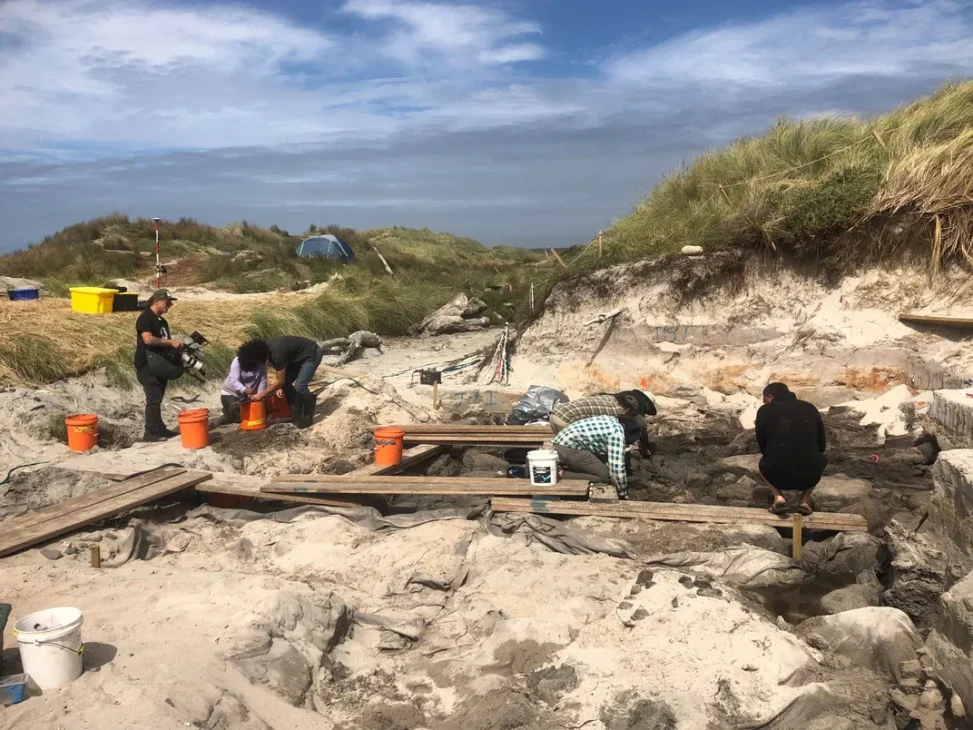
After the discovery, authorities were notified, and a team of researchers began excavations in January. Archaeologists recovered over 450 pieces of the boat.
Maxwell told Te Ao With Moana that the boat was not carved from a single tree, as many wakas are, but rather constructed from several pieces of wood carefully shaped and fitted together.
The archaeologist also revealed that the team found rarely preserved elements like parts of the sail, ropes, and bindings. “Before we started this project, the Holy Grail would have been to find part of the sail, or part of the string that held things together, or part of the rope or the cork</strong,” says Maxwell. “We found all of that. It left us completely astonished.”
For researchers, these discoveries are crucial for better understanding the maritime technology of ancient Polynesian navigators.
Connection of the Polynesian Canoe with the Moriori People
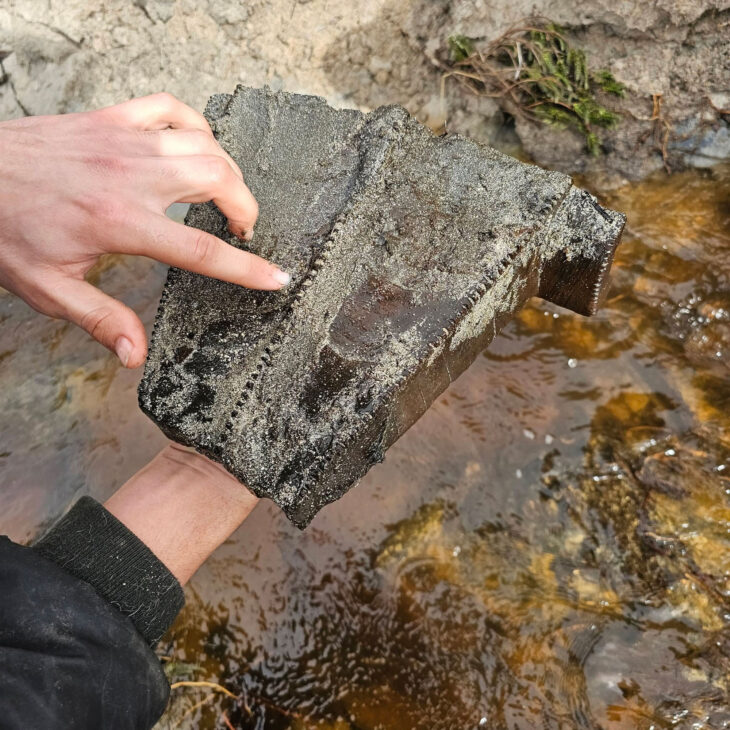
It is believed that the boat was built by the Moriori people, the first inhabitants of the Chatham Islands. According to Maui Solomon, president of the Moriori Imi Settlement Trust, the design of the waka aligns with historical records of Moriori culture.
He emphasized that the highlights and long sides are similar to those of the smaller traditional boats of this people.
The Moriori people arrived in the Chatham Islands around 1500, after navigating from mainland New Zealand. The discovery of the waka reinforces evidence of their navigation abilities and advanced maritime knowledge.
The exact age of the vessel is still unknown. Researchers confirmed that at least three of the pieces of wood are from trees native to New Zealand. Currently, a team led by conservator Sara Gainsford is working to preserve the found fragments.
A laboratory has been set up close to the excavation site, where experts are analyzing the details of the boat. Maxwell and Gainsford are preparing a detailed report on the findings, which may reveal new information about the construction and use of Polynesian wakas.
With information from Smithsonian.