Portuguese
  Spanish


The nuclear aircraft carrier USS Nimitz (CVN-68), the oldest in operation in the world, arrives in Rio this Thursday (7) and stays in Guanabara Bay until May 12 for Operation Southern Seas 2026 of the US 4th Fleet, with exercises with the Brazilian Navy between May 11 and 14, on its last mission before deactivation in March 2027.
The oldest nuclear aircraft carrier still in operation in the world arrives in Rio de Janeiro this Thursday (7) for a stopover that marks one of the last operational presences of one of the most emblematic ships of the United States Navy. The USS Nimitz (CVN-68), 332 meters long and with a displacement of over 100,000 tons, will remain in Guanabara Bay until May 12 as part of Operation Southern Seas 2026, conducted by the US 4th Fleet, and will participate in joint exercises with the Brazilian Navy between May 11 and 14. Commissioned on May 3, 1975, the aircraft carrier had its useful life extended until March 2027, making this passage through the Brazilian coast its last operational voyage along the South American coast before heading to the Newport News Shipbuilding shipyard in Virginia, where it will be deactivated.
The aircraft carrier’s stopover in Rio takes place within the 11th edition of Operation Southern Seas, the main naval cooperation exercise of the United States in the Western Hemisphere. The Nimitz sails accompanied by the destroyer USS Gridley (DDG-101) and carries Carrier Air Wing 17 (CVW-17) aboard, an air wing composed of six squadrons operating F/A-18E/F Super Hornet fighters, EA-18G Growler electronic warfare aircraft, C-2A Greyhound transport planes, and MH-60R/S Seahawk helicopters. “Operating with other Navies is always an opportunity to develop interoperability and refine capabilities, in addition to strengthening the bonds of friendship, traditional to Naval Forces,” declared Rear Admiral Carlos Marcelo Fernandes Considera, Commander of the Second Division of the Brazilian Navy’s Fleet, in an official statement released by the Navy News Agency.
What the USS Nimitz aircraft carrier will do in Rio de Janeiro

The aircraft carrier’s stay in Guanabara Bay between May 7 and 12 serves both for refueling and crew rest, as well as for preparing for the subsequent naval exercises. Between May 11 and 14, the aircraft carrier and its aircraft will participate in joint exercises with the Brazilian Navy off the coast of Rio de Janeiro, operations that include communication maneuvers, coordinated navigation, and aerial operations testing the ability of the two naval forces to operate together in the South Atlantic. The Brazilian Air Force issued an alert to pilots at Santos Dumont Airport about the ship’s presence, classified as a “mobile obstacle” by DECEA (Department of Airspace Control) due to the height of the antennas and equipment installed on the aircraft carrier’s command island.
-
After three years living in a van, a couple bought an abandoned historic house and had to deal with mold, damaged plumbing, raccoons, and heavy cleaning before moving in.

-
In the city that the market called “road cockroach,” between Balneário Camboriú and Florianópolis, he launched a planned neighborhood worth R$ 1 billion with a marina for 90 boats and sold 80% of the lots in the first phase in 1 week.

-
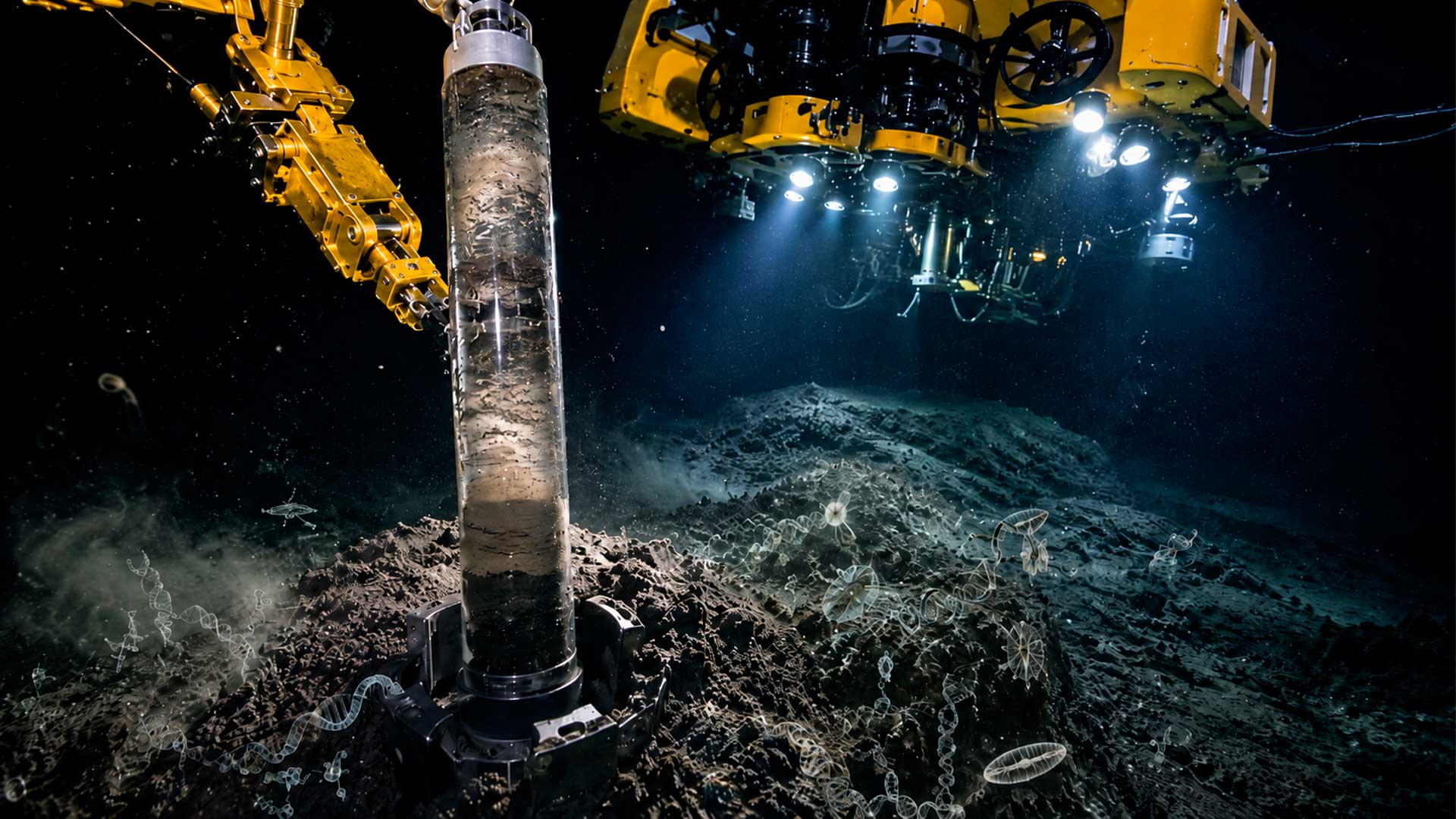
At a depth of 5,000 meters, where there is no sunlight, researchers found ancient DNA preserved in the mud of the South Atlantic and discovered signs of organisms that did not match known records.

-
At 77 years old, a retired woman who never tires of learning completes her second degree in design in Ceará and moves people by revealing the help of her 98-year-old mother in the final project.



Cooperation between Brazil and the United States in naval exercises has a recent history that contextualizes the aircraft carrier’s stopover. In 2024, the Brazilian Navy operated with the aircraft carrier USS George Washington (CVN-73) in exercises off the Southeast coast that included “cross deck,” a procedure where aircraft from one navy land and take off from the deck of the other, with Brazilian AF-1 Skyhawk fighters and helicopters operating alongside US F/A-18 Super Hornets. During that same operation, the George Washington transferred 15 tons of donations to the Brazilian Navy’s Multipurpose Aircraft Carrier Atlântico in support of the victims of the Rio Grande do Sul floods, demonstrating that military exercises can have a concrete humanitarian component.
Who is the USS Nimitz aircraft carrier and why is this mission special

The USS Nimitz is not just a ship: it is the class leader that gave its name to the entire family of nuclear-powered aircraft carriers that has sustained United States naval projection for half a century. Commissioned on May 3, 1975, the aircraft carrier was the second nuclear-powered ship of its kind in U.S. Navy history, participated in operations such as Desert Storm (1991), Southern Watch, and Iraqi Freedom (2003), and served as a symbol of U.S. military presence in all oceans of the planet throughout five decades of active service. Its 332 meters in length are equivalent to more than three football fields lined up, and its more than 100,000 tons of displacement make it one of the heaviest mobile objects ever built by humanity.
The distinction between the Nimitz and more recent aircraft carriers is important to avoid a common mistake. The oldest aircraft carrier in operation in the world is not the largest: that title belongs to the USS Gerald R. Ford (CVN-78), commissioned in 2017, with 337 meters in length and electromagnetic catapult technology that the Nimitz does not possess. What makes the Nimitz special in this mission is precisely its age: after 51 years of continuous service, the aircraft carrier is undertaking its last operational voyage before being decommissioned, a process that will include the removal of nuclear fuel from the two reactors that power the ship and is expected to be completed at the Newport News Shipbuilding shipyard in Virginia.
What is Operation Southern Seas and which countries participate
Operation Southern Seas is an annual exercise of the U.S. Fourth Fleet, in its 11th edition, dedicated to naval cooperation with countries in South and Central America. Commanded by Rear Admiral Carlos Sardiello from U.S. Naval Forces Southern Command/U.S. Fourth Fleet, the 2026 operation includes port calls in Brazil, Chile, Panama, and Jamaica and involves naval forces from Argentina, Brazil, Chile, Colombia, Ecuador, Peru, Mexico, El Salvador, Guatemala, and Uruguay, with the objective of strengthening partnerships, developing interoperability between navies, and coordinating responses to threats in the maritime environment of the Western Hemisphere. The aircraft carrier USS Nimitz is the main asset of this year’s operation, a choice that gives the 2026 edition additional symbolic weight as it is the ship’s operational farewell.
Rear Admiral Sardiello stated in a press release that the deployment seeks to expand interoperability and joint readiness with the region’s naval forces. The presence of a nuclear-powered aircraft carrier in joint operation with the Brazilian Navy demonstrates a level of trust between the two naval forces that goes beyond diplomatic protocol: it allows for training with state-of-the-art aircraft, encrypted communication tests between ships of different flags, and coordination of operations in scenarios simulating everything from search and rescue to the defense of maritime trade lanes in the South Atlantic. For the Brazilian Navy, the opportunity to operate alongside a nuclear-powered aircraft carrier represents access to experience and procedures that no simulated exercise can reproduce with the same fidelity.
What happens to the USS Nimitz aircraft carrier after Brazil
After the stop in Rio and exercises with the Brazilian Navy, the aircraft carrier will follow a route that includes stops in other ports in South and Central America before returning to the United States. The final destination is the Newport News Shipbuilding shipyard in Virginia, where the aircraft carrier will undergo the inactivation process, which includes the removal of nuclear fuel from the two reactors on board, dismantling of weapon systems, removal of hazardous materials, and preparation of the structure for storage or scrapping, a process that can take years and cost hundreds of millions of dollars. Deactivation is scheduled for March 2027, ending 52 years of active service that made the Nimitz the nuclear-powered aircraft carrier with the longest career in U.S. Navy history.
The passage through Rio de Janeiro carries symbolic weight that the Brazilian public will be able to witness from the shores of Guanabara Bay. A 332-meter aircraft carrier anchored in the same waters where ferries, fishing boats, and tourist vessels pass offers a visual contrast that dimensions the scale of U.S. naval power in a way that no photograph or report can convey with the same intensity. For those interested in following, the aircraft carrier’s stay in Rio extends from May 7 to 12, and information about possible public visits or observation from the shore can be consulted on the official channels of the Brazilian Navy.
And you, do you plan to see the USS Nimitz aircraft carrier in Guanabara Bay? What do you think of Brazil-U.S. naval cooperation? Leave your opinion in the comments.