






 Portuguese
  Spanish


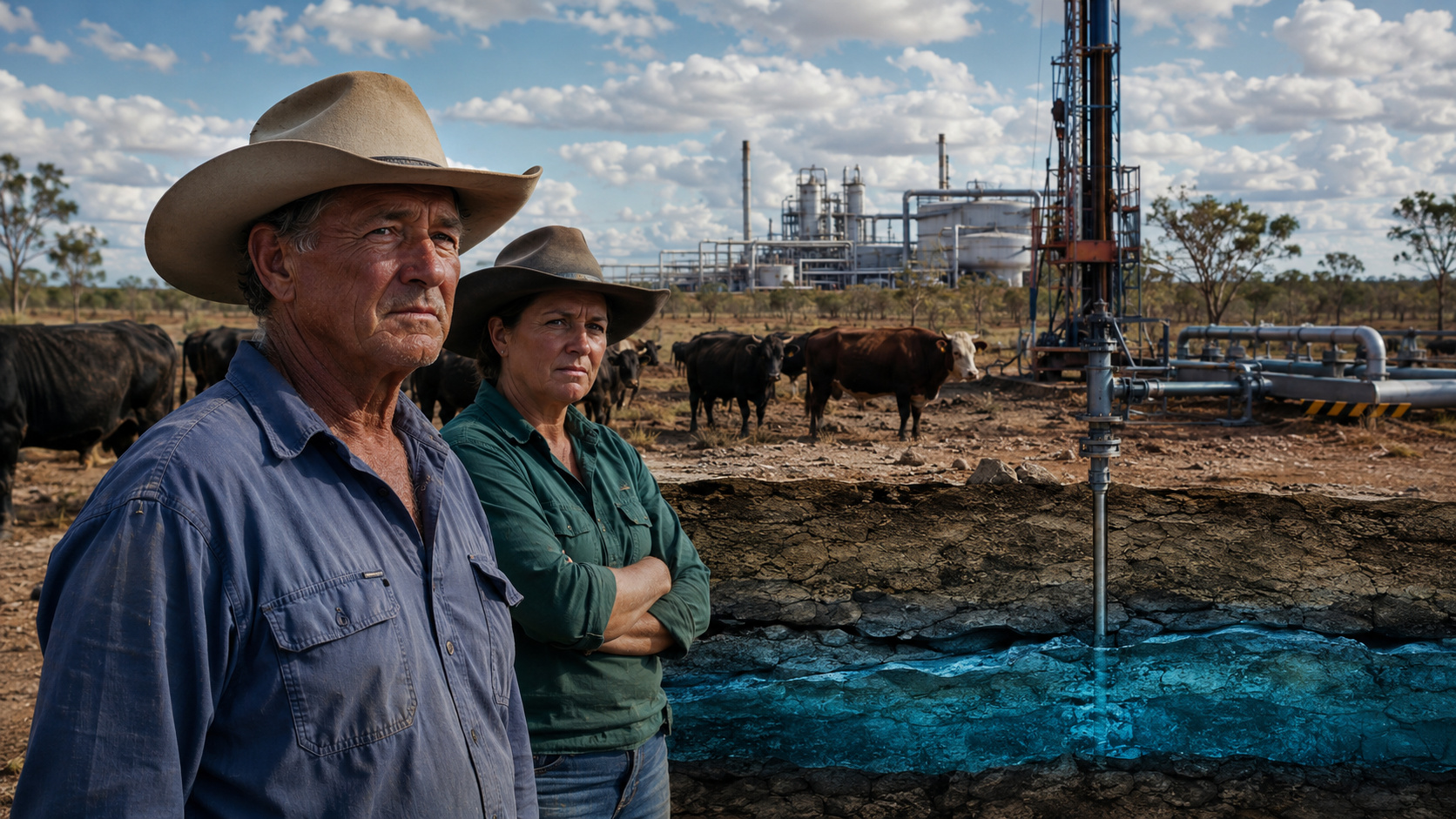


Queensland’s carbon capture project placed liquid CO₂, Glencore, and the Great Artesian Basin at the center of a dispute over groundwater and rural survival
Australian cattle ranchers opposed a project linked to Glencore that aimed to store liquid CO₂ underground in formations associated with the Great Artesian Basin, Australia’s largest aquifer and one of the country’s most important groundwater reserves.
The investigation was published by The Australian, a national Australian newspaper. The case gained traction because it put a climate promise on a collision course with a basic rural concern: the protection of water that sustains farms and rural communities.
Queensland’s environmental regulator blocked the proposal’s advancement after pointing out risks to the aquifer. For farmers and ranchers, the decision represented a victory against a plan seen as a threat to groundwater.
-
Scientists warn that melting ice is triggering an alarming chemical transformation in preserved areas, and the first signs are already concerning researchers worldwide.

-
China placed 198 robotic legs under a 7,600-ton school and made the building walk 62 meters in 18 days, rotating the historic structure as if a concrete structure had gained feet to escape demolition.

-
Distributor confirms the premiere of ‘Dark Horse’, Bolsonaro’s film, in 650 cinemas with 99% of copies dubbed.
-
9-year-old boy who could only hold a plank for 6 minutes in physical education class trained alone for 6 months, without needing encouragement from his parents, until he broke the world children’s record with 61 minutes and 5 seconds.


Glencore’s Project Aimed to Place Liquid CO₂ Underground Near the Great Artesian Basin
The proposal linked to Glencore and CTSCo involved carbon capture and storage. This technology seeks to remove CO₂ from industrial processes and store this carbon in deep layers of the soil.
In Queensland’s case, the plan aimed to inject liquid CO₂ into formations associated with the Great Artesian Basin. The sensitive point was precisely this connection to an area essential for the country’s groundwater.
For the lay public, the concern can be simply summarized. The carbon would be placed underground, near a water system that supplies regions of the Australian outback.
Farmers and Ranchers Reacted Out of Fear of Groundwater Risk
The reaction in the countryside was strong. Farmers, ranchers, and local authorities opposed the project, fearing groundwater contamination and impacts difficult to reverse.
The aquifer’s water is not just an environmental resource. It is part of the lifeblood of rural communities, agricultural properties, and livestock farming in inland areas.
Therefore, the dispute gained greater weight. The central question ceased to be solely about carbon and began to involve water security, rural production, and trust in climate transition projects.
Queensland Environmental Regulator Blocked Project Due to Aquifer Risk
Queensland’s environmental regulator blocked the proposal’s advancement. The decision pointed out risks to the aquifer and reinforced concerns about possible impacts on groundwater.
The Australian, a national Australian newspaper, detailed the central points of the issue and showed that the regulatory rejection was treated as a defeat for the carbon capture project and a victory for rural producers.


The decision also put the case on the radar of other debates about carbon capture and storage. When a climate solution involves sensitive water areas, the analysis ceases to be merely technical and directly affects those who depend on that water.
Carbon Capture Became a Symbol of Conflict Between Climate and Rural Survival
Carbon capture is often presented as an alternative to reduce emissions. However, in Queensland, the technology met resistance by touching on a vital point: survival water.
The case shows that a climate solution can generate rejection when the local community perceives a direct risk to supply and agricultural work. For many producers, groundwater is worth more than any promise of carbon reduction.
The phrase that summarizes the tension is strong: they wanted to bury carbon in the aquifer that supplies the outback. This image explains why the case went viral and why the rural reaction was so intense.
Producers’ Victory Creates Alert for Carbon Projects in Sensitive Aquifers
The rejection of the project created an important precedent against carbon capture and storage initiatives in areas linked to sensitive aquifers.
The victory of rural producers shows that climate projects need to pass the test of local trust. Reducing carbon is a relevant goal, but water protection remains a priority for those who live and produce in rural areas.
In Queensland, the dispute ended with a clear message: when carbon and water clash, water security can outweigh technological promises.
The case involving Glencore, CTSCo, and the Great Artesian Basin shows how the climate transition can become complex when it reaches the territory of rural communities. The environmental regulator’s decision reinforced that groundwater cannot be treated as a minor detail.
Should a technology created to help the climate advance when farmers and ranchers fear it will endanger the water that sustains their farms, their animals, and their communities? Leave your opinion in the comments and share this post.


