Portuguese
  Spanish



Taiwanese giant evaluates Brazilian market to expand electric vehicles with contract, design, manufacturing, and services model, while seeking strategic local partner to enable national production, accelerate Foxtron’s entry into the country, and integrate Brazil into the global automotive electrification chain led by Hon Hai Technology
Foxconn, globally known for manufacturing the iPhone, is evaluating Brazil as a possible destination to expand its operations in electric cars.
According to information from AutoData Agency, released after the 360º Mobility Mega Show in Taiwan, the company is looking for a national partner in the automotive sector.
The intention, therefore, is not to launch its own brand in the country. Instead, the company wants to offer its design, manufacturing, engineering, and services structure to interested manufacturers.
-
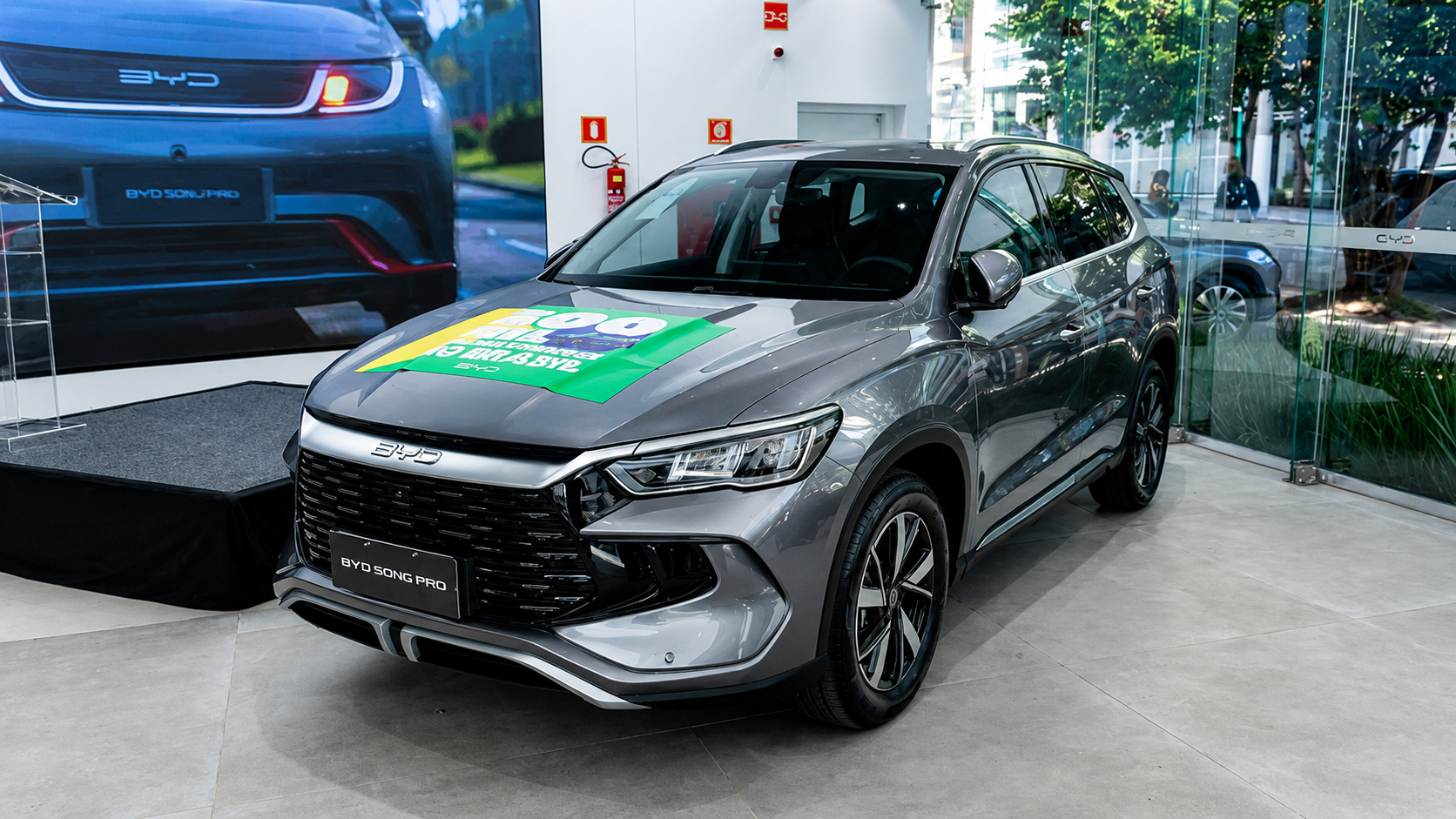
BYD’s Dolphin Mini Becomes Electric Vehicle Sensation in Brazil, Surpassing 300,000 Sales with Major Factory and Retail Leadership

-
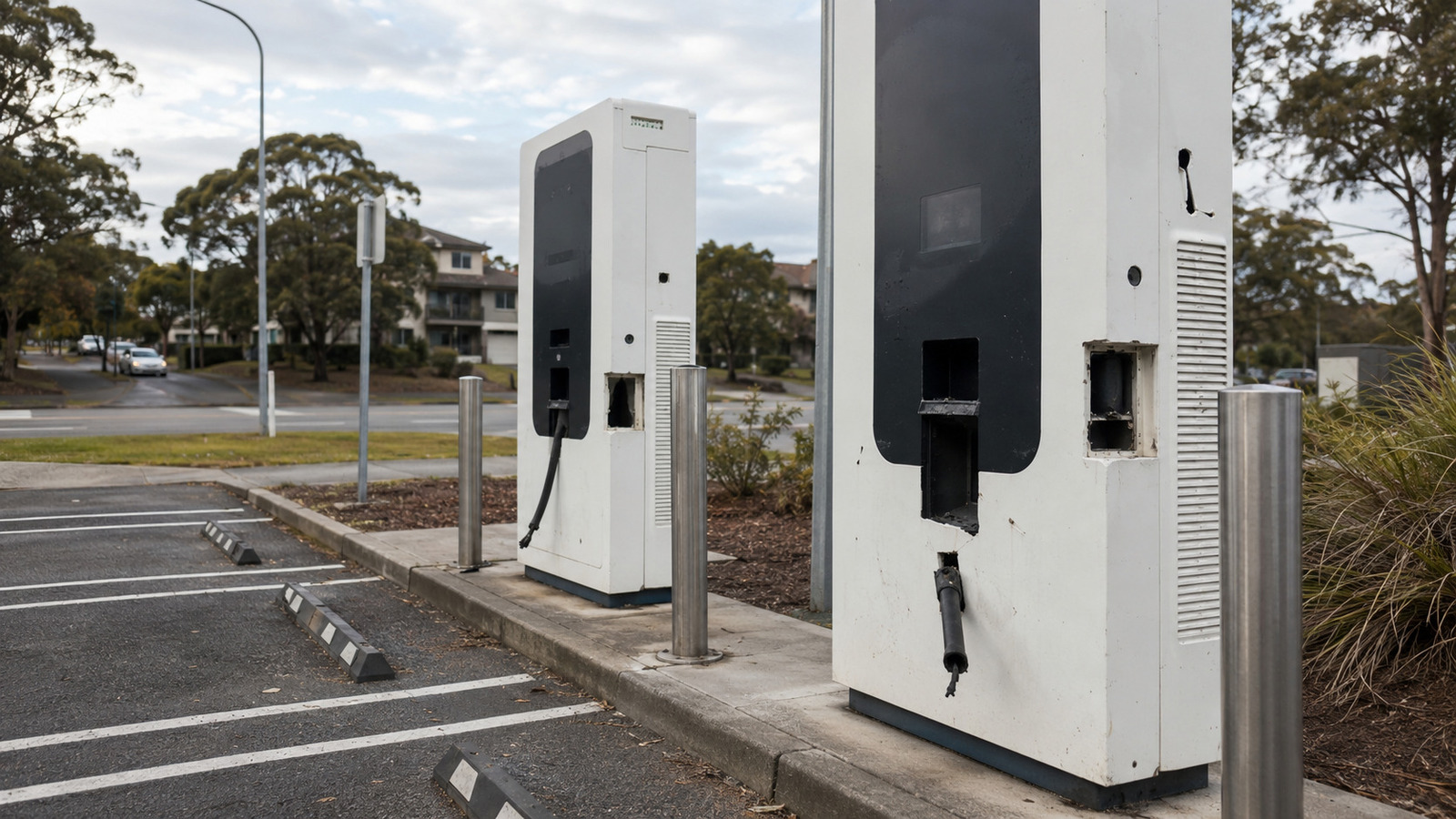
Brazil Faces Surge in Copper Wire Thefts at Electric Car Charging Stations, Leaving Drivers Stranded

-
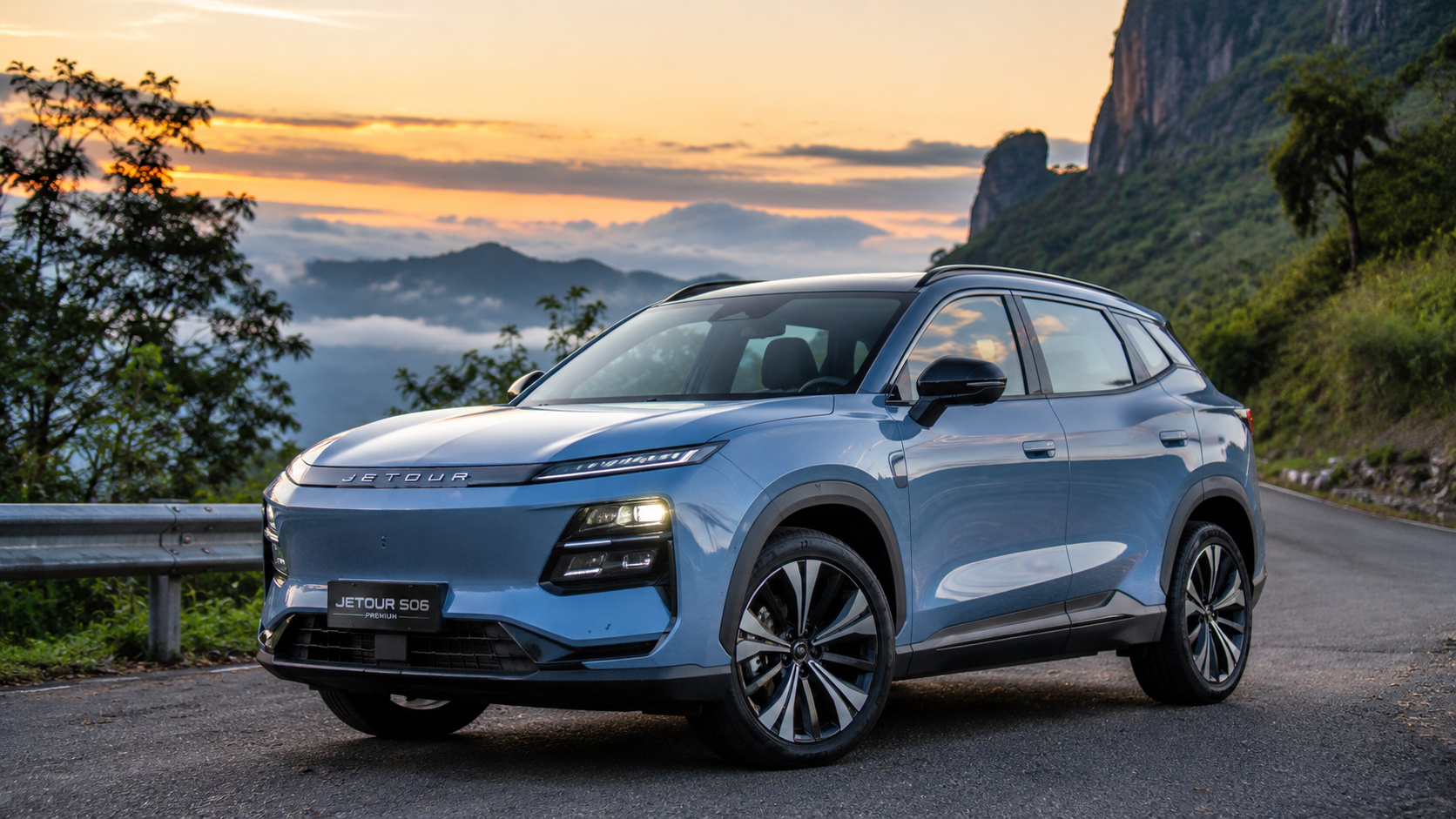
Jetour S06 Launches in Brazil as a More Affordable Plug-In Hybrid SUV Than BYD Song Plus and Haval H6, But Tests Highlight Its Shortcomings
-
Electric and Hybrid Cars Set to Transform Brazilian Streets: A New Era Begins
The plan involves the Foxtron brand, Foxconn’s automotive arm. Furthermore, the strategy could bring Brazil closer to a global production chain linked to electrification.
CDMS Model Paves Way for Partnership in Brazil
According to James Wu, spokesperson for the Hon Hai Technology group, Foxconn’s controller, the model adopted by the company is called CDMS.
The acronym stands for Contract, Design, Manufacturing, and Services. This way, a Brazilian company could handle the local operation.
Meanwhile, Foxconn would provide technology and production scale. Furthermore, any manufacturer can become a client within this format.
According to Wu, the company does not intend to operate solely with its own brand. Therefore, the model expands partnership possibilities.
The executive stated that Brazil is on the radar. If there are interested clients, the company will be open to this opportunity.
Brazilian Market Catches Foxconn’s Attention
Brazil appears in the strategy because it has a large internal automotive market. Furthermore, it has a population of over 200 million inhabitants.
According to Wu, Foxconn wants to find a partner who wishes to build a brand and sell electric cars.
However, this partner may not yet have all the technical capacity needed to develop and manufacture vehicles.
Foxconn already maintains a presence in Brazil. The company has a factory for electronic components in Jundiaí, São Paulo.
Therefore, the executive stated that, over time, the company should seek partnerships in the country. In this scenario, anything is possible.

Hon Hai Wants to Transform Taiwan into an Electric Showcase
Currently, Hon Hai is focusing efforts on verticalizing the production of electric vehicles in Taiwan.
According to James Wu, demand for electric models has grown over the last decade. Therefore, the group decided to invest in this segment.
About five years ago, the company started treating the electric car as the engine of the future.
The company wants to show that Taiwan has the capacity to develop electric motors and manufacture battery-powered cars.
According to Wu, traditional manufacturers may face cost and speed challenges. Therefore, external partnerships can become strategic.

Foxtron prepares new generation of N7 electric SUV
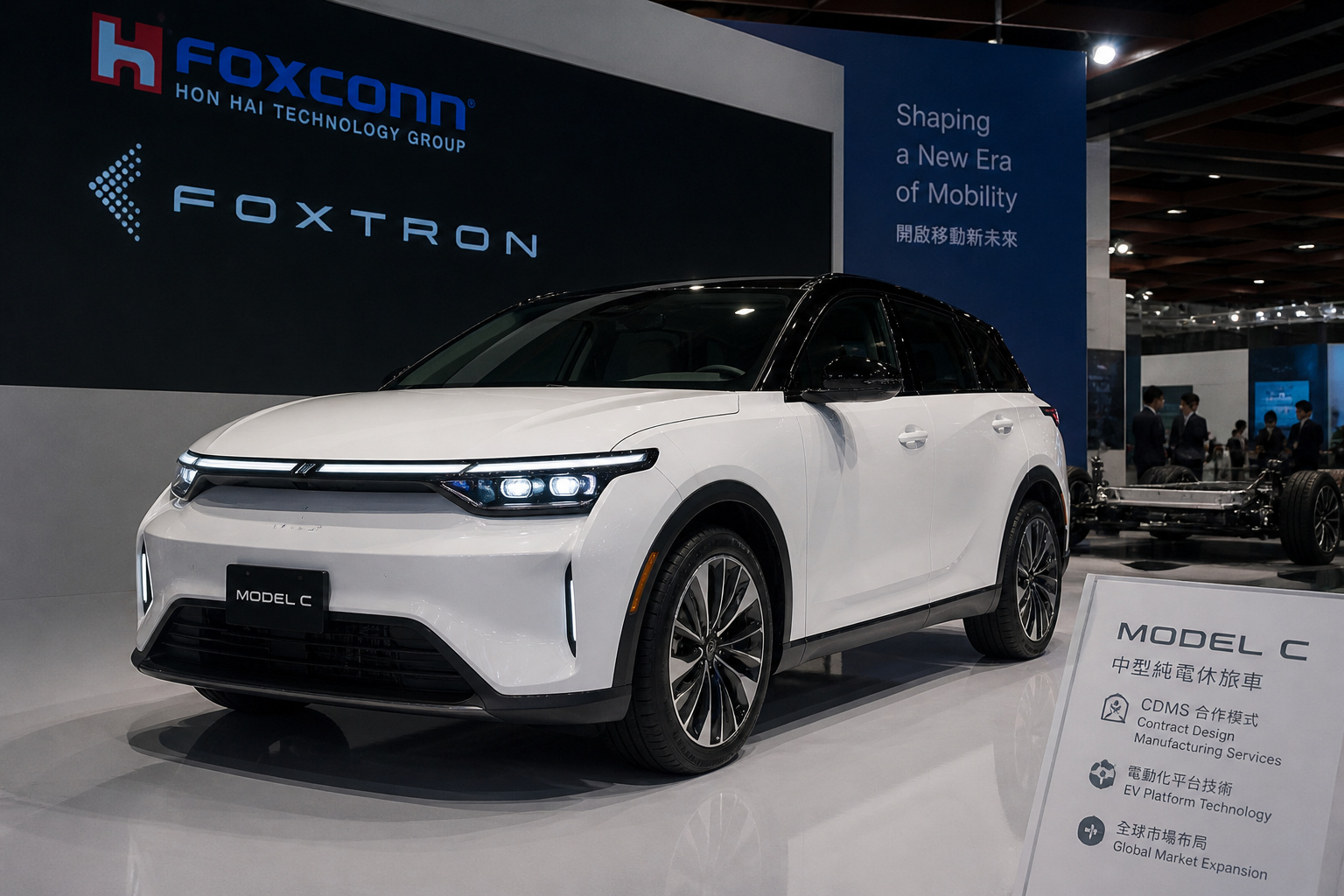
Foxtron will soon begin producing the new generation of the N7 electric SUV, known as Model C.
This model will replace the Luxgen n7, the company’s first electric car.
According to AutoData, the final version was presented to the public during the 360º Mobility Mega Show.
Compared to the previous model, the SUV features a completely new look. Furthermore, it presents significant structural changes.
Among them are the physical door handles on all four doors, replacing the retractable system common in Asian models.
Inside, the car received physical buttons below the vertical touchscreen multimedia center. It also features a digital dashboard, a multifunction steering wheel, and white synthetic leather seats.
Model B already has over a thousand orders
Meanwhile, the Model B, also called Bria, began to be sold in Taiwan at the end of last year.
According to AutoData, the urban SUV has already surpassed 1,000 orders.
The model features sporty elements, such as red seat belts and a distinctive interior finish.
The dashboard features a digital display, a horizontal multimedia center, and physical buttons.
Unlike the Model C, the Model B uses a black interior finish. This pattern appears on the seats, dashboard, and doors.
Prices range between R$ 143 thousand and R$ 182.5 thousand, considering direct conversion. The reported range is 516 km in the NEDC cycle.
Kaohsiung factory is ready for export
Foxconn’s electric vehicle factory is located in Kaohsiung, Taiwan. The unit is also expected to produce electric motorcycles in the future.
When asked about new factories, James Wu stated that everything would depend on customer needs.
According to him, Hon Hai has 233 factories in 24 countries. Therefore, expanding production to other markets would not be a problem.
However, factors such as costs, logistics, and demand will be decisive in this choice.
Thus, not all vehicles need to be produced in Taiwan. However, partners need to have local production capacity.
Can Brazil enter the global electric vehicle route?
Foxconn’s potential partnership in Brazil still has no defined timeline. Furthermore, there is no confirmation of a specific factory or model.
Even so, the company’s declared interest places the country on the global electric mobility radar.
Meanwhile, Foxconn seeks to transform its electronics experience into a new industrial front.
Given this scenario, if it finds a strategic partner, can Brazil become part of this global expansion of electric vehicles?