Portuguese
  Spanish


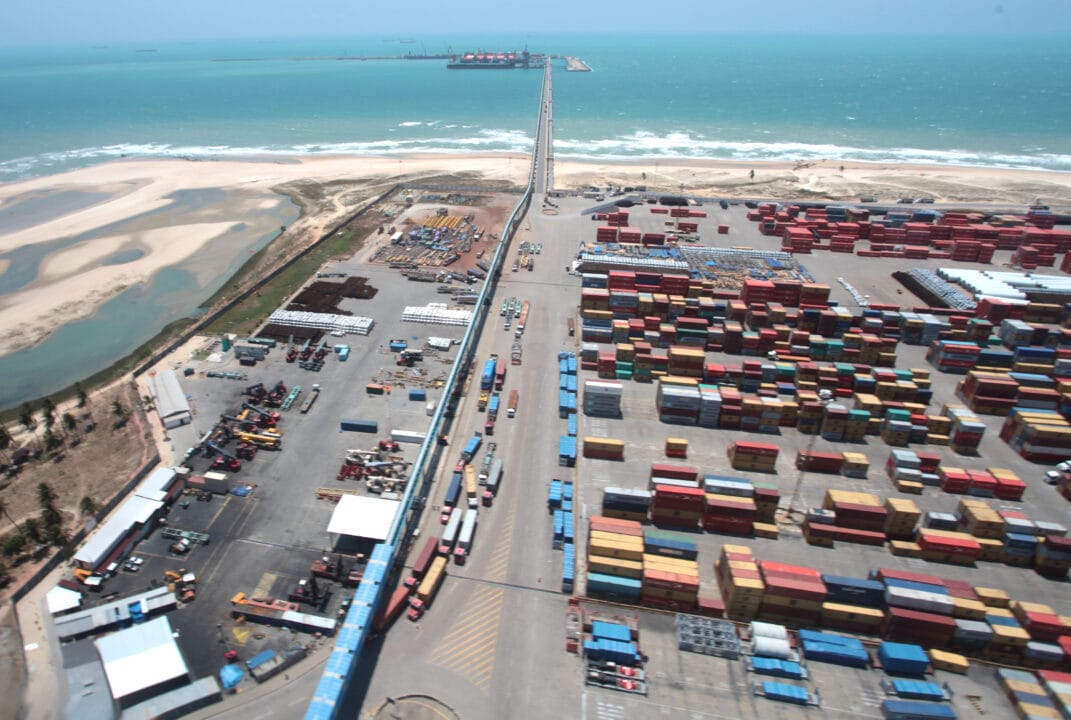

Port of Açu Receives Billion-Dollar Investment for the Installation of a Green Hydrogen Hub. The Project Promises to Generate Thousands of Direct and Indirect Jobs.
The industrial district of Port of Açu is moving towards becoming a reference in energy transition in Brazil. The statement from the general director of the complex in the 5th district of São João da Barra, Vinícius Patel, during a public hearing held last Thursday (22), aims at the installation of a Green Hydrogen Hub and low-carbon derivatives, generating thousands of jobs.
More Than 5 Thousand Jobs Will Be Generated at Port of Açu
With an estimated R$ 40 billion in investments, the industrial plant estimates the generation of 5,600 jobs during the four phases of implementation. According to a survey by the website Campos 24 horas, the estimate is for 1,200 direct and indirect jobs just in the initial stage.
According to Patel, the main goal is to make Port of Açu the port of the energy transition of a country on the path to what he calls neo-industrialization with the use of low carbon footprint energy sources. This phase also represents a new stage of opportunities, partnerships with universities, job and income generation, and training of people.
-
Oil feels the weight of the war between the United States and Iran on the same day that Tehran buries its assassinated supreme leader and the world watches to see who will control the Strait of Hormuz, a strategic route for global oil.

-
The perks at Nubank are over: the bank announces a monthly fee for HBO Max, which was “free,” with a 12-month term on Ultravioleta, 6 months on Nubank+, and the fee starting from January 2027.

-
The Chamber releases R$ 10 billion to hold the price of diesel until December and proves that Brazilian fuel remains tied to Congress.

-
Has the charge for sitting together ended? Anac confirms that minors under 16 have the right to a seat next to their guardians without an extra fee, and airlines may be penalized for failing to comply with the new rule.




Currently, the Port of Açu is the largest thermoelectric complex in Latin America, where over 7,000 jobs are generated and, for the company, this is a source of pride, with this workforce formation applying not only to the port but to people who went through training programs and are now in other states of the country.
The opportunities are also seen in hiring service providers, to micro and small local businesses that will serve the new industrial venture, starting from the Supplier Development Program (PDF).
Green Hydrogen Produced at Port of Açu Will Not Be Exported
At the site where the green hydrogen hub, which aims to generate thousands of jobs will be built, the installation of an administrative and technological center, areas for methanol production, substation, ammonia, green and blue hydrogen, logistics and supply areas, and two treatment stations is planned. The entire world will consume new renewable fuels like H2V.
To meet the targets set in the Paris Agreement, it will be necessary to cut CO2 emissions by 60% by 2050, and only green hydrogen will allow for the decarbonization of some sectors, such as steelmaking and fertilizer production.
According to Vinícius, the focus of Port of Açu is not on exporting. Port of Açu is connected to the Southeast region, where 54% of Brazil’s GDP is located. There is a wave of neo-industrialization in the country that will need this low carbon footprint energy.
Among the industries potentially consuming hydrogen are industrial plants for iron and steel, electric power generation refineries, gas network injection, as well as maritime, aerial, and land transportation.
Learn How Hydrogen Will Be Produced at the Hub
The production of hydrogen, which will create various jobs, involves the use of natural gas through steam reforming, while water is used through electrolyzers, separating water (H2O) into hydrogen and oxygen using electricity.
Green hydrogen is transported through other chemical products such as ammonia or methanol. Estimates point to a production of 1.9 million tons per year of ammonia and 314,000 tons per year of methanol. The 2,555 m³ of water per hour to be used is divided into 50% seawater, 40% reuse, and 10% groundwater.