Portuguese
  Spanish


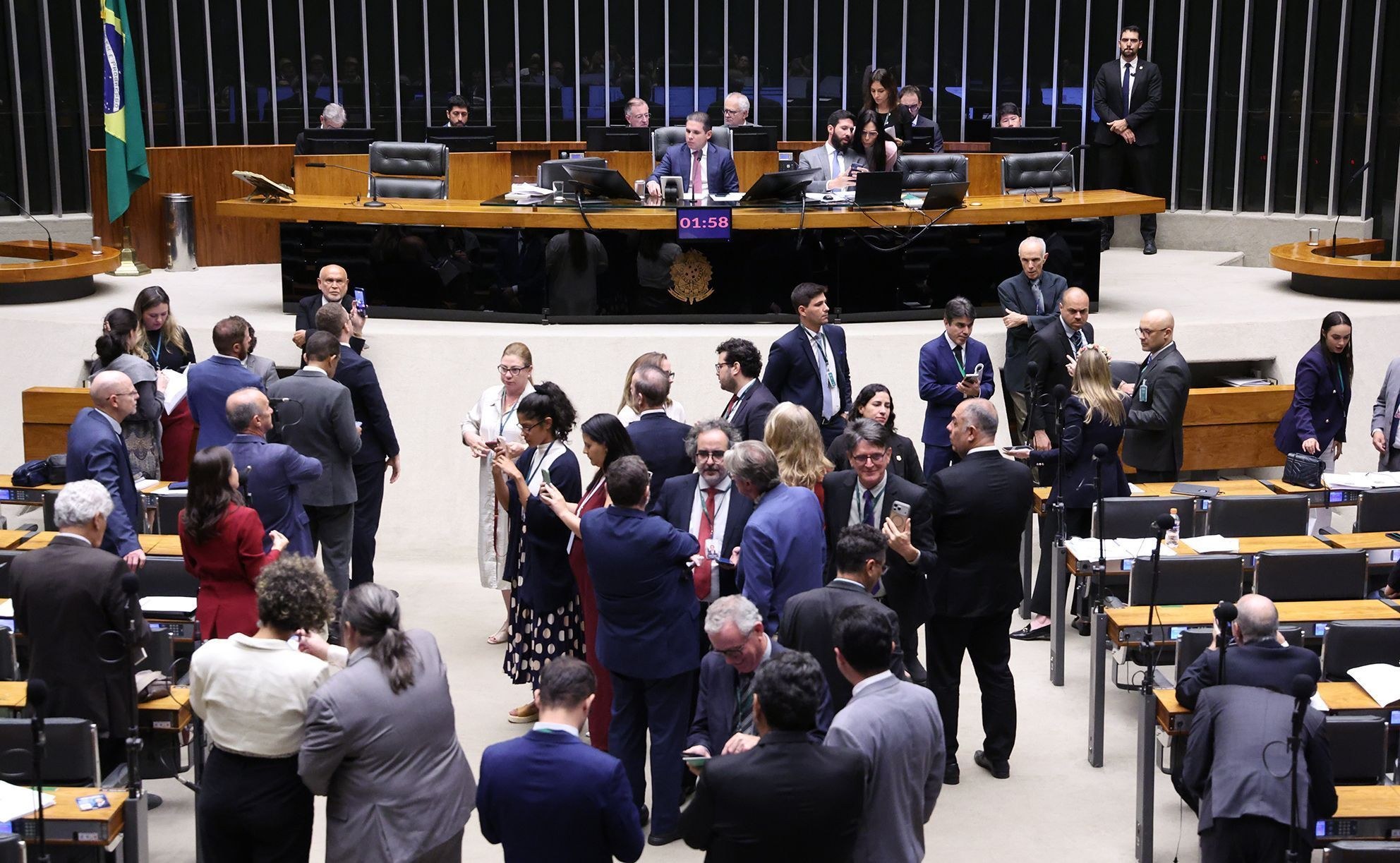
The Chamber approved this Tuesday, July 8, the opening of R$ 10 billion in extraordinary credit for the Ministry of Mines and Energy, a massive aid aimed at subsidizing the price of diesel until the end of the year, making it clear that the price of Brazilian fuel remains tied to the mood of the plenary and showing the size of the cost the country pays to avoid a price hike at the pump.
The provisional measure now goes to the Federal Senate and, if approved, ensures resources to cover the difference between the international price of diesel and the domestic price practiced by distributors. It’s a known budgetary engineering: instead of Petrobras absorbing the entire cost of alignment with the external market, the Treasury steps in with a part, relieves the final consumer, and transfers the bill to public debt.
The text is valid until December 31, 2026. That is, the R$ 10 billion needs to be spent this year and serves to cover a specific window of pressure on the diesel price, the moment when the soybean and corn harvest in the Midwest, the peak of civil construction activity, and the intensity of road transport make consumption soar.
What the government claimed to request this check
In the text that supported the vote, the government argued that the “absence of swift mitigating measures has the potential to generate an inflationary cascade effect, supply shortages, and severe compromise of national economic activity.” We understand the subtext: the price of diesel is one of the most sensitive indicators of Brazilian inflation because it directly impacts freight, food prices in supermarkets, and urban transport adjustments.
-
Has the charge for sitting together ended? Anac confirms that minors under 16 have the right to a seat next to their guardians without an extra fee, and airlines may be penalized for failing to comply with the new rule.

-
After nearly two decades in operation, the Grupo Dass shoe factory ends production, confirms 150 layoffs, and shows how the drop in orders changed everything.

-
Pizza Day highlights a curious contrast in Brazil: while 13 new pizzerias open every day, the price of mozzarella skyrockets, and the country’s most beloved dish weighs increasingly on family budgets.
-
It’s official: Petrobras takes 75% of block 3 in São Tomé and Príncipe and debuts as an offshore operator outside South America.


The opposition did not remain silent. The opposition bloc leader accused the Executive of having harmed Petrobras before and now passing the bill to the Union. The criticism has a basis. In previous months, the state company kept the domestic price below the international one in successive waves of lag, which reduces the company’s margin, and the new round of subsidy via the Treasury comes precisely to cover part of this gap.
Why diesel is the most political fuel in Brazil
Unlike gasoline, which mainly affects private drivers, diesel moves the entire country. It fuels trucks, urban buses, harvesters, tractors, emergency generators, coastal shipping vessels, and a large part of the utility fleet that the Brazilian economy uses every day. A 15% increase in diesel quickly turns into freight adjustments and generalized inflationary pressure.
It’s no wonder that the price of diesel brought down a minister in 2018, during the truckers’ strike, and it’s the diesel price that appears every week in the political account of whoever occupies the Planalto. Approving R$ 10 billion to hold the bomb until December is, in the view of any market analyst, insurance against political crisis during the second semester.
The bill that remains for Petrobras
On the other side of the coin, Petrobras has been facing double pressure. If it raises the price along with the international market, the government complains and Congress legislates against it. If it holds the price below the market, the financial result melts, and shareholders, including Brazilian pension funds, start demanding explanations. We know that since 2024, the company has adopted a policy of “diesel at international parity price with occasional lags,” a technical translation for “we hold the price when it is politically unacceptable to change.”
The credit opening approved yesterday functions, in practice, as a fiscal cushion so that Petrobras does not have to absorb the next wave of lag alone. If the barrel rises too much in the second semester, and the international market shows signs of supply tightening, the R$ 10 billion helps cover the difference without detonating the state company’s balance sheet.
Who ultimately pays this bill
This is where things get uncomfortable. Extraordinary credit is an expense not foreseen in the Budget, that is, it enters the public debt account. Some economists point out that, at the end of the day, the Brazilian consumer pays the same bill avoided at the pump, only spread in debt interest, future inflation, or cuts in other social programs. The path is indirect, but it exists.
Even so, the policy of subsidizing diesel has become standard in several Latin American countries in recent decades. Mexico, Argentina, and Chile have already used similar formulas in critical moments, with varied results. In Brazil, the model has the obvious advantage of silencing the dissatisfaction of truckers and rural producers, two groups that know how to organize mobilizations that can halt the country in a week.
What lies ahead
I imagine the scenario in the Senate. Since the measure already came from the Chamber with government support and the opposition knows that blocking a credit for diesel generates almost immediate public backlash, the realistic expectation is for approval in a few weeks. The text becomes law, resources are released, and the Ministry of Mines and Energy begins to pass on subsidies via tariff mechanism, probably still in August.
After that, it remains to monitor how much of the international price effectively materializes at the pump. If Brent returns to US$ 100, the R$ 10 billion may disappear in a few months. If it remains stable, there may be some left by the end of the year. What is certain is that Brazilian fuel remains with one foot tied in Congress and will continue this way as long as the domestic diesel price is more valuable as a political thermometer than as an economic signal.
R$ 10 billion to hold the diesel price until December is a fair insurance or is Petrobras paying the same bill twice?