Portuguese
  Spanish


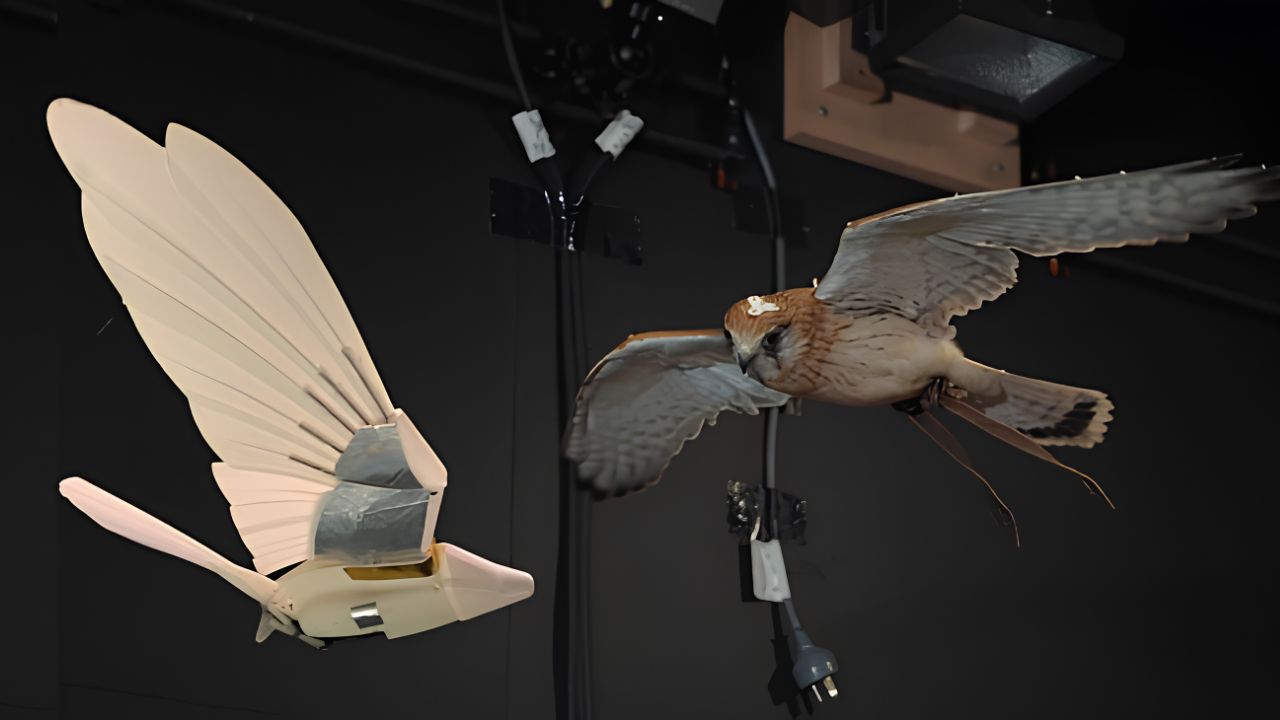

Researchers developed a robotic bird inspired by the falcon to solve aerial stability problems in urban and turbulent environments.
Researchers from RMIT University, Australia, published on June 17, 2026, a study on the development of a biomimetic robotic bird designed to navigate precisely in turbulent environments, overcoming the instability that limits the operation of conventional drones in urban areas. The prototype, which replicates the adaptability of falcons (Falco cenchroides), uses a low-inertia articulated skeleton capable of altering the geometry of its wings and tail in real-time to counteract wind gusts.
By integrating motion capture data from real birds with morphological control systems, the team created a solution that allows these unmanned aerial vehicles to maintain balance instantly, paving the way for a new class of aircraft more efficient in tasks such as search, rescue, and autonomous deliveries.
About the robotic bird
To achieve the expected results, the team began the work by monitoring real falcons in wind tunnels through motion capture sensors. From this data collection, the great challenge was to translate biological agility into a mechanical system.
-
U.S. university performs surgeries with remotely controlled humanoid robots

-
A 12-year-old boy from the municipal network of Canoas won gold in the Brazilian Mathematics Olympiad, earning the school’s first national medal in history and standing out in a competition that brought together more than 18 million students, demonstrating how public education can uncover hidden talents in Brazil.
-
Why did a company that was already earning US$ 1 million decide to completely change its strategy? The answer begins with used bottles, worms, and an unexpected decision.

-
Where it almost never rains, residents hung giant nets in the desert mountains and started to ‘fish’ drinking water from the fog: the nets can collect thousands of liters per day directly from the mist.


As researcher Matthew Penn explains, the birds’ ability lies in the almost instantaneous perception of disturbances and the coordinated response of feathers and joints. The robotic bird prototype focuses on integrating a highly complex wing, designed to be lightweight and have low rotational inertia.
By reducing the weight and resistance of the moving parts, the robot can execute ultra-fast trajectory corrections.
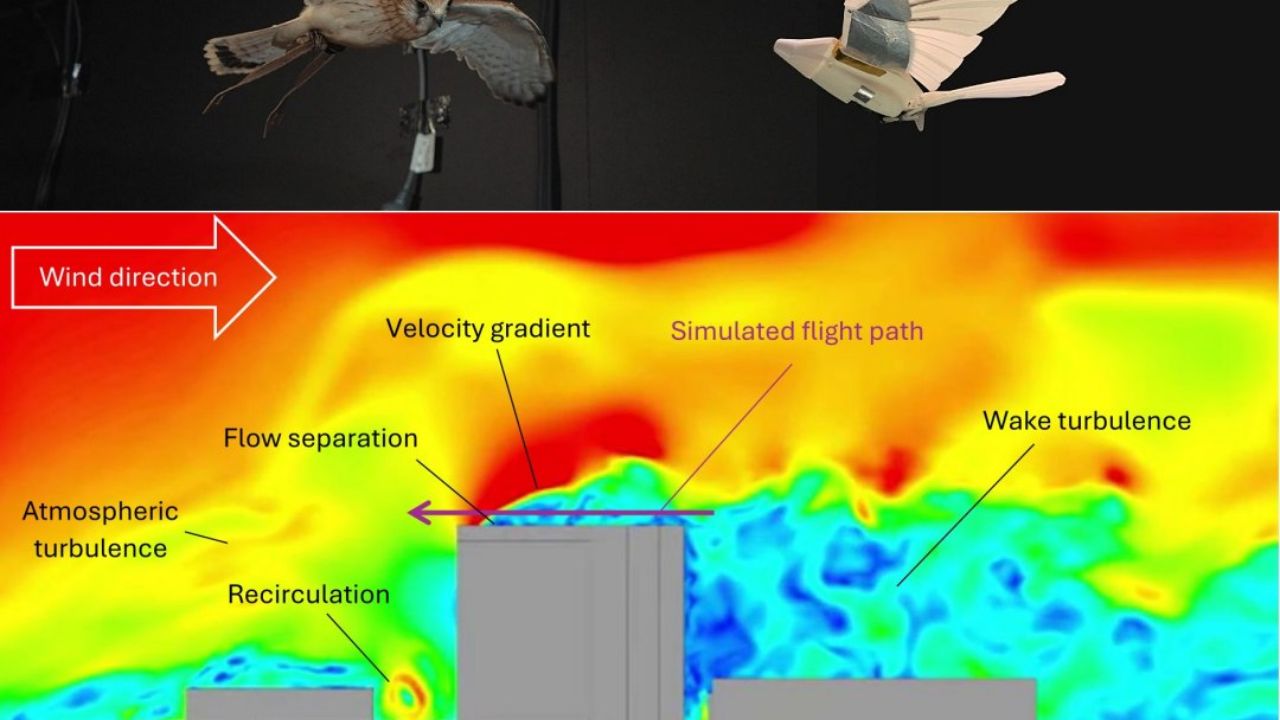
This design, which prioritizes physical agility instead of relying solely on heavy motors, is what allows the equipment to maintain a precise position in the air, even under gusts that would destabilize conventional drones.
Flight Dynamics: The Harmony Between Wing and Tail
The project’s differential lies in the structure of continuous morphological alteration. Instead of using traditional rigid surfaces like the ailerons of common airplanes, the device uses an articulated mechanism:
- Adaptable Wingspan: The mechanical skeleton allows the wing to extend or retract as needed for lift.
- Active Tail: The rear set has degrees of freedom that allow tilting and fan-like opening.
- Three-Dimensional Synchronization: The system couples the movements of the wing and tail, allowing lift control to be isolated without altering the robot’s pitch.
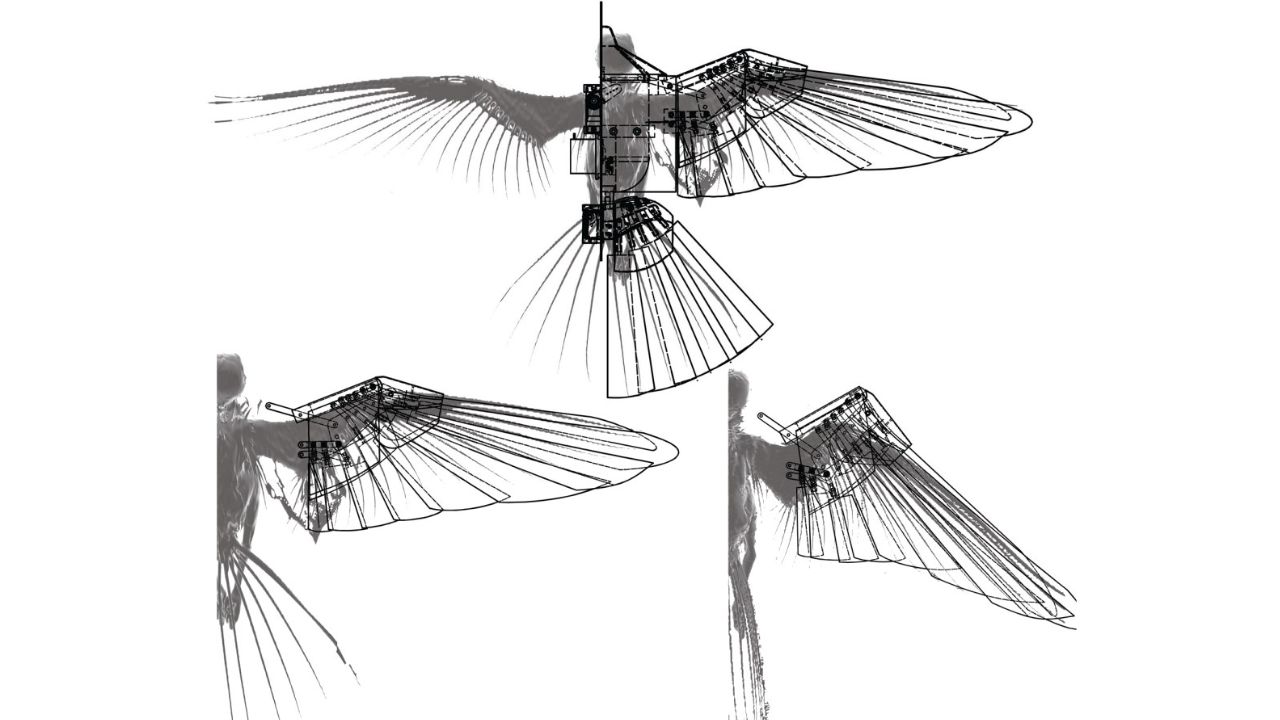
This intelligent coordination allows the robotic bird to make geometric adjustments during flight, absorbing changes in airflow both passively and actively simultaneously. It is this harmony that enables the robot to remain stationary at an exact point, mimicking the efficient strategy that falcons use to stay firm against headwinds.
Practical Applications of the Robotic Bird
Currently, the researchers’ focus is to ensure the viability of this technology for UAVs used in search and rescue, aerial photography, parcel deliveries, and agricultural monitoring.
However, the success of the robotic bird points to a larger scale. The team intends to simplify the algorithms and data obtained so that the principles of variable morphology can be adapted in the future to larger drones and even passenger airplanes.
The advancement represents a significant milestone in aeronautical engineering. By proving that energy efficiency and flight safety can be achieved through biomimicry — copying the evolutionary design of wings — science opens doors to a future where turbulence will no longer be an impediment to autonomous aviation.
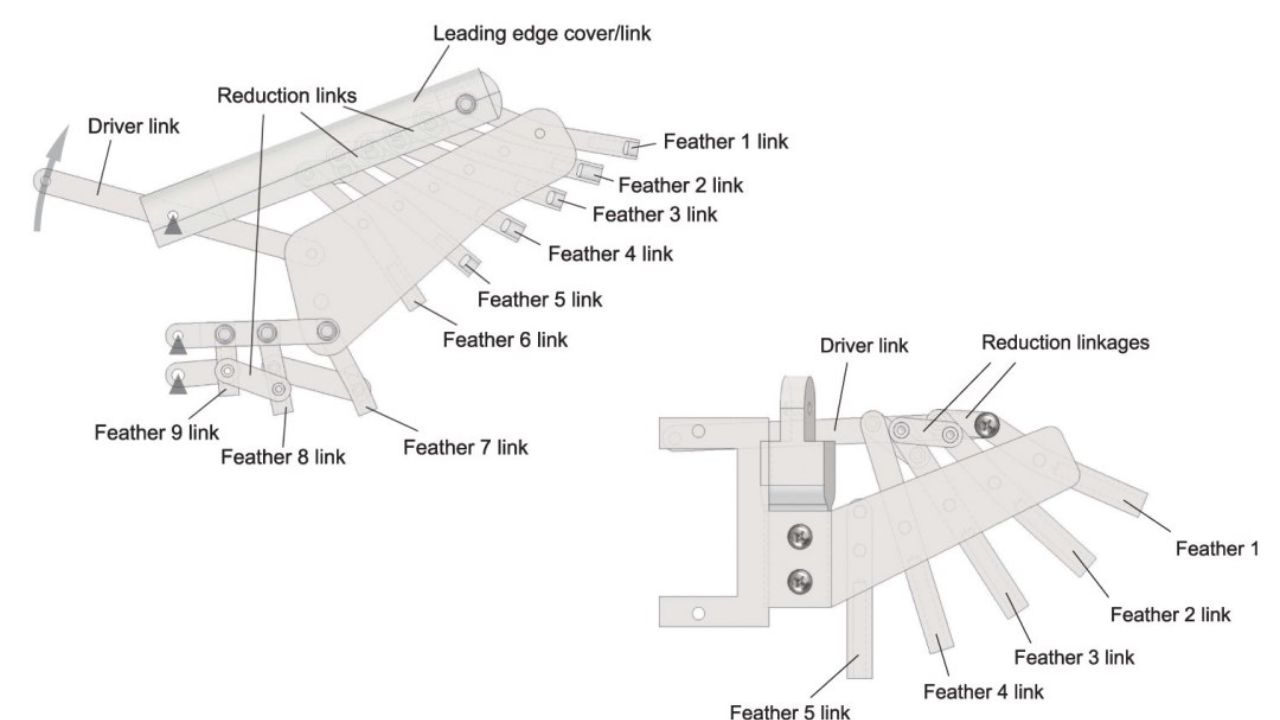
The robotic bird is not just a flying machine, but a model of structural intelligence that promises to change the way we interact with urban airspace.
Source: Inovação Tecnológica