Portuguese
  Spanish




Ultra-thin tower in Manhattan combines extreme engineering, residential luxury, and rare wind solutions, with a structure anchored to rock, damping systems at the top, and integration with the historic Steinway Hall in one of New York’s most valued areas.
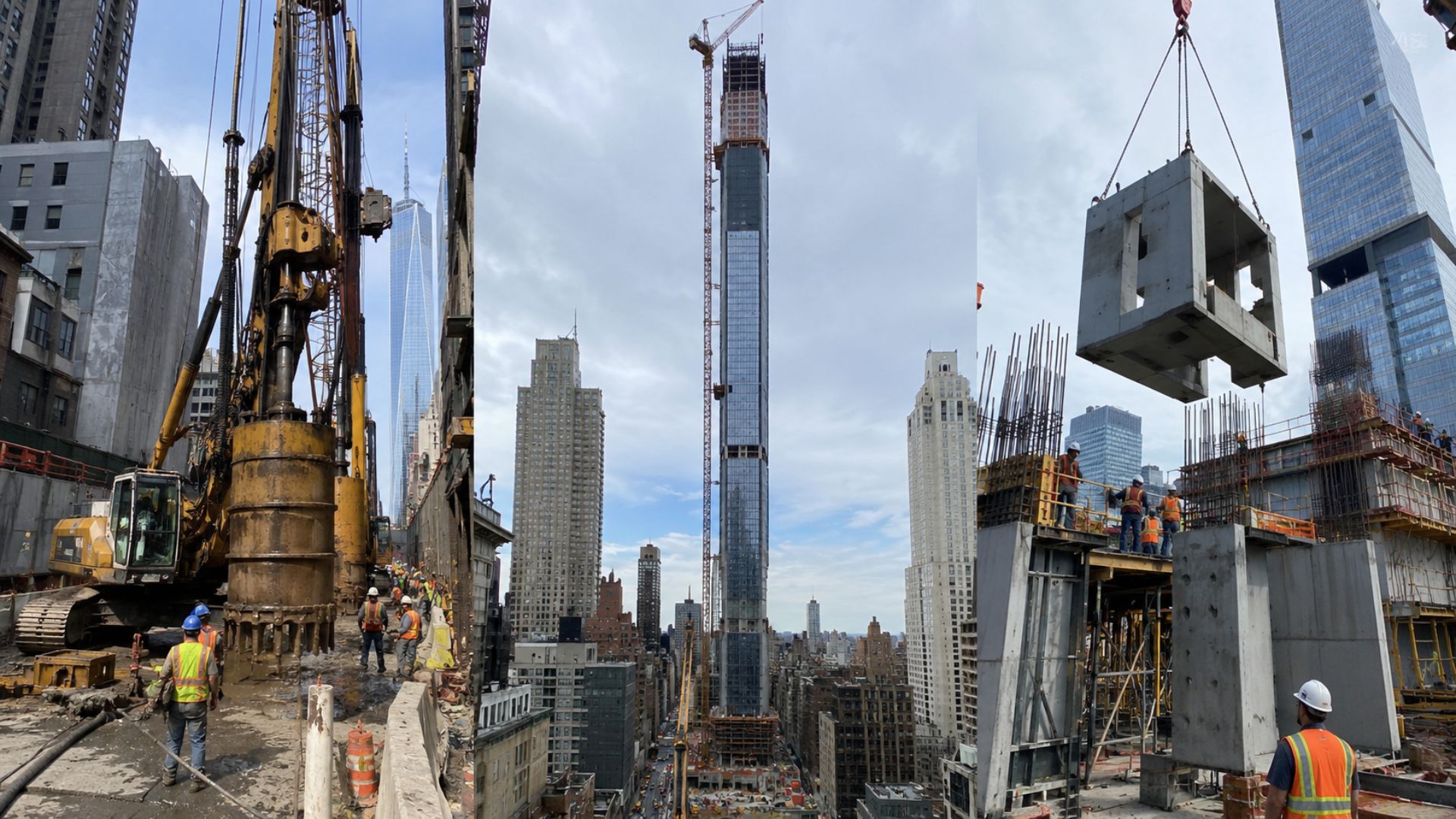
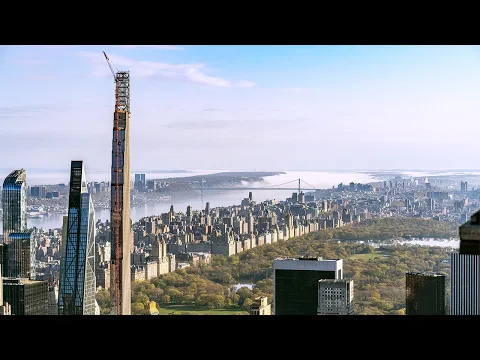
The Steinway Tower, officially 111 West 57th Street, has consolidated one of the most radical feats of skyscraper engineering in Manhattan: a residential building of 435.3 meters, 84 floors above ground, and a slenderness ratio close to 1:24, considered one of the most extreme ever executed in a habitable tower.
Built in the so-called Billionaires’ Row, a strip of ultra-high-end developments near Central Park, the tower combines luxury apartments, integration with a historic building, and structural solutions designed to control wind, vibration, and displacements in an exceptionally narrow construction.
The project was developed by JDS Development Group, Property Markets Group, and Spruce Capital Partners, with architecture by SHoP Architects and structural engineering by WSP, according to data from the Council on Vertical Urbanism, formerly CTBUH, an international reference in the monitoring of tall buildings.
-
400 km² of Greenhouses in Almería, Spain, Astonish American Visitor by Producing Millions of Tons of Produce for Cold-Weather Markets

-
Antarctic Volcano Emits Microscopic Gold Particles That Travel Up to 1,000 Kilometers Across the Continent
-
Little-known Japanese factory is the world’s largest zipper manufacturer, producing 7 billion pieces annually and closing half the world’s pants.

-
Brazilian Factory Recycles One-Third of the Country’s Styrofoam Waste, Matching European Levels with 51,000 Tons Reused Since 2007


Steinway Tower combines residential luxury and extreme engineering
The construction did not start from a large, isolated plot, but from one of the most contested points in Midtown Manhattan, where the new skyscraper was integrated with the Steinway Hall, a historic building associated with the piano manufacturer Steinway & Sons and completed in the 1920s.
Instead of erasing the previous construction, the development preserved the architectural presence of the Steinway Hall and erected behind it an ultra-thin tower, clad in glass, bronze, and terracotta, materials chosen to dialogue with the tradition of New York’s classic skyscrapers.
SHoP Architects themselves state that the building, at 1,428 feet tall, was designed to contribute to the city’s skyline and revive the use of terracotta, a striking material from the so-called golden age of Manhattan skyscrapers.

Deep foundation anchors the tower to Manhattan’s rock
The decisive challenge was below the street, because such a tall and narrow tower needs to withstand not only vertical weight but also the overturning forces generated by lateral winds, especially on an island surrounded by urban corridors that accelerate gusts.
Available technical reports indicate that the foundation uses almost 200 steel bars driven into the Manhattan bedrock, with depths of up to about 100 feet, equivalent to just over 30 meters, to anchor the structure to the subsoil.
This solution transforms the base into a deep anchoring system, comparable to structural roots, capable of distributing forces to the bedrock and reducing the risk of displacements incompatible with a construction of such unusual proportions.
Structure uses high-strength concrete and linking beams
Above the foundation, the tower was designed with a concentrated structural system, as narrow residential floors did not allow for the repetition of many internal columns without compromising the apartments and panoramic views of Manhattan and Central Park.
The engineering solution relied on large shear walls, linking beams, high-strength concrete slabs, and metal components, creating a structure rigid enough to reach the height without excessively occupying internal space.
In typical floors, columns that would normally be on the south side were replaced by a deep concrete beam, while only two columns remain on the north side, a strategy that helped keep internal areas more open.
The concrete used in the construction reached strengths of up to 14,000 psi, about 95.6 MPa, a high level to allow for more compact elements, reduce reinforcement congestion, and maintain the necessary rigidity of the assembly.
800-ton damper reduces oscillations at the top
In ultra-thin buildings, the wind is not just a load to be overcome by the structure; it also directly affects the comfort of those occupying the upper floors, as accelerations and oscillations can be felt by the residents.
Therefore, the project team conducted wind tunnel tests to understand pressures, vibrations, and aerodynamic effects, as well as to adjust the geometry and distribution of reinforcements before the structure’s completion.

One of the responses was the creation of three open floors, which allow part of the wind to pass through the body of the tower and help reduce the phenomenon known as vortex shedding, common in tall and slender structures.
Another measure was the installation of four outrigger systems on mechanical floors, connecting important structural parts to increase global rigidity and improve the building’s response to lateral forces.
Near the top, an 800-ton tuned mass damper acts as a dynamic counterweight; when the tower moves under wind action, the equipment helps reduce accelerations and vibrations perceived on the occupied floors.
Apartments occupy an ultra-thin tower on Billionaires’ Row
The Steinway Tower was not conceived as a mixed-use building with high traffic, but as a high-standard residential tower, with 60 registered apartments in the international database of tall buildings and common areas concentrated in part of the base.
The configuration allows for few residents per floor and, on many levels, units with the feeling of a private residence suspended above the city, a feature valued in luxury developments aimed at high-net-worth buyers.
The advertised amenities include an indoor pool, fitness areas, social environments, and private service spaces, in line with the building’s positioning in the most expensive segment of Manhattan’s real estate market.
From a technical standpoint, the operation requires elevators, pressurization, hydraulic systems, fire protection, and maintenance compatible with a tower much narrower than conventional skyscrapers, although concentrated in residential use.
Tower redefines limits in New York’s skyline
The tower has also become part of the debate about the transformation of New York’s skyline, marked in recent decades by increasingly tall, thin, and expensive residential buildings along 57th Street.
For engineering, 111 West 57th Street demonstrated how deep foundations, high-strength concrete, aerodynamic testing, open floors, and dynamic damping can enable a residential building in proportions previously considered very difficult for everyday use.
For Manhattan, the result is more ambiguous: while it adds a recognizable silhouette to the skyline, it reinforces the concentration of ultra-luxury developments in an area associated with real estate appreciation and the competition for privileged views of Central Park.