






 Portuguese
  Spanish


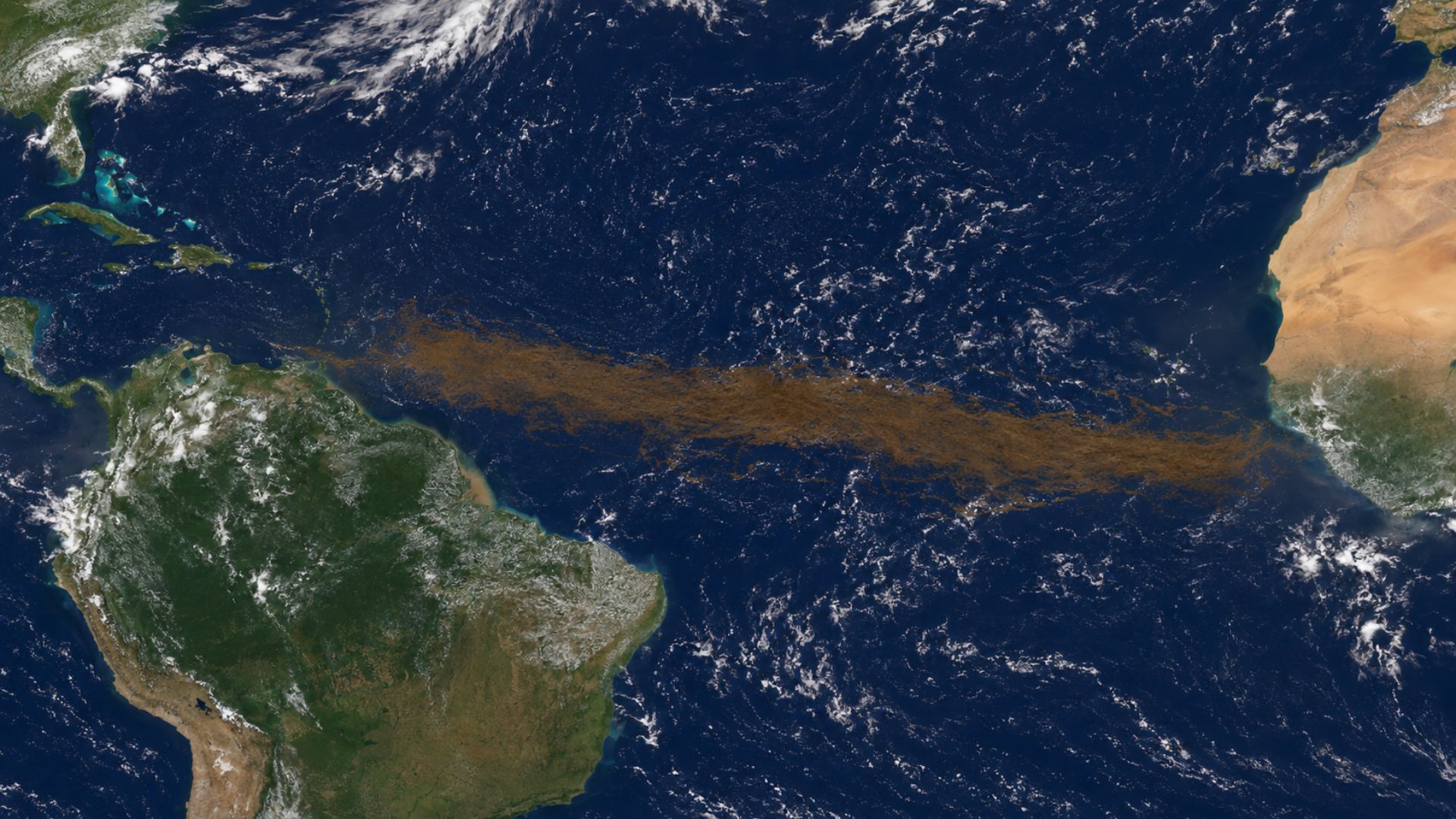


The satellite image is deceiving: it looks like a land bridge floating in the sea. In fact, it is living mass, an alga that spreads in floating mats the size of a continent. In the open ocean, it shelters fish and turtles. Near the beach, however, it becomes a smelly problem that threatens Caribbean tourism.
Seen from space, the scene impresses and even deceives the viewer’s eye. A giant brown strip visible from space, about 8,850 kilometers long, connected Africa to America in the Atlantic Ocean, and satellites revealed that it is neither land nor pollution, but the world’s largest accumulation of seaweed, which set a record in 2025.
The phenomenon is known to scientists as the Great Atlantic Sargassum Belt, an enormous proliferation of the floating macroalga called sargassum, which extends from the west coast of Africa to the Gulf of Mexico. According to researchers from the University of South Florida, in the United States, who monitor the strip with NASA satellite images, in May 2025 the sargassum mass reached about 37.5 million tons, a historical record. Below, we explain what this brown strip is, why it keeps growing and why it can be both beneficial and problematic.
What is this brown strip in the Atlantic
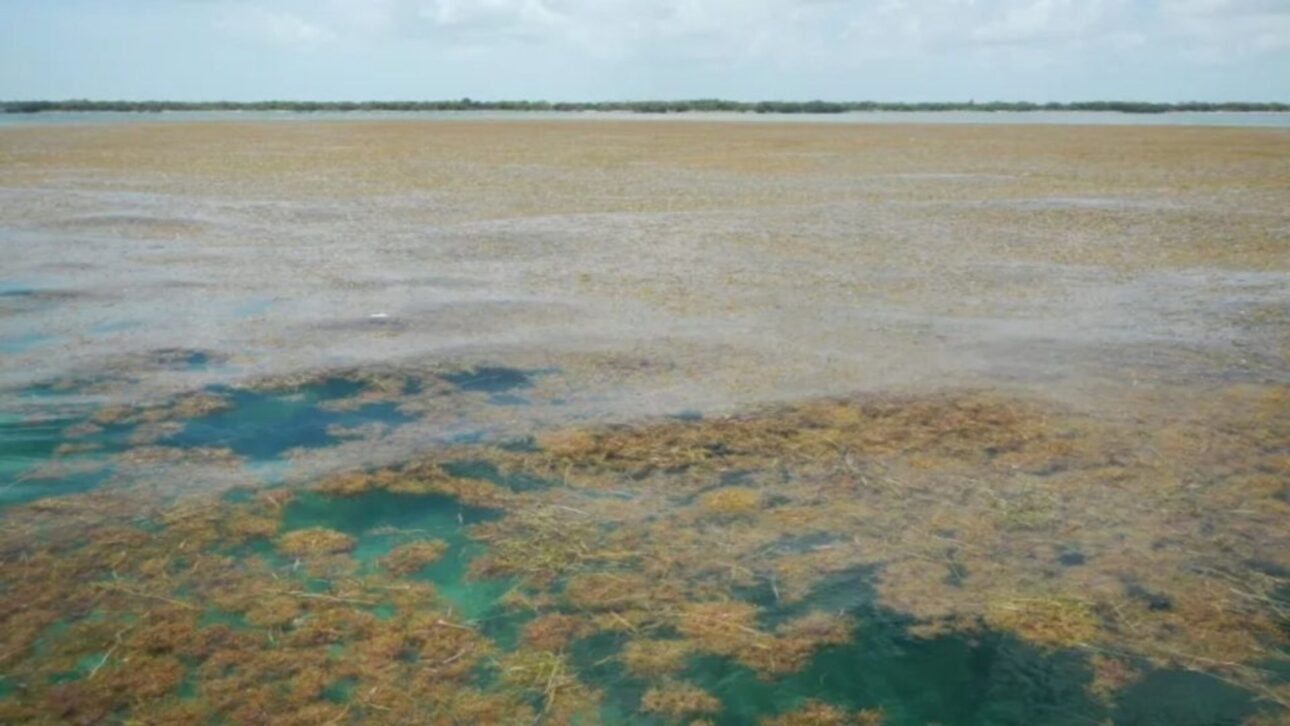
The brown strip is the so-called Great Atlantic Sargassum Belt, and not sand, pollution, or dust, but rather a colossal accumulation of sargassum, a marine macroalga that floats on the sea surface and gathers in such large quantities that they are visible even by satellite, forming the largest algae accumulation on the planet.
-
Artesian Well Becomes Lifeline for Small Brazilian Farm: Drilling Reaches 60 Meters, Finds Marble, Navigates Rock Fissures, and Strikes Fresh Water

-
Street Cleaner in Brazil Finds Discarded Books That Helped His Wife Pass Civil Service Exam and Become Police Captain
-
July’s Night Sky to Feature Planetary Alignments, New Moon, Venus at Sunset, Buck Moon, and Two Meteor Showers

-
Fisherman Catches 18kg Catfish Near Brazil’s Itaipu Lake, Among Largest Recorded in Recent Years



According to a study published in 2019 in the scientific journal Science, led by researcher Mengqiu Wang, from the University of South Florida, this belt was identified as the largest macroalgae bloom in the world.
The phenomenon, on this scale, began to form in 2011 and, since then, reappears almost every year during the spring and summer of the northern hemisphere, growing in size over time.
So, what is a macroalga
To understand sargassum, it is necessary to know what it really is.
A macroalga is an alga large enough to be seen with the naked eye, unlike microscopic microalgae, and sargassum is one of them, living in the water and growing in large floating mats that function as true moving ecosystems in the middle of the ocean.
Although it performs photosynthesis and produces oxygen like plants, sargassum is not a real plant, as it has no roots, stems, or flowers, forming its own group of living beings.
It stays on the surface thanks to small gas-filled sacs that act as buoys, and its mats serve as homes and hiding places for fish, turtles, and other marine animals.
In summary, it is a kind of sea grass, but without being a plant.
Villain or hero? Depends on where it is
Here lies the most interesting point of the story, far from a simplistic view.
Sargassum is not simply harmful, as everything depends on where it is, since in the open sea, spread out, it plays an important ecological role, serving as shelter and nursery for turtles, fish, invertebrates, and birds, besides producing oxygen through photosynthesis, being beneficial for ocean life.
The problem arises when the algae arrive in excess near the coast.
In these conditions, the same algae that helped now hinder: it can obstruct the movement and breathing of marine species, and when it sinks in large quantities, it can suffocate corals and seabed vegetation.
In other words, it is the same organism playing opposite roles, depending on where it accumulates.
The problem that reaches the beaches
For those living on the coast or from tourism, the downside is quite concrete.
When large amounts of sargassum accumulate and rot on the beach sand, the decomposition releases hydrogen sulfide, that strong rotten egg smell, which besides being unpleasant can cause respiratory discomfort and drive tourists away, harming the local economy of coastal regions.
In heavily affected beaches of the Caribbean and the east coast of Florida, this has become a serious and recurring challenge in recent years.
It is important to clarify, however, that it is not a distant danger, but a concrete health and environmental problem when there is a large-scale rotting accumulation.
Cities and hotels in these regions face difficulties in removing the enormous amounts of algae that reach the sands.
Why Sargassum Keeps Growing
The explanation for this advance is not yet fully established by science.
The exact cause of the unchecked growth of the sargassum belt is not entirely clear, but scientists point to strong clues, such as the excess nutrients reaching the ocean from fertilizers used in agriculture, runoff from large rivers, and other sources, since more nutrients in the water mean more food for the algae.
Among the nutrient sources investigated, researchers even cite the runoff from large rivers, such as the discharge of the Amazon River into the Atlantic, as well as processes like the upwelling of deep waters and atmospheric deposition.
Another factor is the changes in ocean current patterns, and the fact that sargassum grows faster when the sea surface temperature is normal or slightly cooler than average.
The combination of these elements helps explain the size records.
What to Expect Going Forward
Experts prefer to be realistic about the near future.
The large episodes of sargassum accumulation on the beaches of the Caribbean and the east coast of Florida are considered practically inevitable, as the belt continues to move westward carried by the currents, according to scientists monitoring the phenomenon.
This does not mean there is nothing to be done.
Satellite monitoring helps predict when and where the sargassum will arrive, allowing communities and governments to prepare for beach cleaning and management.
In the end, this giant brown belt is a powerful reminder that all oceans are connected, and that changes at one end of the planet can become very visible on the other side of the Atlantic.
The brown belt that connects Africa to America in the Atlantic is one of those phenomena that mix beauty, science, and environmental concern in a single satellite image.
More than a curiosity seen from space, the Great Sargassum Belt reveals how the health of the oceans depends on a delicate balance, where the same algae can be an ally of marine life or a problem for beaches.
Following and understanding this belt is essential so that affected regions can prepare and humanity can better understand the effects of its actions on the sea.
And you, had you heard about this giant brown belt crossing the Atlantic? What did you think about discovering that it is the largest algae bloom in the world? Leave your comment, share your opinion, and help spread the article to those interested in science, oceans, and the environment.




One thing this article did not cover. Once it reaches the beaches it does not only affect humans with its smell. Humans can acquire a rash and that sulfer leeches into the sand killing crabs and turtles living and hatching there. All of the creatures it was protecting when it was in the ocean cannot get out from the tangle and die. As does the Sargassum. The creatures protection is now a tomb.
It is possible to turn Sargassum into a natural fertilizer, however it has to be harvested prior to it reaching the beaches and itself dying. If it is collected when still floating, some creatures may die but hey would probably die anyway and the beaches would be safer for humans and creatures alike.
Looks like a skid mark
When removed from the beaches is the algae beneficial to farmers as fertilizer?