






 Portuguese
  Spanish


In a video from the channel Giants of the Industry, the ship appears as part of an ocean plastic collection system. Meanwhile, The Ocean Cleanup reported that it removed 11.5 million kg of waste from oceans and rivers in 2024, considering its operations for the year.
The ship that “swallows” ocean waste appears in the video from the channel Giants of the Industry as a visual way to explain high-seas plastic collection systems. The description is similar to the model used by The Ocean Cleanup, which operates floating barriers with support vessels, sensors, and monitoring to concentrate waste in the ocean.
According to the video, the logic is to avoid the most dangerous mistake: trying to sweep the sea as if it were a simple surface. Common nets could capture fish and harm marine life. Therefore, the system relies on flexible materials, sensors, artificial intelligence, and onboard sorting to separate plastic without turning the cleanup into another environmental damage.
U-shaped barrier lets the ocean do part of the work
The central idea of the system is simple: instead of chasing after the plastic, the equipment is positioned in areas where ocean currents help concentrate the waste. The U-shaped barrier works like a floating funnel, retaining bottles, bags, fishing nets, and smaller fragments.
-
Cold War Secret Plane Lost Engine Mid-Flight, Forcing Six to Parachute in Darkness; Wreckage Remains in Death Valley Mountains 73 Years Later

-
Opened in 1980, Shopping Recife was Pernambuco’s first mall and helped transform Boa Viagem into a bustling and sought-after district in southern Recife.
-
Tired of Monthly Water Supply, South African Villagers in Limpopo Connect Mountain Spring to Taps, Bringing Water to 5,000 People with $700 Initiative

-
Rare Case of Neurocysticercosis in Spain: 60-Year-Old Man’s Suspected Brain Cancer Turns Out to Be Tapeworm Cysts, Avoiding Invasive Cancer Treatments





The ship does not try to vacuum the ocean. It works with a surface trap that lets water pass through and holds solid waste. According to the channel Giants of the Industry, the structure uses soft and elastic material to reduce the risk of trapping fish, while the plastic continues to be directed to the collection area.
Sensors and artificial intelligence aid in separation
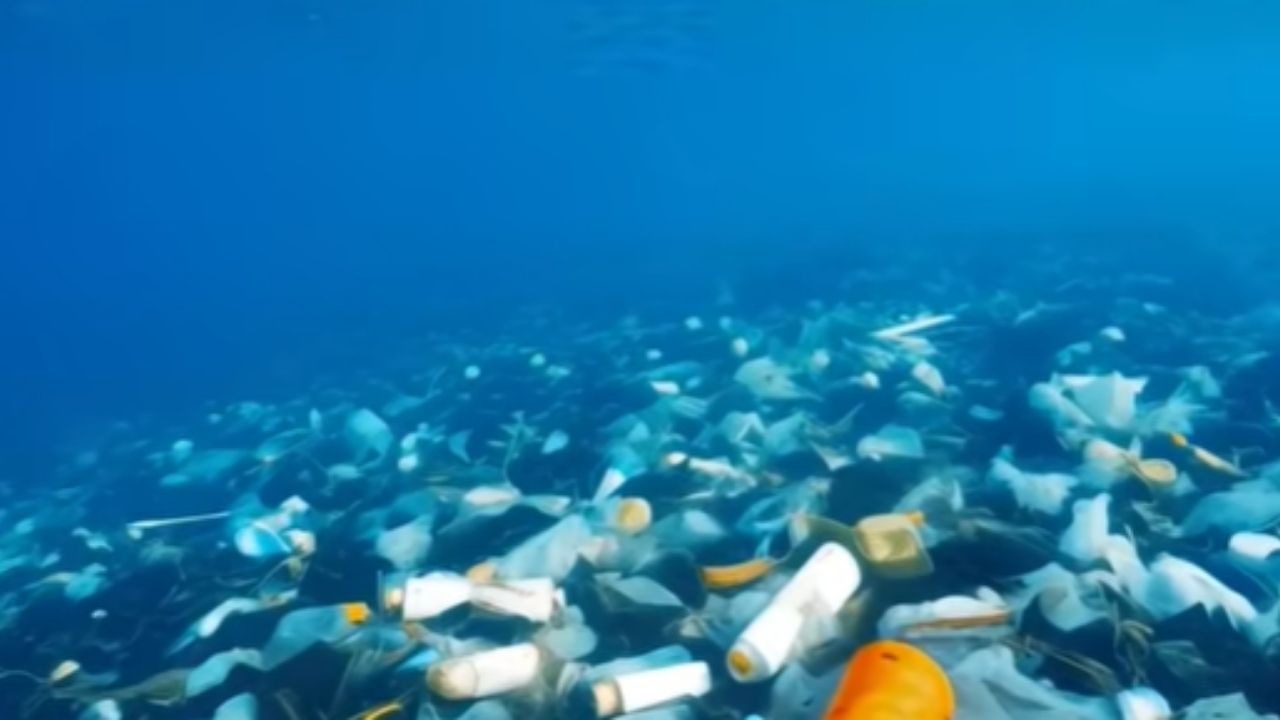
The video also describes the use of cameras, sensors, and artificial intelligence to differentiate plastic from other marine debris. In the ocean, not everything that appears in the way is trash: there are branches, algae, stones, and organic matter, which makes sorting more difficult.
According to the source, the sensors analyze characteristics such as density, texture, and color. The artificial intelligence has been trained to distinguish a plastic bottle from a stone with more precision than the human eye in some situations. This step is important because poor recycling starts with poor separation.
System works with barrier, vessels, and sorting
The video from the channel Gigantes da Indústria describes the ship as a kind of floating factory, but the operation needs to be presented more accurately. In The Ocean Cleanup model, the plastic is concentrated by a floating barrier and then removed with the support of vessels.
After collection, the material goes into containers on board and is taken to shore for recycling. The Ocean Cleanup itself describes the process as a sequence of capture, removal, return to land, and recycling, and not as a single ship that solves the ocean trash problem on its own.
Plastic doesn’t stay put: it goes into containers
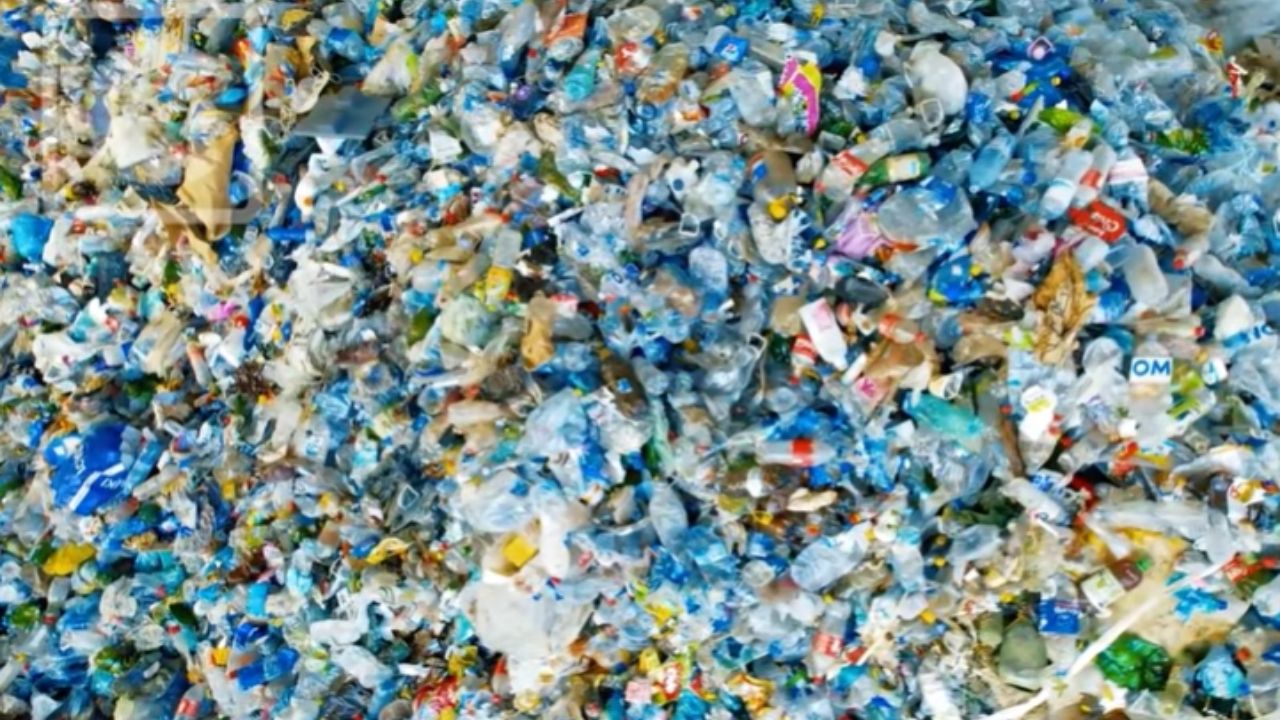
An important technical point is that the ship cannot carry trash indefinitely. According to the video explanation, the plastic is placed in airtight containers on board. When they are full, they head to the nearest port, are unloaded, and the system returns to operation.
This logistics shows that ocean cleaning does not end with capture. After being removed from the water, the plastic still needs to be transported, washed, disinfected, and sorted by type, because it spent months or years in contact with salt, algae, bacteria, sludge, and organic remains.
Recycling requires washing, sorting, and correct destination
The video states that the plastic removed from the ocean arrives dirty and degraded. Therefore, the first step after collection is to wash and disinfect the material. Then comes the sorting by type, such as polyethylene, polypropylene, and polystyrene, each with its own recycling path.
Part of this material can be turned into pellets for new products; another part can be used for fuel or construction materials, as described by the source. But the efficiency of this process depends on sorting. If the material arrives too mixed, recycling loses quality and becomes more expensive.
Fishing nets and bags are among the biggest risks
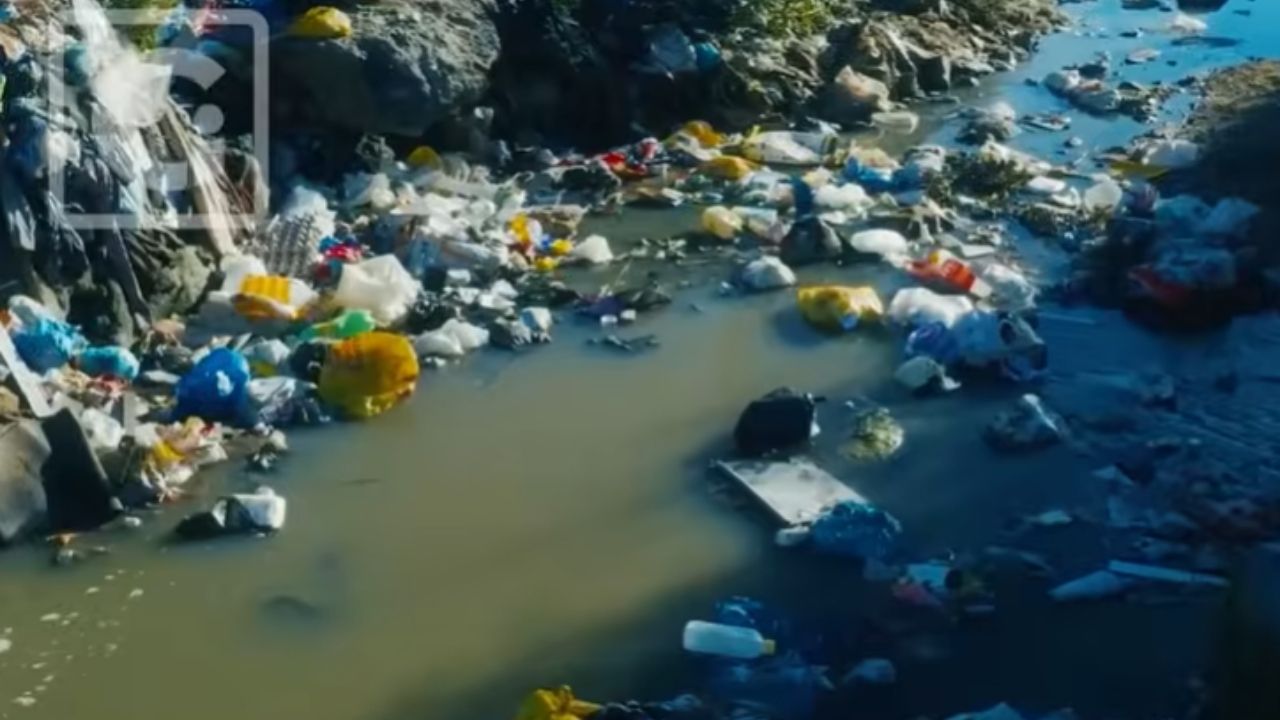
The system particularly targets large debris, such as fishing nets, bags, and bottles. These materials can quickly kill animals: turtles can get caught in nets, dolphins can mistake bags for food, and fish can ingest smaller fragments.
The channel Industry Giants also relates the problem to microplastics. Small fragments enter the food chain when ingested by marine animals. The trash that starts in the ocean can return to the human plate through fish, making the environmental problem also a matter of health and consumption.
Ocean Cleanup removed 11.5 million kg in 2024
According to an update published by The Ocean Cleanup on December 19, 2024, the organization removed 11.5 million kg of trash from oceans and rivers throughout 2024. This total considers the entity’s operations as a whole, including actions in rivers and the ocean, and should not be attributed solely to a single ship or a single offshore system.
In the Great Pacific Garbage Patch, the organization states that System 03 played a central role in 2024, with 112 extractions. The system operates with a floating barrier and a retention zone, supported by vessels that help maintain speed, direction, and removal of collected material.
Cleanup depends on multiple systems, not a single ship
According to the video, a single system is not enough. The Great Pacific Garbage Patch, the Mediterranean Sea, and the Asian coast are cited as areas that would require multiple fronts of action. The challenge, therefore, is to scale the technology without ignoring cost, maintenance, and logistics.
The source estimates that such a system could cost from $5 million to $20 million. The amount is high, but the video proposes another perspective: comparing the cost of technology to the environmental cost of polluted seas, dead animals, and microplastics circulating through the food chain.
Energy, currents, and climate influence the operation


The system is placed where the currents are strong and constant, precisely to use the natural movement of the water to aid in collection. According to the channel, this reduces fuel and energy consumption, as the equipment does not need to chase the trash all the time.
The video also mentions solar panel power and specific training for operators. In case of rough seas, the system can be turned off and moved. Ocean cleaning, in this model, depends as much on technology as on the correct reading of maritime conditions.
The challenge is to clean without repeating the mistake
The ship that collects plastic in the ocean draws attention because it turns an invisible problem for many into a concrete operation: barriers, sensors, containers, sorting, and tons removed from the sea. But the source itself shows that technology is not a magic solution.
The question that remains is whether the world can expand systems like this at the same speed it produces and discards plastic. The ship helps remove part of what has already been thrown into the ocean, but the real challenge is to prevent trash from continuing to reach the sea every year.
Do you think technologies like this collection ship can change the future of the oceans, or should the priority be to reduce the production of disposable plastic before it reaches the sea? Leave your opinion in the comments.




Is evident that reduce consumption is the key for a better future and this is a contention action. Tons produced by day and tons collected and the cost of the operation makes this a reduction expensive and not a solution. Today are dropping to the sea containers so may will have the brutal idea to throw the container full of plastic deep into the Ocean.