






 Portuguese
  Spanish


Named Transaqua and conceived in Italy in the 1980s, the giant canal would cost about 50 billion dollars and has the support of eight countries and China. Even so, it remains on paper for decades, blocked by the opposition of the Democratic Republic of the Congo and environmental warnings.
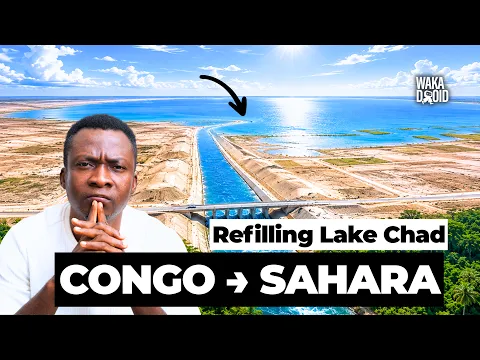
A giant canal capable of crossing the heart of Africa to carry water from the Congo River to Lake Chad has returned to the center of the debate about the future of the Sahel. The idea, called Transaqua, envisions a transposition of about 2,400 kilometers to replenish a lake that has already lost around 90% of its surface. Conceived in Italy in the 1980s and revived in the 2010s with Chinese support, the project is estimated to cost about 50 billion dollars, approximately 258 billion reais at the current exchange rate.
The problem that the canal intends to solve is dramatic and has a name and address. Lake Chad, on the edge of the Sahara Desert, has shrunk from about 25,000 square kilometers in 1963 to around 2,000 in recent decades, and about 40 million people depend on it for fishing, farming, and raising animals. With the water receding, entire communities have collapsed, which has helped open space for armed groups in the region.
The Slow Death of Lake Chad
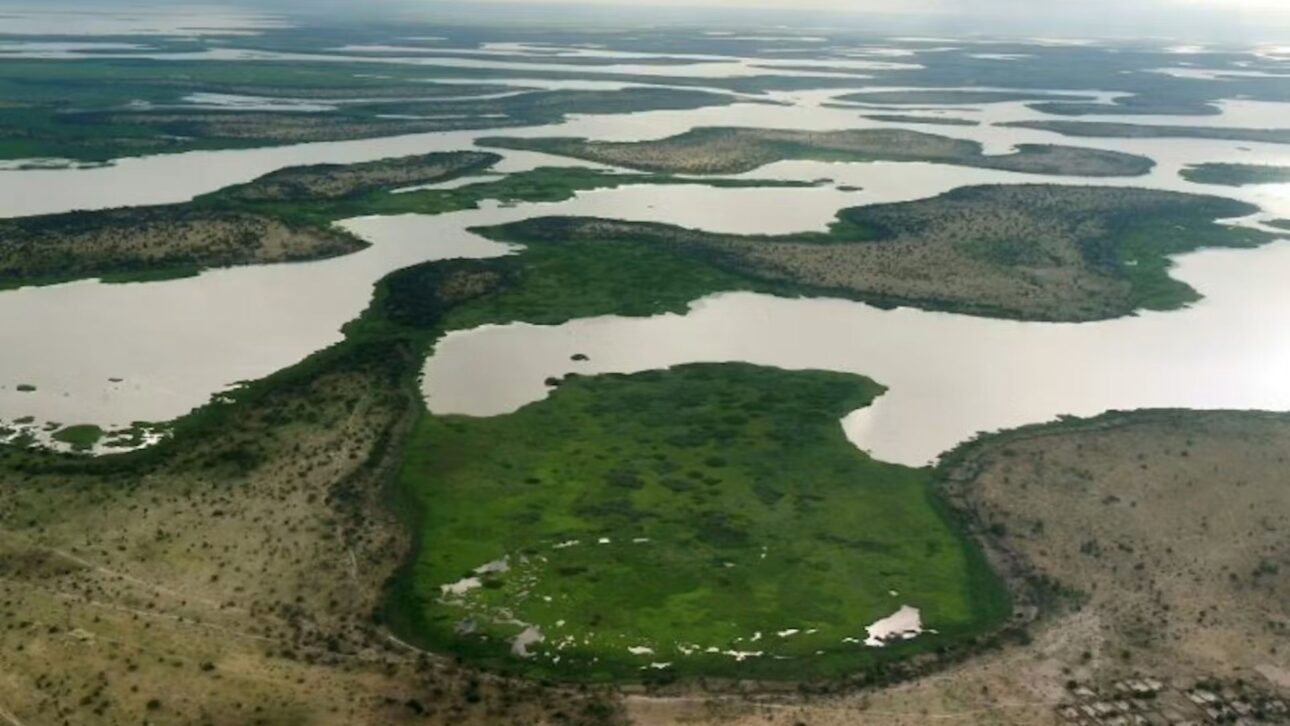
Located at the meeting point between Chad, Cameroon, Nigeria, and Niger, it covered about 25,000 square kilometers in 1963 and shrank to around 2,000 in the following decades, with some measurements pointing to as low as 1,350.
-
The Frenchman Who Brought the World Cup to Life: Overcoming Resistance and Crossing the Atlantic with the Trophy to Create Football’s Biggest Tournament

-
Archaeologists Reexamine 4,500-Year-Old Tombs in Ancient Mesopotamia, Suggesting Some Early Kings May Have Been Powerful Women
-
The North Face Co-Founder Donates Vast South American Lands to Create National Parks in Patagonia, Turning Private Wealth into Environmental Legacy

-
From Rural Brazil to Global Tech: Entrepreneur Builds a 800-Employee Company with Over $40 Million Annual Revenue in 19 Countries


The loss is around 90% of the surface, driven by climate change, scarcer rainfall, and increased water usage.
What remains has split into two portions, connected by a strip of vegetation.
For the local population, the receding water took away a way of life.
Approximately 40 million people live around Lake Chad, most of whom depend on fishing and subsistence farming, and the Chari and Logone rivers account for about 95% of the water that reaches the lake.
When the shores dried up, forced migration came, and a vacuum that groups like Boko Haram and the Islamic State faction in West Africa exploited to impose themselves.
The water crisis did not create the insurgency, but it fueled it, in a Sahel where, in October 2025, nearly 4 million people were displaced by conflict, hunger, and climate.
It is precisely this collapse that a giant canal intends to reverse.
The giant canal that would connect the Congo to Chad
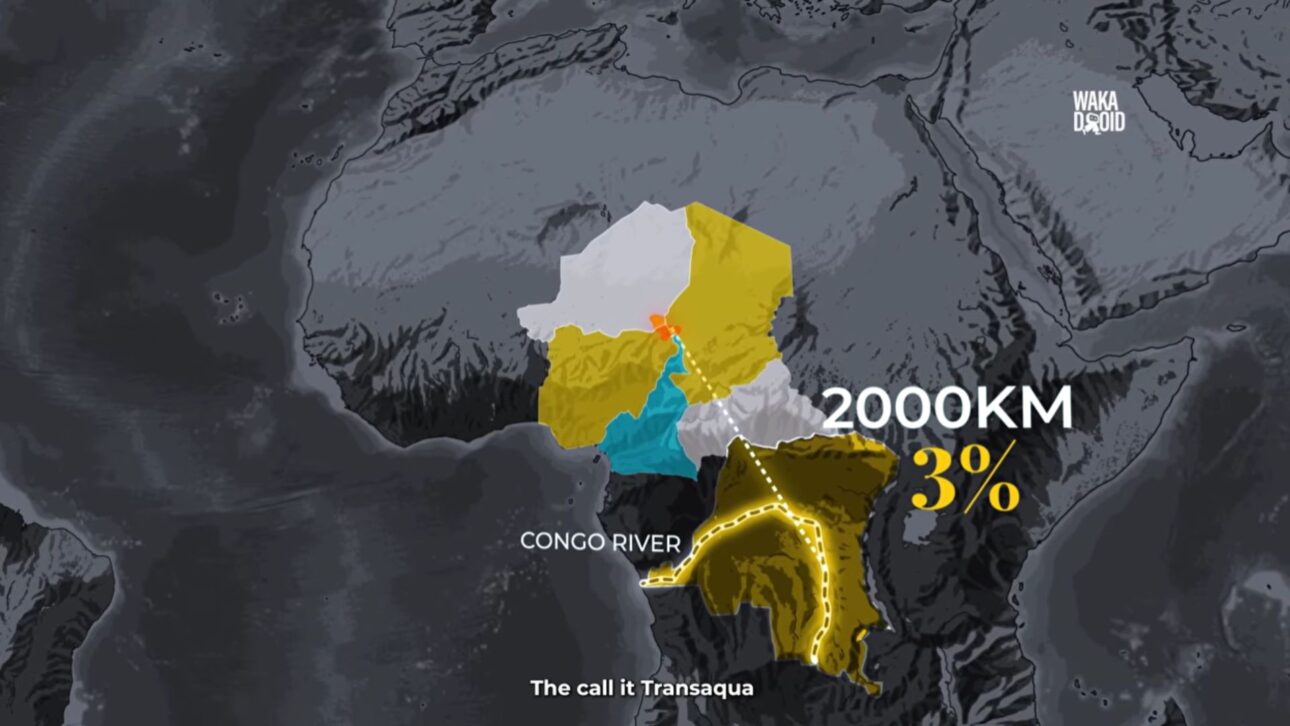
The giant canal would start from tributaries on the right bank of the Congo River, often cited as the second largest in the world by volume of water, second only to the Amazon, with an average flow of around 41,000 cubic meters per second.
The idea is actually old, as filling Chad with water from the Congo was already considered in 1929, but it was the Italian company Bonifica that, in the 1980s, designed the project named Transaqua.
The layout is what gives the real dimension of the undertaking.
It would be about 2,400 kilometers of canal, fed by dams, carrying a fraction of the Congo’s flow, in the order of a few percent, to the north, crossing the Central African Republic until reaching the Chari River and Lake Chad.
The project gained new momentum in the 2010s, when the Chinese state company PowerChina signed a memorandum with the Lake Chad Basin Commission in 2016 and, in 2018, the commission endorsed Transaqua and signed an agreement with Italy.
Eight countries support the initiative, with Nigeria, under former President Muhammadu Buhari, leading the articulation.
The promise of an economic corridor in the middle of Africa
For its defenders, the giant canal would be much more than a water pipe.
The proposal sells the work as a backbone of development that would cut across the continent, with tens of thousands of square kilometers of irrigated crops, large-scale hydroelectric power generation, and a navigable waterway connecting landlocked Central African countries to the Atlantic.
According to the logic of the creators, each dam and each section of the canal would serve multiple functions at the same time.
The discourse is also about security, not just economy.
Supporters argue that the jobs generated by the construction and the return of water would help stabilize the Lake Chad basin, emptying the ground that armed groups take advantage of.
It’s no coincidence that enthusiasts compare the ambition of Transaqua to works like the Suez and Panama canals.
It is worth remembering, however, that all these numbers and gains are projections of a project that has not yet left the drawing board.
Why the giant canal has not yet left the drawing board

Despite political support, Transaqua encounters obstacles that have lasted decades.
The most sensitive point is the Democratic Republic of the Congo, which has never agreed with the plan.
It would be in its territory, and in that of the Central African Republic, that much of the work would take place, and the country claims to have been left out of the decisions, while three-quarters of its own population do not have access to drinking water.
Taking water from the Congo basin to supply the northern neighbor, in this scenario, is a thorny conversation.
To the costs and geopolitics are added environmental warnings and cheaper alternatives.
Part of the French scientific community argues that diverting even a fraction of the Congo could cause irreversible damage to one of the most biodiverse ecosystems on the planet.
Faced with the price of 50 billion dollars, engineers returned to the drawing board and studied leaner versions, such as using the Ubangi tributary with pumping, or capturing water by gravity in the Kotto River, at a high point in the Central African Republic, at costs estimated to be a fraction of the original project.
None of them, however, have left the drawing board, because, the moment the water crosses borders, engineering becomes a problem of sovereignty and governance.
The giant canal to save Lake Chad summarizes the size of the Sahel’s dilemma.
On one side, there is a real crisis of water, hunger, and security pushing millions of people, and an engineering solution that promises to reorder the map of an entire region.
On the other, there is a billion-dollar cost, a neighbor who feels left behind, environmental risks, and decades of meetings without construction.
The Transaqua is, at the same time, one of the most audacious ideas ever conceived for Africa and one of the most difficult to bring to fruition.
And you, do you think a giant canal like Transaqua should be built to revive Lake Chad? Is it worth the cost and risk of diverting water from the Congo River, despite the resistance from the Democratic Republic of the Congo and environmentalists, or would it be better to invest in other solutions for the Sahel? Leave your opinion in the comments, with respect for different views, and share this article with those interested in geopolitics and major projects.





Why not build the canal from River Benue to Lake Chad? Combine that with dredging the Benue river to remove the silt
I think this is an excellent idea.maybe ,all the objector should look at this as using natures gift(water)and wasting these wonderfull resources
Construction of this canal should not be pegged on Terrorism in sahel expansion. All the terrorists in that area belong to just one religion, work for religion and kill in the name of a religion but never due to lake drying up. These terrorists live there because the area is conducive to them in spreading the religion. If at all its the terrorists who force people to flee as opposed to taking advantage of departure of good people,
If the area is full of terrorists, them it’s easier wiping everything existing in the area to clear terrorism rather than diverting Congo river to feed them.
White men must just come clear and tell the world what funny interests they’ve here because this is a plan strategized since long time ago.