Portuguese
  Spanish


Musk deer was seen in Nuristan, in northeastern Afghanistan, between 2008 and 2009, according to a study published in the scientific journal Oryx
After almost six decades without confirmed scientific records, a rare deer known for its “vampire fangs” has been observed again in a remote forest in northeastern Afghanistan. The animal, called the musk deer, was located in the province of Nuristan, a region marked by mountains, rocky areas, and forests that are difficult to access.
The discovery was described in the scientific journal Oryx and was based on surveys conducted by researchers between 2008 and 2009. During this period, the team recorded five sightings of the animal, considered endangered by the Red List of the International Union for Conservation of Nature, the IUCN.
The reappearance drew attention because the species had not been scientifically seen in Afghanistan since 1948. Therefore, the new record reignited discussions about conservation, illegal hunting, and habitat loss in one of the country’s most unstable regions.
-
Historic Living Hedge in Brazil, Over 300 Years Old and 13 Meters Tall, Enters Guinness World Records

-
Couple Trades Wedding Celebration to Invest in Therapeutic Gym for Seniors in Brazil, Now Earning $2 Million Annually
-
Daughter of a Cleaner and a Doorman Started at McDonald’s at 14, Opened a Salon for Curly Hair at 19, and Helped Grow it into a Network with Thousands of Employees

-
Whale with Scoliosis Spotted in Spain, Baffling Experts After Being Mistaken for Entangled Animal



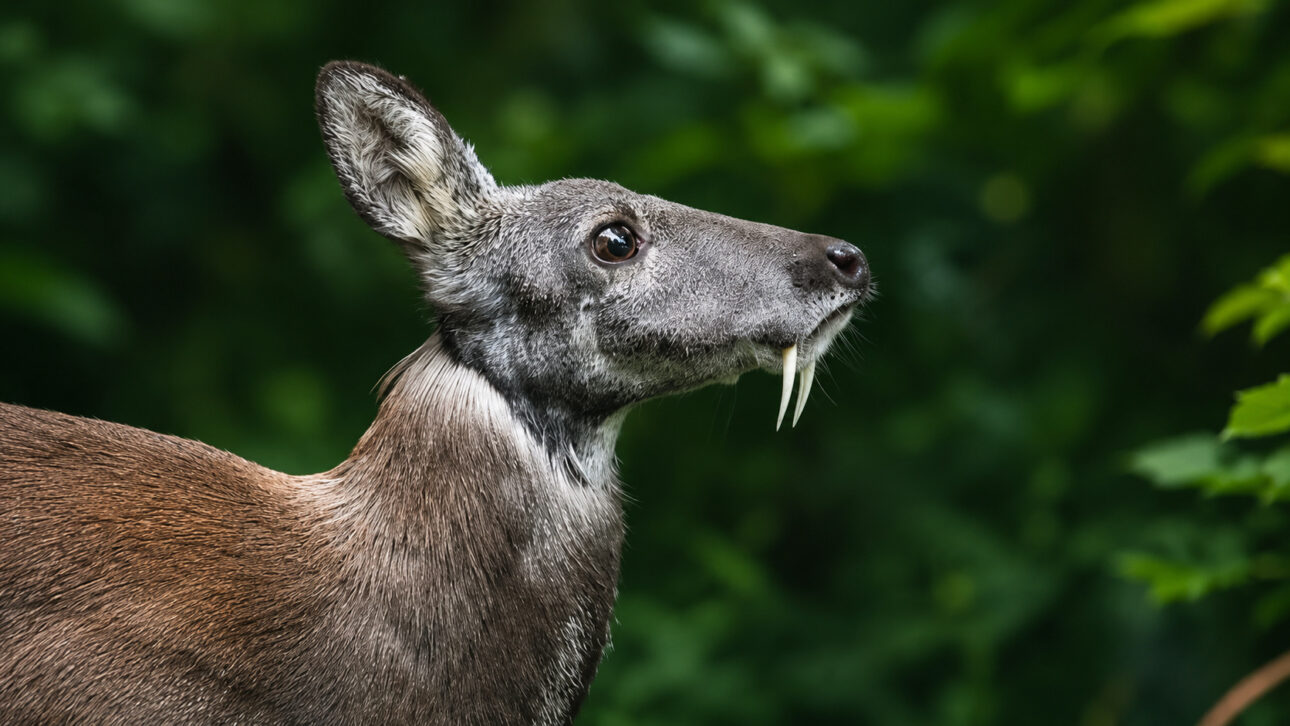
Musk deer was seen in Nuristan after decades without scientific confirmation
During the searches in Nuristan, the researchers observed a solitary male on three different occasions, always near the same area. Additionally, the team found a female with a fawn, another female that could be the same one already observed, and the dry carcass of a female.
These records were important because they confirmed that the species still persisted in the region, despite decades of war, political instability, and human pressure on the natural environment.
The musk deer lives in mountainous and forested areas, relying on regions with steep slopes, vegetation, and refuge sites. Therefore, its observation is considered difficult.
Why the deer gained fame as an animal with “vampire fangs”
The nickname arose because of the elongated teeth that appear in males. These fangs are not used to suck blood nor do they represent aggressive behavior outside the natural context of the species.
In fact, only the males possess these structures. During the mating season, they use the fangs to compete for females with other males.
The species is native to areas of the Himalayas, northeastern India, the Kashmir region in Pakistan, and northeastern Afghanistan. Even so, their records are rare due to the isolated habitat and hunting pressure.
Illegal hunting puts endangered species at even greater risk
According to the IUCN, the musk deer is classified as an endangered species. The animal’s meat is considered a local delicacy, but the main threat comes from its scent glands.
These glands are highly valued in the illegal market. According to information cited by international conservation, they can be sold for up to US$ 45,000 per kilo.
This value has made the animal a target for hunters. Consequently, the species has faced even greater pressure in areas where enforcement is limited.
Decades of war favored the advance of the illegal market
The province of Nuristan has suffered the effects of decades of conflict. Political instability has hindered the efforts of environmental organizations and increased violence in the region.
In this scenario, the illegal trade of scent glands has grown unchecked. Therefore, hunting has constantly threatened the few remaining animals.
The situation has also hampered the work of researchers. Since 2010, non-governmental organizations like the Wildlife Conservation Society have been unable to operate directly in Nuristan due to lack of security.
Loss of forests reduced the habitat of the musk deer
In addition to hunting, the musk deer faces the destruction of its natural environment. Geological research cited in the study indicates that the region has lost more than 50% of its forested mountains since the 1970s.
This deforestation has fragmented the species’ habitat. As a result, the animals have become more vulnerable to human encroachment and the actions of hunters.
The deer depends on mountains and coniferous forests to survive. However, human habitation and environmental degradation have been reducing these refuges.
Winter snow leaves animals more exposed to hunters
The researchers found all the deer on a hard-to-reach rocky outcrop. In the summer, they usually graze on steep slopes, making human approach difficult.
This condition offers some protection against hunters. However, during the winter, heavy snow forces the animals to descend to more accessible areas.
It is precisely during this period that the risk increases. With the deer in lower regions, hunters can pursue them more easily.
Wildlife Conservation Society hopes to resume research in the region
The Wildlife Conservation Society maintains contact with local researchers trained to monitor the species. Even without direct action in Nuristan since 2010, the organization seeks to monitor the situation from a distance.
Peter Zahler, deputy director of WCS’s Asia programs, stated that the musk deer is part of Afghanistan’s natural heritage, alongside species like the snow leopard.
According to him, the entity hopes for an improvement in regional security. Thus, researchers and local partners will be able to better assess the animal’s conservation needs.

Reappearance of the deer shows urgency to protect rare species
The record of the deer with “vampire fangs” does not guarantee the species’ recovery. On the contrary, it shows that some individuals still survive in remote areas, while remaining threatened.
The combination of illegal hunting, habitat loss, war, isolation, and human advancement keeps the musk deer in a delicate situation.
Therefore, the reappearance in Nuristan represents an important scientific discovery. At the same time, it serves as a warning about the need to conserve a rare species before it disappears again.