






 Portuguese
  Spanish


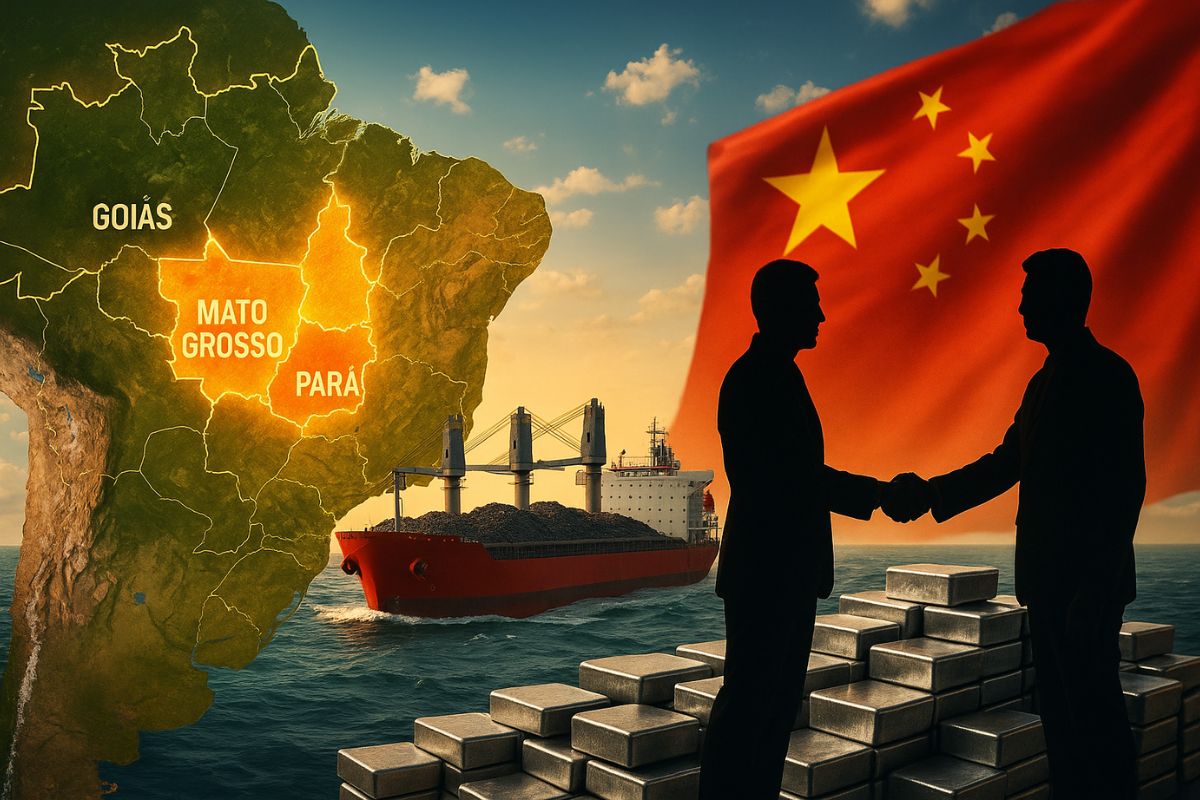


U.S. Private Sector Requests Trump to Intervene in Nickel Reserve Sale in Brazil to China. US$ 500 Million Deal Raises Strategic Concerns Over Chinese Dominance in Critical Minerals and Pressures Brazilian Government.
The Estadão revealed that the American private sector formally requested Donald Trump to intervene in the sale of nickel reserves in Brazil to China, in a negotiation that could redefine the global balance of strategic minerals. The operation involves Anglo American’s assets in Goiás, Mato Grosso, and Pará, acquired by MMG Limited, a company controlled by the Chinese state-owned enterprise China Minmetals Corporation.
The transaction, estimated at US$ 500 million (R$ 2.7 billion), includes ferronickel mines and future exploration projects. According to the American Iron and Steel Institute (AISI), if completed, China will further consolidate its dominance over the global nickel supply chain, a mineral essential for batteries, wind turbines, solar panels, and semiconductors.
Why Are the U.S. Pressuring Brazil?
The request for intervention was sent by AISI to the Office of the United States Trade Representative (USTR), amid the trade conflict triggered by the tariffs imposed by Trump on Brazil. The Americans argue that Chinese control over Brazilian nickel would amplify vulnerabilities in the U.S. stainless steel industry, which is responsible for 65% of global demand for the mineral.
-
Brazilian Executive Takes Helm of Heineken Amid Decline in Sales: 51-Year-Old Has Led Operations Across Four Continents and Managed a $7 Billion Empire

-
Brazilian Actress Turns Waxing Clinic into 400-Unit Chain with $50 Million Revenue, Sells Stake After 13 Years
-
Major Company Shuts Down 70-Year-Old Factory in Brazil, Relocating Production and Impacting Over 100 Families
-
Toyota Shuts Down Brazilian Plant After Producing Over 1 Million Vehicles, Plans Special Destination for Final Corolla Produced Following $2.1 Billion Investment and Expansion.


According to the entity, Brazil and Indonesia account for almost half of the world’s nickel reserves. Indonesia already has a strong Chinese presence following billion-dollar investments, and now Brazil would be the next step for Beijing. This move is seen in Washington as a direct risk to American energy and technological security.
What Is at Stake in the Sale of Nickel Reserves in Brazil to China
Anglo American confirmed that the sale includes the Barro Alto and Codemin units in Goiás, as well as the Morro Sem Boné (MT) and Jacaré (PA) projects. Only in 2023, these Brazilian operations produced about 40,000 tons of nickel, a significant figure given the growing global race for critical minerals.
For analysts, Chinese interest goes beyond immediate production: it’s about ensuring future and strategic access to raw materials that support the energy transition and high-tech sector. This would explain the American pressure, which calls for the government to block or renegotiate the terms of the transaction.
The Position of the Brazilian Government
Finance Minister Fernando Haddad stated that the “interference” from the U.S. is directly linked to strategic interests in critical minerals and rare earths. According to him, the United States wants a “subservient” government in Latin America, given the lack of domestic reserves.
The Brazilian government is discussing a regulatory framework for critical minerals, which may be announced before COP30 in Belém. The idea is to attract investments, but also to protect national interests amid the growing geopolitical dispute. Among the proposals is the issuance of incentivized debentures to finance mining projects.
The pressure from the American private sector to block the sale of nickel reserves in Brazil to China reveals the geopolitical weight of Brazil’s subsurface in the race for critical minerals. The outcome of this negotiation could influence not just the future of mining in the country but also the balance of power in the global energy transition.
What do you think, should Brazil allow China into this strategic sector or seek alternatives that preserve its sovereignty? Share your opinion in the comments — we want to hear from those closely following this global dispute.


É nosso Brasil, mais uma vez “entregando o ouro pros ****”. Deveriamos estimular industrias brasileiras a vender o produto acabado com alto valor agregado ao inve´z de vender as minas por esta esmola…
absolutamente certo para evitar o que houve com nosso silício retirado da serra do navio e depositado no deserto nos EUA e que abastece a **** dos semicondutores, placas solares etc
Sim, chega de Trump no Brasil, esse cara só quer enriquecer uma minoria prejudicando as maiorias.
Brasil deve cuidar os fortes laços com China que realmente investe no país e compra de nós sem exigências.
Concordo, mas é estranho que tinha outra empresa querendo comprar por 900 milhões e foi vendido para a china por 500
A situação atual é simples. Os EUA é um péssimo parceiro comercial. A China até o momento tem mostrado im ótimo parceiro comercial. É Fayo que nossas Reservas de **** devem ser negociadas com limites. É possível amanhã o Brasil ter tecnologia para usar e desenvolver tbm estes ****.
É isso Paulo Roberto! O comentário do Alcivan tbem é pertinente. Para os EUA o mundo tem vários “ditadores” que na realidade muitos não o são, e sim são líderes que defendem a soberania de seus países. Quando esses líderes não se curvam e não lambem as botas dos EUA, já são classificados como ditadores e impõe a esses países sansões de todo tipo. Além disso divulgam mentiras na mídia internacional com a intenção de transformar em verdades. E, infelizmente, os EUA voltou a ser governado pelo ditador mais forte e poderoso que já teve em toda a sua história. Ele está preocupado por que a hegemonia dos EUA já entrou na fase do começo do fim.