





 Portuguese
  English
  Spanish
  2 min of reading


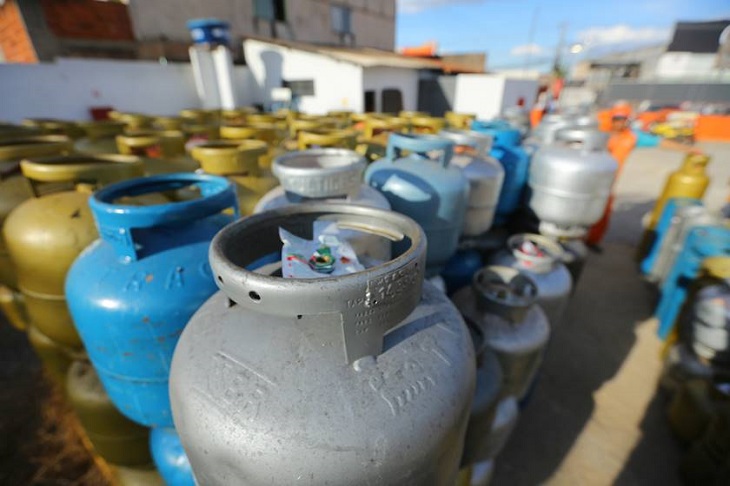
ANP Wants to Implement Partial Filling of Gas Cylinders, and the Distributor Union Says the Measure is Against Safety Regulations
Since the ANP proposed the fractional sale of kitchen gas cylinders, debates have intensified, with factions both in favor of and against the ANP’s initiative. Government Wants Gas Prices to Drop by Half with the End of Petrobras’ Monopoly.
The partial filling of the 13 kg cylinder, according to the ANP, would benefit low-income populations, allowing them to purchase the amount of gas their resources would permit. The main argument from the distributor union, against the measure, is regarding the safety of the filling operation.
Basing itself on the consumer protection code rules that provide for the fractional sale of products, the ANP launched the proposal and is studying the fractional sale of the 13 kg gas cylinder.
In July of this year, the ANP’s general director, Décio Oddone, communicated this intention, stating the benefit for low-income families who do not have the resources to buy a full gas cylinder.
-
Taller than the Statue of Liberty, thousands of wind turbines are being planted in the middle of U.S. fields, creating two-story farms where corn and soybeans grow below while the wind turns into electricity above.
-
Volkswagen trucks hit the track in a comparison between the Meteor 29.530, designed for operations up to 74 tons, and the Constellation 20.480, which relies on 480 horsepower for those seeking robustness in a 4×2 tractor unit.
-
Volkswagen trucks hit the track in a comparison between the Meteor 29.530, designed for operations up to 74 tons, and the Constellation 20.480, which relies on 480 horsepower for those seeking robustness in a 4×2 tractor unit.
-
Lula government releases R$ 1.16 billion through the New PAC to renew public transportation in Brazil with 727 buses in cities of São Paulo, Pernambuco, Minas, Rio, and other states, including electric and less polluting models.
Another advantage of the measure, according to the director of the Oil Derived Fuels Department at the Ministry of Oil, Cláudio Akio Ishihara, will be greater competition in supply, which, in his view, will help lower the final price to consumers and increase
the availability of gas in isolated locations.
The Disadvantages
According to the president of the National Union of Liquefied Petroleum Gas Distributors (Sindigás), Sérgio Bandeira de Mello, Brazilian cylinders are not prepared for fractionation.
According to Bandeira de Mello, Brazil currently has about 120 million cylinders, and the swap would create a cost increase of 50% to 120% in relation to the price of the cylinder in use.
But the main problem cited by the union president would be the safety risks, and he provided examples of accidents that occurred during the fractional sale of gas in other countries.
Partial filling of the cylinders would require greater training for attendants, not to mention the increase in the number of filling stations, which would raise potential safety problems and fraud, making oversight more difficult.
Regarding the swap of the cylinders, the ANP’s general director, Décio Oddone, stated that at no time did he propose that the fractionation would occur with the current cylinders and that fractionation is already being done in larger cylinders.
When asked for his opinion, the major of the Fire Department of the Federal District, Márcio Neder Paiva de Sousa, said that the concern is with the risk of gas accidents, especially during refueling. “The Fire Department does not view the procedure calmly,” he stated.
Read Also! Oil May Not Have Just One Company, but Several, According to Guedes!






Be the first to react!