Portuguese
  Spanish


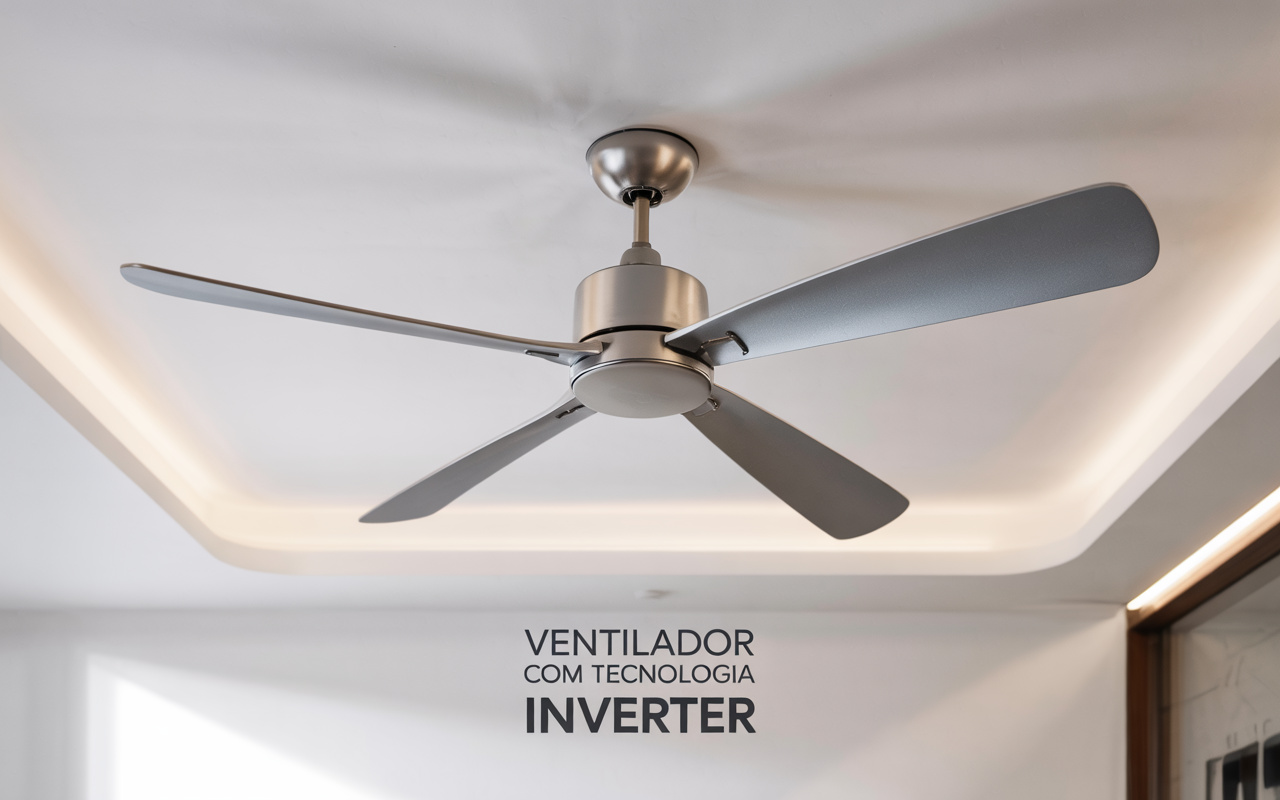


Ceiling Fans With Inverter Motors Are Gaining Space in Brazil. With Consumption Up to 75% Less and Silent Operation, They Have Become a Real Alternative to Air Conditioning in Residential Environments.
The search for thermal comfort on hot days remains intense in Brazil, but the cost of electricity. Inverter technology, widely used in refrigerators, air conditioners, and air coolers, is beginning to gain traction in the ceiling fan segment as well. The proposal is simple: to deliver a device with intelligent motor speed control, which consumes less energy, operates silently, and has a longer lifespan. The result is a real alternative for those who want to cool the environment efficiently, without the costs of air conditioning.
Models such as the Ventisol Fênix Inverter, available in the Brazilian market, offer all this with an important differential: they are affordable and easy to install. With a DC brushless motor, complete remote control, and average consumption below 35W, these fans stand out for their low impact on the electricity bill and for providing a more comfortable usage experience.
While traditional ceiling fans consume between 100W and 130W, an inverter fan can operate with less than half that power — and with more stable airflow, without noise fluctuations or sharp variations in rotation.
-
China Unveils 300-Ton Hybrid-Electric Truck as the Heavy Machinery of the Future

-
Brazilian mechanic invents simple solar lamp using water and chlorine in a PET bottle, providing up to 60 watts of light during the day

-
Swiss glaciers melting fast enough to fill an Olympic pool every 6 seconds, France confirms 3,700 heatwave deaths, and WMO predicts strong El Niño intensifying extremes until 2027

-
Sudden Sea Recession in São Paulo Sparks Tsunami Alert and Online Debate on Giant Wave Risks in Brazil


What Is an Inverter Motor and Why Does It Make So Much Difference
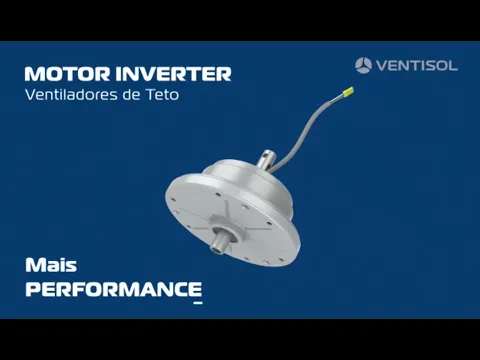
The heart of the technology lies in the type of motor. Conventional fans use alternating current (AC) motors, which operate at fixed speeds and with continuous energy consumption, even when high rotation is unnecessary. On the other hand, the DC brushless motor used in inverter fans works with electronically controlled direct current, allowing for real-time rotation modulation.
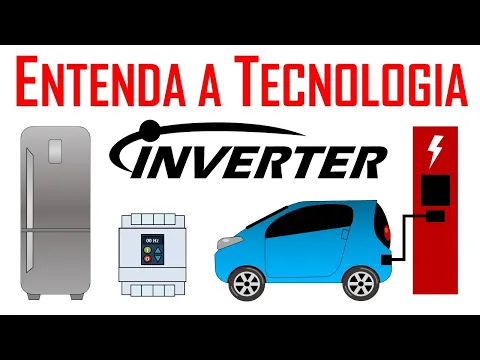

This smooth variation in speed reduces noise, prevents energy spikes, and improves the durability of the equipment. Since there are no internal brushes in constant friction, the motor also requires less maintenance and operates with less vibration. Additionally, the start-up is smooth, which avoids the loud snap that many conventional fans make when turned on.
In practice, this means that the device consumes only what is necessary to maintain airflow, automatically adjusting the power according to the chosen setting. This balance between performance and consumption is what ensures the high efficiency of inverter models.
Ventisol Fênix Inverter: One of the First National Models With Brushless Motor
The Ventisol Fênix Inverter is one of the few models manufactured in Brazil that incorporates this technology. Its 35W nominal power motor consumes around 0.6 kWh/month, compared to 2.5 to 3 kWh/month for a regular fan running for 8 hours a day.
The device features six adjustable speed levels via remote control, a reverse ventilation function (which helps distribute warm air in winter), breeze mode with automatic rotation oscillation, and a timer function, allowing for automatic shut-off programming.

The design is discreet and modern, with a matte white finish, three aerodynamic blades, and installation compatible with conventional ceilings. The product is bivolt, has a Procel A energy efficiency label, and is approved by Inmetro.
Regarding noise, users highlight that the sound level is significantly lower than that of traditional fans. Even at maximum speed, operation remains stable without excessive shaking, buzzing, or abrupt sound variations.
Savings in Practice: How Much Can You Save?
In simple numbers, the savings are real. A conventional fan of 120W running 8 hours a day consumes around 29 kWh per month. The same routine with a 35W inverter fan consumes about 8.4 kWh/month — a difference of over 70%.
With the average electricity rate around R$ 0.85 per kWh, this reduction amounts to R$ 17 to R$ 20 less per month, just with one fan. In a year, that’s over R$ 200 in savings, not counting the use of multiple units or the fact that inverters tend to last longer, requiring fewer replacements and repairs.
Comparison With Air Conditioning: Where Does the Inverter Fan Fit?
It’s important to clarify: the inverter fan does not replace an air conditioner in extremely hot environments, but it significantly reduces the thermal sensation in well-ventilated areas, and is sufficient for most everyday situations.
While a split air conditioner can consume from 20 to 30 kWh in a single day, an inverter fan consumes less than 0.3 kWh in the same period. For those seeking a balance between comfort and savings, especially in bedrooms, small rooms, offices, or study areas, the ceiling fan with inverter motor performs very well — and with extremely low operational costs.
When Is It Worth Investing in an Inverter Fan?
The switch to an inverter motor fan is particularly recommended for:
- Those who sleep with the fan on every night
- Families who use multiple fans at the same time
- Environments where silence is essential (like home offices or baby rooms)
- People seeking more durable appliances with less constant maintenance
- Consumers attentive to the Procel label and energy performance
The initial investment of about R$ 450 to R$ 600, depending on the model and store, pays off in less than two years of continuous use. In addition to the savings, thermal and acoustic comfort represents a direct gain in quality of life.
With the increase in the availability of brushless motors and the gradual decrease in technology costs, it is likely that inverter fans will become standard in the coming years. They represent a natural evolution in a market that has stagnated for decades, offering more control, more efficiency, and less noise.
Meanwhile, Brazilian consumers can already rely on real options, locally manufactured, with proven performance and excellent cost-effectiveness. For those who want to achieve more with less, the inverter ceiling fan is a choice that combines technology, savings, and comfort with energy responsibility.