






 Portuguese
  Spanish




Research from Imperial College London Uses Mathematical Models and Questions Whether Natural Chemical Processes Fully Explain the Emergence of Life 4 Billion Years Ago
A scientific study released in July 2025 has reignited debate over one of the most accepted explanations for the origin of life on Earth.
The traditional hypothesis holds that the first microorganisms emerged around 4 billion years ago from organic molecules formed by natural chemical processes.
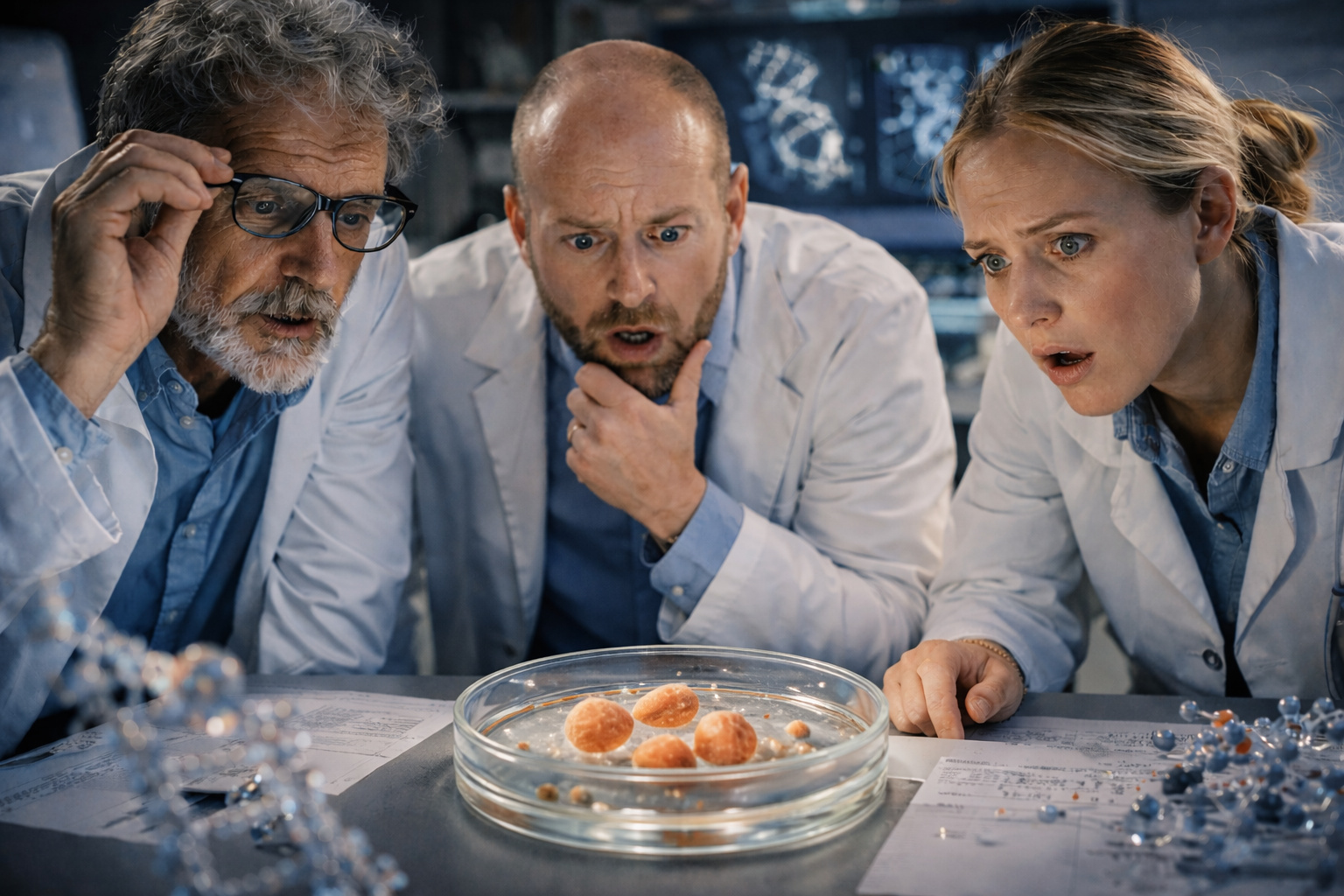
However, researcher Robert G. Endres from Imperial College London presented a paper entitled “The Irrational Probability of Being” on arXiv, in which he mathematically analyzed the plausibility of abiogenesis.
-
Australia Plans to Export Desert Solar Energy to Singapore via 4,300 km Undersea Cable in a $35 Billion Project

-
Archaeologists Discover 9,000-Year-Old Stone Hammer with Perfect Hole During Routine Inspection for Norwegian Bike Path

-
New Regulations in Brazil Require Dedicated Circuit and Safety Measures for Electric Car Chargers in Condos, Highlighting Hidden Risks of Overnight Charging

-
Argentinian Students Transform Cigarette Butts into Eco-Friendly Bricks, Cutting Cement Use by Over 50% and Halving Costs



According to the author, while the hypothesis cannot be dismissed, the calculations indicated that the process may be highly unlikely under the known conditions of primitive Earth.
Mathematical Investigation Questions Chemical Origin of Life
The abiogenesis theory posits that life arose from inorganic matter.
According to this proposal, non-living substances underwent successive chemical transformations to form complex self-replicating systems.

This process would have occurred in the early stages of the planet, which formed about 4.5 billion years ago.
During that period, meteorite craters filled with water and intense volcanic activity marked the terrestrial landscape.
Hydrothermal vents are often pointed out as favorable environments for the emergence of the first biological structures.
However, Endres used mathematical models to estimate how long it would take for the first cell to spontaneously emerge.
According to the results presented in 2025, essential molecules would need to combine extremely rapidly.
Otherwise, they would decompose before forming stable microscopic organisms.
Estimated Time Does Not Align with Fossil Records
The calculations indicated that the trial-and-error process would require a much longer period than suggested by the available fossil records.
Even considering the presence of chemical catalysts, the estimated timelines remained incompatible with the known geological chronology.
Furthermore, physical systems naturally tend toward disorder.
This principle represents an additional obstacle to the spontaneous formation of highly organized structures, essential for life.
At the end of the study, the researcher stated that it is not possible to rely solely on chance and natural chemical reactions to fully explain the emergence of life.
Nevertheless, he emphasized that the origin of life is not impossible.
According to Endres, broader physical principles that fully clarify this phenomenon are lacking, which represents a significant challenge for biological physics.
Directed Panspermia Hypothesis Returns to Scientific Debate
In light of the limitations pointed out, the study revives a hypothesis discussed since the 1970s.
During that period, Francis Crick, known for his contribution to the discovery of the DNA structure in 1953, and Leslie Orgel proposed the so-called directed panspermia.
This theory suggests that life may have been deliberately spread by an advanced extraterrestrial civilization.
Alternatively, panspermia also admits that molecules or microorganisms may have arrived on Earth transported by meteorites, comets, or interstellar dust.
According to a report published by Popular Mechanics, Endres questioned whether Earth could have been terraformed in the past.
Currently, the concept of terraforming is debated in scientific studies analyzing future possibilities for Mars and Venus.
Although the hypothesis of extraterrestrial intervention contradicts the principle of Occam’s razor in traditional science, the researcher states that it remains logically possible.
However, he emphasizes caution.
The extraterrestrial origin of life is considered unlikely but cannot be technically ruled out.
The debate remains open within the scientific community.
After all, did life emerge exclusively through natural chemical processes or could it have come from outside Earth?


