






 Portuguese
  Spanish
  3 min of reading
  0 comments


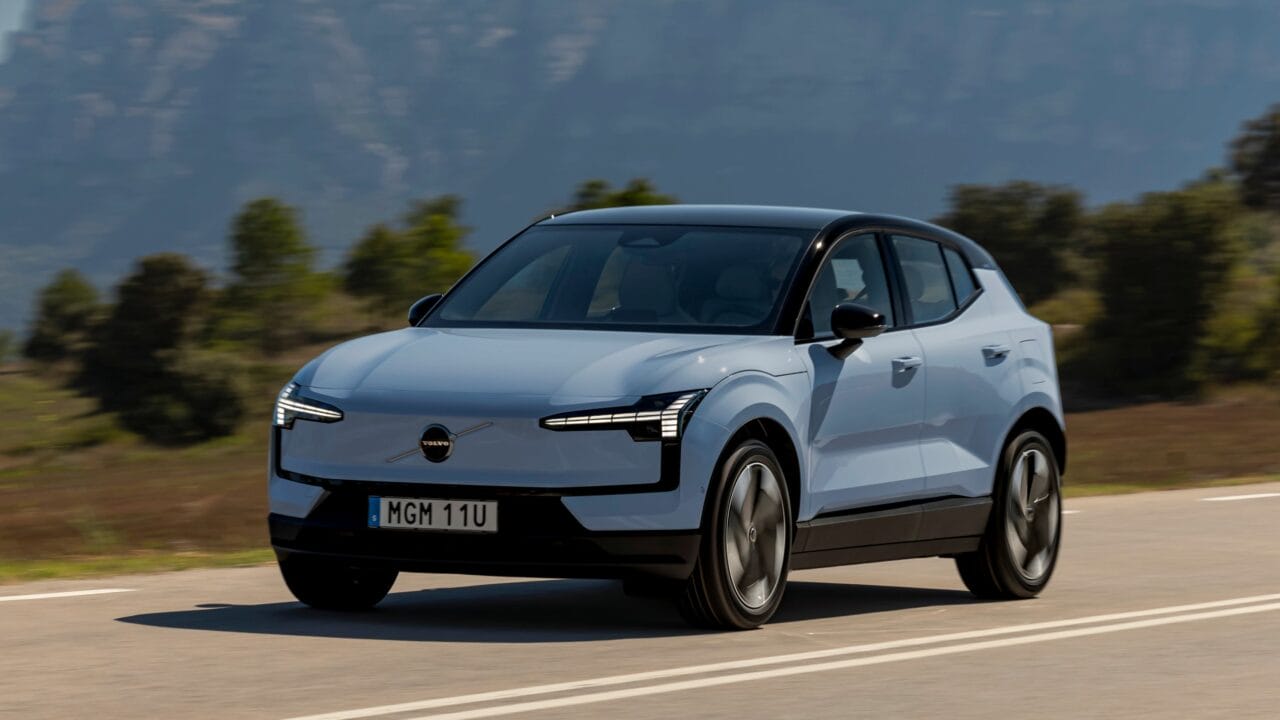
Versions, Prices and Autonomy of the Volvo EX30: The New Bet from the Swedish Manufacturer Comes to Compete with Both Electric and Combustion Cars.
The Brazilian automotive industry is about to witness the arrival of another member of the Chinese invasion of electric vehicles. In 2024, Brazilian consumers will have the opportunity to purchase the Volvo EX30, a compact electric SUV manufactured in China that promises to shake up the market for traditional cars.
Versatility in Battery and Finishing Options
The Volvo EX30 will arrive in the Brazilian market with two battery variations, catering to the different needs of consumers.
The more affordable version, called E40, has a starting price of R$ 219,950 and is equipped with a lithium iron phosphate (LFP) battery of 51 kWh.
-
Uber Faces Shareholder Scrutiny as Board Accused of Ignoring Safety, Compliance, and Harassment Warnings Amid Over 3,500 U.S. Lawsuits

-
Ferrari’s First Electric Car Divides Fans, Priced at $630,000, Amid Concerns Over Limited Editions; Brand Clarifies It’s Not Just for Future Perks
-
BYD Dolphin Mini: The Electric Car That Defies Depreciation, Losing Only 3.58% in a Year and Becoming the Best-Selling Retail Model Under $22,000

-
Electric Car JAC E-JS4 Loses $19,000 in Value in One Year, Leading Record Depreciation of Used Cars in Brazil Due to Expensive Battery and New Models


This battery powers a rear electric motor capable of generating 276 hp of power.
The declared autonomy is 350 km in the WLTP cycle, although it is expected to be slightly lower when assessed by the Brazilian Vehicle Labeling Program (PBEV).
For those seeking even greater autonomy, the EX30 offers the E60 option, equipped with a nickel-cobalt-manganese (NCM) battery of 69 kWh.
This configuration provides an impressive autonomy of 480 km in the WLTP cycle, with the same rear electric motor of 276 hp.
The E60 version accelerates from 0 to 100 km/h in just 5.3 seconds, making it an attractive choice for those seeking performance.
See the Volvo EX30: The Cheapest Electric Car than the Jeep Compass


Various Customization Options, Competitive Prices of the Volvo EX30 Challenge the Market
In addition to the battery options, the Volvo EX30 offers three customization packages for the E60 version: Core (R$ 239,950), Plus (R$ 265,950), and Ultra (R$ 279,950).
The Ultra version has stood out as the most sought after in Brazil, with a sales volume that is already attracting attention.
Surprisingly, in just five days, the EX30 surpassed the registrations of the XC40 throughout the year.
One of the main reasons for the success of the Volvo EX30 in the Brazilian market is its competitive price.
The compact electric SUV comes at a price equivalent to that of mid-size combustion models, such as the Jeep Compass Limited (R$ 215,950), the Ford Territory Titanium (R$ 219,900), and the Volkswagen Taos Highline (R$ 212,490).
When compared to other electric cars, the EX30 also stands out as an affordable option, outperforming the Nissan Leaf (R$ 293,790) and the Chevrolet Bolt (R$ 259,990).
Its main competitor in the category is the BYD Yuan Plus (R$ 229,800).
Challenges Faced by the Traditional Automotive Industry
The arrival of the Volvo EX30 and the BYD Yuan Plus in the Brazilian market has raised concerns in the traditional automotive industry.
The success of these Chinese-manufactured vehicles is leading the government to consider resuming the taxation of electric vehicles in Brazil, aiming to protect the brands that produce locally.
With information from AutoEsporte.





Be the first to react!