Portuguese
  Spanish


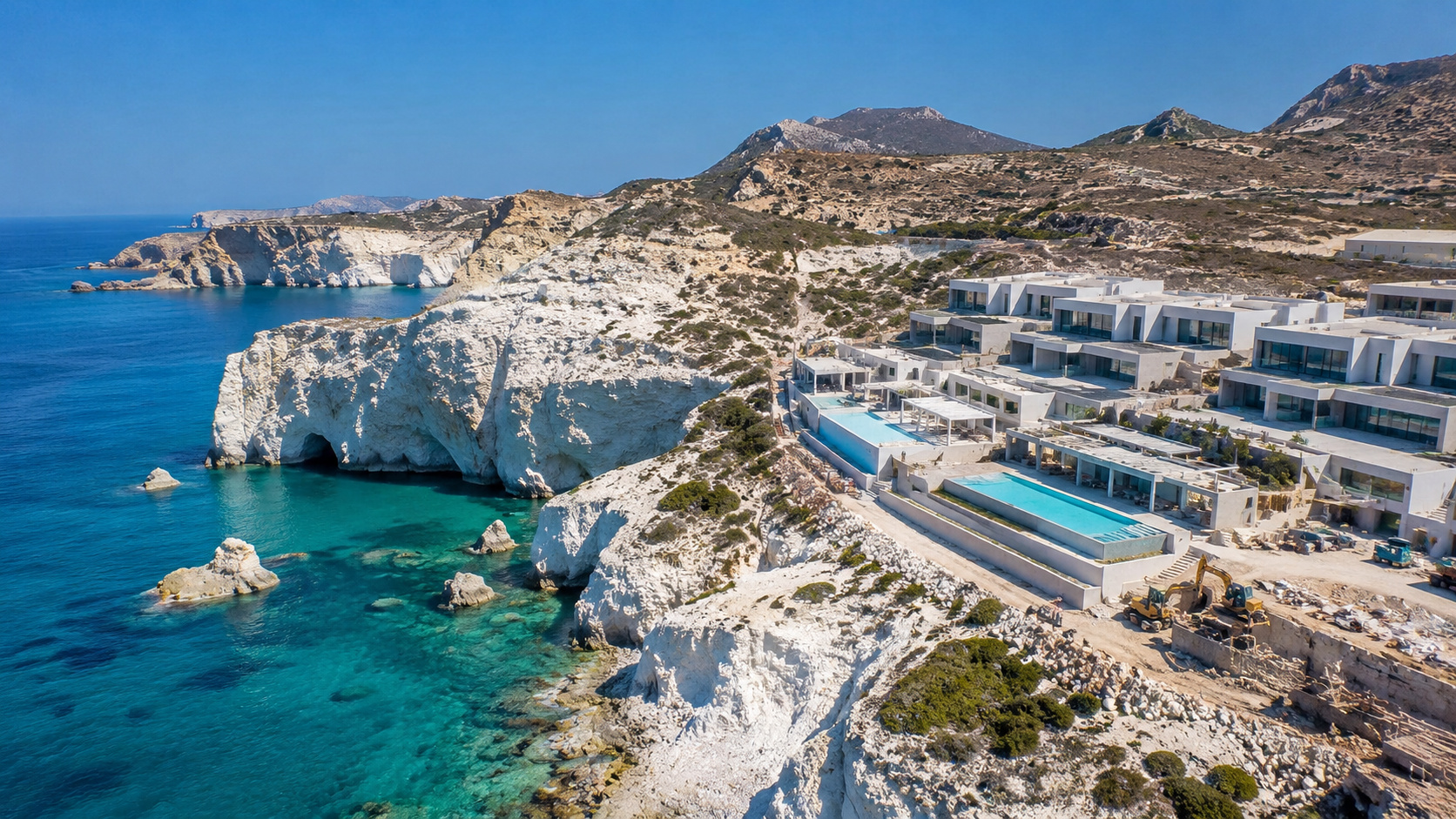

The luxury resort in Milos became a global warning about luxury tourism in Greek islands, after pools and buildings on a famous peninsula sparked public outrage, suspension of the work in 2026, and a debate about the future of the natural landscapes that sustain tourism itself
The five-star project in Milos was suspended in 2026 after public backlash against the advancement of a luxury resort on a famous peninsula of the Greek island.
The investigation was published by Greek Reporter, a news portal about Greece. The case involves pools, several buildings, and a sensitive area on an island known for volcanic landscapes and strong tourist appeal.
The practical impact goes beyond a halted construction. The suspension reignited the debate about luxury tourism in Greek islands, over-hotelization, and the risk of transforming natural postcards into real estate products.
-
Brazil Unveils Search and Rescue Drone Capable of Carrying 50 kg, Equipped with Thermal Camera and Lifebuoy Deployment for River, Flood, Beach, and Remote Area Assistance

-
Labor Shortage: The Essential Profession Keeping Brazil’s Buildings, Hospitals, and Businesses Running Faces Workforce Deficit with Over 802,000 Employed
-
Adventurer Camps in Giant Fig Tree in the Brazilian Amazon After Spotting It with Drone

-
Nokia 3210 Revived with Modern Features by Enthusiast, Retains Classic Design After 25 Years



Luxury resort in Milos became a symbol of a contradiction that bothers residents and environmentalists
Milos is known for its volcanic landscapes and scenery that attract tourists seeking striking images. For this reason, the construction of a five-star resort on a famous peninsula generated a strong reaction.
The project envisioned several buildings and pools in an area considered sensitive. For residents, environmentalists, and cultural organizations, the work threatened to permanently change the landscape.


The contradiction became evident. A venture designed to sell views, exclusivity, and contact with nature almost became the reason why that very landscape would cease to exist as an attraction.
Pools and buildings on a famous peninsula put the natural landscape at the center of the dispute
The controversy grew because the area involved was not just a common plot of land. The peninsula is part of the visual scenery that, therefore, helps to form Milos’ tourist image.
When pools and buildings enter this type of landscape, the problem is no longer just a construction. The discussion now involves environmental preservation, local identity, and access to places that are part of the island’s public experience.
Public pressure showed that part of the population does not accept any type of construction in the name of tourism. The central fear was the disfigurement of a natural setting used precisely to attract visitors.
Greek Reporter, a news portal about Greece, registered the suspension of construction in 2026
Greek Reporter, a news portal about Greece, reported that the construction of the resort in Milos was halted by local authorities, amidst license review and pressure against the project’s progress.
The halt placed the project at the center of a larger debate. The question was no longer just whether the resort could be built. The point became how far luxury tourism can advance over landscapes that sustain the tourist economy itself.
The halted work also strengthened the mobilization of residents and organizations. The case showed that public reaction can interfere with projects of great visual impact when there is a risk of environmental and cultural loss.
Instagram tourism and Instagram construction clashed in Milos
The case gained traction because it translates a current conflict. Many destinations thrive on the perfect image shared on social media. At the same time, this search for exclusive settings stimulates constructions that can modify the photographed places.
In Milos, the criticism was direct. The resort intended to exploit a famous landscape, but the project ended up being seen as a threat to that very landscape.
This clash between Instagram tourism and construction aimed at visual consumption summarizes the tension in tourist islands. Visitors want the natural scenery, but the industry tries to transform that scenery into private infrastructure.
Work suspension reinforced the debate on over-tourism in tourist islands
The immediate consequence was clear: the work was interrupted and licenses went under review. The case also strengthened the discussion about over-tourism in small and highly sought-after destinations.

Tourist islands often depend on natural beauty to attract visitors. When large developments alter the landscape, the risk is affecting the very reason that draws tourists to the location.
For this reason, Milos became an example of a larger problem. The growth of tourism can generate money, but it can also pressure fragile areas, bother residents, and reduce the natural value of famous places.
The hotel that wanted to sell the postcard almost became the reason for the loss of that postcard
The strongest image of the case is the contradiction. A luxury resort created to sell an experience amidst the landscape almost came to represent a threat to that very landscape.
The suspension in 2026 showed that works in famous areas can face resistance when the population perceives environmental, cultural, and visual risks. In Milos, the debate made it clear that not every view can be treated as a commodity.
The case also serves as a warning for other destinations. When tourism grows carelessly, the postcard can turn into a construction site, and the promise of exclusivity can cost precisely what made the place special.
Do you think a luxury resort should be authorized when the construction might change the landscape that attracts tourists to the destination, or do certain natural postcards need stricter building limits? Share your opinion and send this post to anyone following tourism, the environment, and the Greek islands.