Portuguese
  Spanish


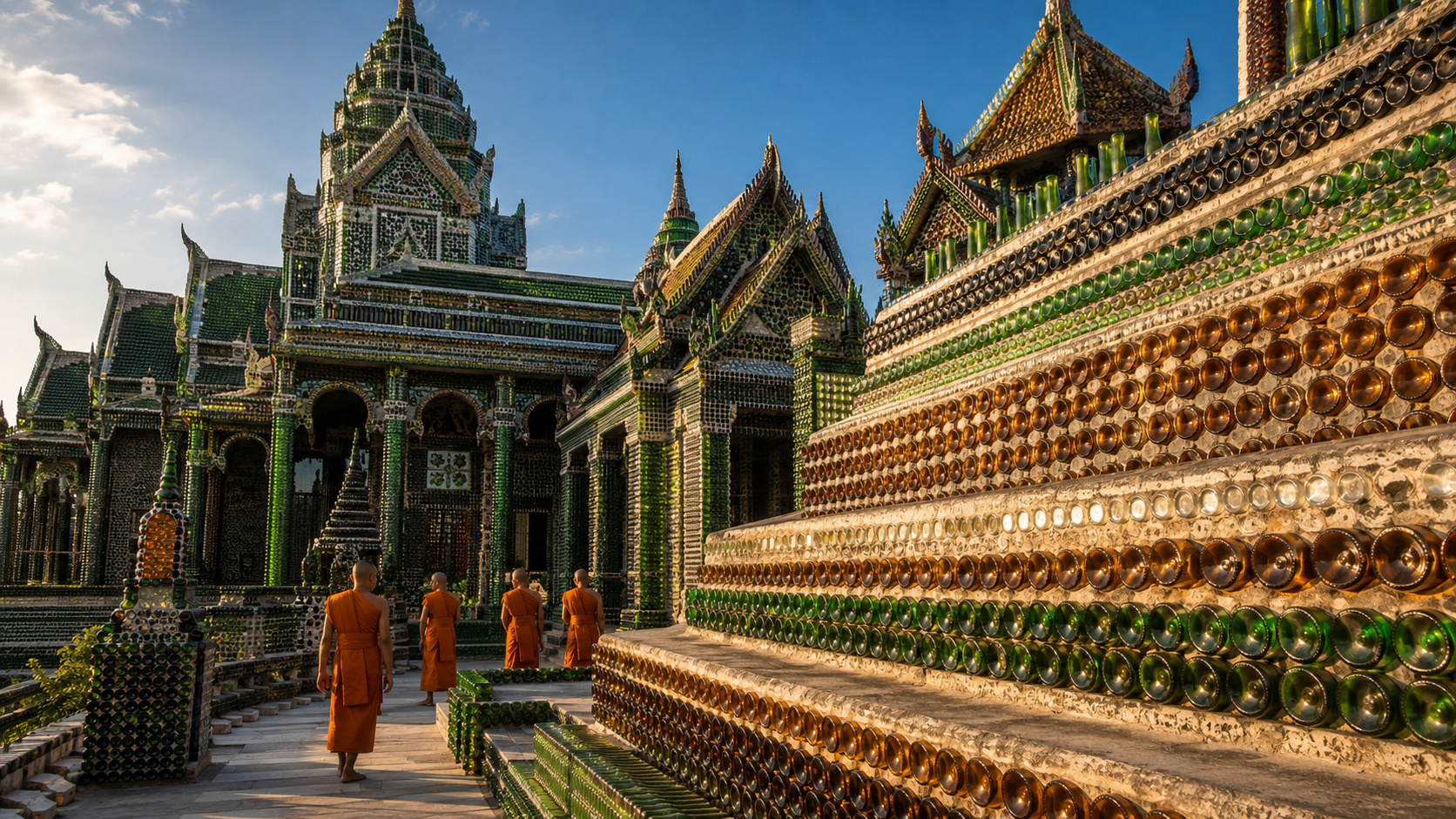

The beer bottle temple called Wat Pa Maha Chedi Kaew in Thailand shows how discarded glass became a religious construction, visual attraction, and example of large-scale reuse
A temple made with 1.5 million beer bottles draws attention in the Sisaket province of Thailand. Wat Pa Maha Chedi Kaew became known as the Temple of a Million Bottles for using discarded glass in walls, roofs, towers, and mosaics.
The report was published by Architectural Digest, a magazine of architecture and design. The case gained prominence because it transforms a common waste, the beer bottle, into a religious construction with a strong visual impact.
The complex includes more than 20 buildings made with green and brown bottles. The initiative began in 1984 when monks started collecting this material to combat the accumulated waste in the region.
-
Former Atacadão Employee Turns Online Cake-Baking Lessons into a Confectionery Brand with Factory, Store, Delivery, and Nearly $400,000 in Revenue

-
Brazilian Startup Sells Nearly 9 Million Surprise Bags of Near-Expiry Food, Prevents Thousands of Tons of Waste, Aiming for $42 Million Revenue by 2026
-
How to Prevent Brown Recluse Spider Bites: Common Hiding Spots and Free Tips to Reduce Risks

-
Natto: The Unusual Japanese Superfood Gaining Popularity on Social Media and Driving Record Exports




Monks began collecting bottles in 1984 to reduce the accumulated waste in the region
The construction of Wat Pa Maha Chedi Kaew was born from a simple solution to a visible problem. In 1984, Thai monks began gathering discarded bottles to tackle the accumulation of waste.
The collection grew over time. The glass ceased to be just a consumption leftover and became part of the temple’s structure. Thus, bottles that could have been abandoned gained a new purpose.


The result draws attention due to its scale. There are 1.5 million beer bottles used in different parts of the religious complex, creating an unusual and striking image.
Green and brown bottles transformed into walls, roofs, towers, and mosaics
The bottles used in the temple appear in green and brown tones. These colors helped create the recognizable visual of Wat Pa Maha Chedi Kaew.
The discarded glass was applied to walls, roofs, towers, and mosaics. Instead of hiding the material, the construction leaves the bottles visible as part of the temple’s identity.
This choice strengthens the story. A common object, present in everyday waste, began to form decorative details and important parts of a religious construction.
Wat Pa Maha Chedi Kaew became known as Temple of a Million Bottles
The Buddhist temple became internationally known as the Temple of a Million Bottles. The nickname sums up what makes the place so curious: the enormous number of bottles used in the construction.
Architectural Digest, a magazine of architecture and design, detailed the central points of the theme. The publication highlighted the use of millions of bottles in the Thai complex.
The name also helps explain why the temple arouses so much curiosity. It combines faith, waste reuse, and an appearance that catches attention at first sight.
Religious complex has more than 20 buildings made with discarded glass
Wat Pa Maha Chedi Kaew is not just an isolated construction. The complex reportedly has more than 20 buildings made with beer bottles.
This number shows the scale of the initiative. The idea started with waste collection and advanced to a broad religious work, with various structures made from the same material.
The repetition of the bottles creates visual unity among the buildings. At the same time, it reinforces the message of reuse in every wall, roof, and decorative detail.
Sustainable construction shows how common waste can gain visual and religious value
The case of the temple in Thailand shows that reuse can go beyond common recycling. The discarded bottles gained value within a space of faith.
The construction also shows a direct way of dealing with waste. The material that once contributed to accumulated trash became part of a permanent work.
The impact is in the contrast. A simple object, repeated 1.5 million times, became a religious construction with visual and symbolic value.
Temple of beer bottles became an example of creativity with discarded material
Wat Pa Maha Chedi Kaew became known because it presents an easily understandable solution. Monks collected bottles, reused the glass, and created a Buddhist temple different from traditional constructions.
The story also draws attention because it does not depend on technology that is difficult to explain. The highlight is the creative use of a common material, found in daily waste.

With more than 20 buildings, the complex shows that small pieces can form a large work when there is continuity. Each bottle became part of a collective construction.
The beer bottle temple in Thailand brings together faith, creativity, and reuse in a single image. With 1.5 million bottles, monks transformed discarded glass into walls, roofs, towers, and mosaics.
The construction shows how a common waste can gain new life when it stops being treated just as trash. The result is a religious complex that draws attention for its scale, appearance, and message.
Do you think discarded materials should appear more in public and religious constructions, or does this only work in very special projects like this? Leave your opinion and share the post.