






 Portuguese
  Spanish
  6 min of reading
  0 comments


Andrew Bedwell wanted to cross the Atlantic in a micro sailboat smaller than many sofas, but the attempt ended in rescue, abandoned boat, and debate over the limits of sea adventures
The attempt by English sailor Andrew Bedwell, aged 52, to cross the Atlantic in a boat about 1.2 meters long ended before completing two days of navigation. The goal was to break the record for the smallest sailing vessel to cross the ocean, but the adventure ended with a distress call to the Canadian Coast Guard.
Bedwell departed from St. John’s, Newfoundland, Canada, heading to England, on a journey that could exceed 3,000 kilometers across the North Atlantic. The vessel, called Big C V2, was so small that the sailor could not stand up or walk inside it.
According to UOL, the Englishman reported that a technical problem put his life at risk and led him to call for help. He hoped that the boat would be towed for repairs, but the operation ended with only the crew member being rescued.
-
Man creates homemade system with laptop batteries and reduces dependence on the power grid; the project has been operating since 2016 with reused batteries, 24 solar panels, and more than 10 kW.

-
Morocco wants to end water scarcity and the sea is the secret: the country invests $14 billion, builds the largest desalination plant in Africa, and aims to source 60% of its drinking water from the ocean by 2030.
-
Cuba is abandoned and a giant ship arrives to help: the vessel brings 100 tons of food, medicine, and solar panels after an oil blockade, while the island faces blackouts, fuel shortages, and has received only one oil tanker in months.
-
Chile raises military alert and bets on a new national aircraft to rival the Super Tucano; the project brings together the Navy, Air Force, and ENAER, leveraging technologies from the T-40 Newen and experience accumulated from more than 140 aircraft produced.




The case drew attention not only because of the size of the vessel but also for the discussion it reignited. To what extent can a pursuit of personal records justify risks at sea and mobilize a public rescue structure?
Rescue happened still near the Canadian coast
According to the specialized magazine Practical Boat Owner, the Canadian Coast Guard was called on the morning of June 5, 2026, when the Big C V2 was about 75 nautical miles east of Grates Cove, Newfoundland. The vessel CCGS Sacred Bay was dispatched from Old Perlican and arrived at the location around 2:15 PM local time.
Bedwell was safely removed from the micro sailboat and taken back to dry land. The good news was that he came out alive and without any serious injuries reported. The bad news for the project was that the boat did not return with him.
The vessel ended up abandoned at sea, according to information released after the rescue. For Bedwell, this meant the practical end of the attempt, as the Big C V2 was the result of years of preparation, testing, and adjustments.
The case seems even more curious because the boat was small enough to fit in many common spaces. Even so, in a rescue operation, the priority is to preserve human life, not necessarily to recover goods or equipment.
Micro sailboat did not allow standing up or sleeping normally
The Big C V2 was designed for an extreme idea: to cross the Atlantic in a vessel smaller than any conventional boat used for ocean crossings. The micro sailboat was about 1 to 1.2 meters in length, depending on the measurement cited by sources, and had little internal space.
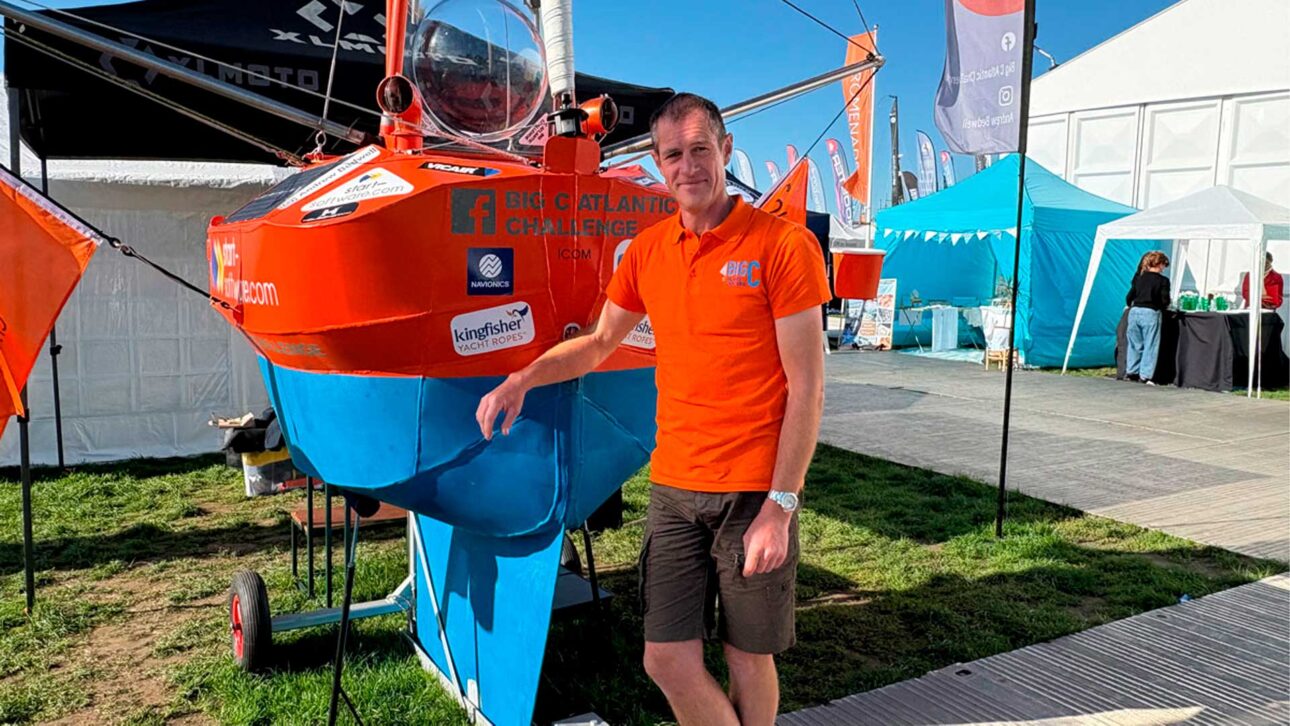
The proposal forced Bedwell to remain seated almost all the time. To sleep, he had to adapt to a crouched position, without the possibility of lying down normally or moving as he would in a traditional sailboat.
This detail is essential to understand the risk of the attempt. In the North Atlantic, a long crossing involves cold, wind, waves, fatigue, mechanical failures, limited communication, and great physical wear. In a tiny boat, any problem takes on another proportion.
Bedwell himself had publicly defended that he wanted to fill his life with adventures. But after the new rescue, the phrase came to be read by many as a portrait of the line between courage, obsession with records, and exposure to danger.
The second failed attempt changed the course of the project
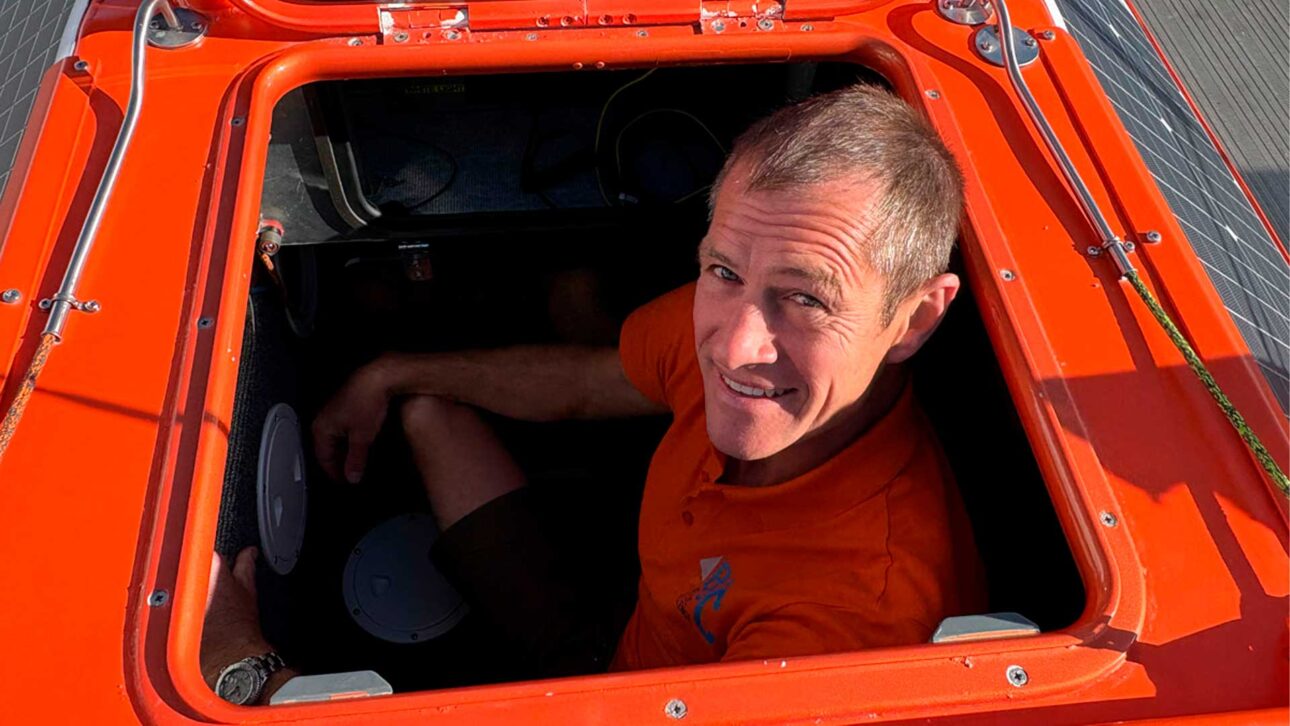
This was not the first time Andrew Bedwell attempted to cross the Atlantic with a tiny vessel. In 2023, he had already started a similar attempt but had to return quickly after problems with water ingress and damage to the boat.
On that occasion, according to reports from navigation-specialized outlets, the first Big C suffered severe damage during the water removal process. This forced the sailor to rebuild the plan and bet on a new version of the vessel.
The Big C V2 emerged as a revised version, made to try to correct previous problems. The idea was to turn the frustrating experience into learning and finally complete the crossing to England.
But the new failure seems to have ended the dream. After the rescue, Bedwell indicated on social media that this would have been his last attempt to break the record for crossing the Atlantic in the smallest possible boat.
Current record belongs to Hugo Vihlen since 1993
Bedwell’s inspiration came from a historical dispute among navigators who attempted to cross the Atlantic in increasingly smaller boats. The record recognized by the Guinness World Records belongs to the American Hugo Vihlen, who crossed the ocean in 1993 aboard the Father’s Day, a vessel measuring 1.62 meters.
According to the Guinness World Records, Vihlen sailed from Newfoundland, Canada, to Falmouth, United Kingdom, in a journey that lasted 106 days, from June to September 1993. The feat remains one of the most unusual marks in ocean navigation.
The National Maritime Museum Cornwall also records the Father’s Day as a historic vessel due to its extreme size. The boat became a piece of memory precisely for showing how far the human quest for limits can go.
The problem is that since then, the attempt to further reduce the size of the boat has become increasingly risky. When a vessel becomes too small, it loses comfort, space, safety margin, and the ability to face unforeseen events.
The North Atlantic does not forgive experimental vessels
The route between Newfoundland and the United Kingdom may seem straightforward on the map, but it is far from simple. The North Atlantic is known for rapid weather changes, fog, cold waters, strong waves, and large maritime traffic.
In a conventional vessel, these factors already require technical preparation, reliable equipment, and rigorous planning. In a micro boat, the same factors become even more critical, because there is little space for redundancy, repair, and physical protection.
Another important point is visibility. Such a small boat can be difficult to detect by other vessels, especially in rough seas or low visibility. This increases the risk of collisions and complicates tracking operations.
Therefore, even if Bedwell was an experienced navigator, the episode became a warning. The crew member’s experience does not eliminate the physical limits of a vessel built to break records, not to offer comfort or a wide safety margin.
Between personal adventure and the public cost of rescue
The story gained attention because it combines courage, curiosity, and controversy. On one side, Bedwell pursued a rare personal goal, linked to the tradition of navigators testing limits on the ocean. On the other, the rescue mobilized public teams in a situation many consider predictable.
This debate is not new in the world of extreme adventures. Whenever a risky expedition ends in rescue, the question arises about who should bear the costs and to what extent authorities should allow departures in such unusual conditions.
In Bedwell’s case, the end was relatively quick and safe. The sailor was saved, but the boat disappeared from the project and likely drifted until it sank or was located by another vessel.
The attempt, which began as a quest for a record, ended up becoming a warning about the risks of turning the ocean into a stage for increasingly extreme challenges. The Atlantic is not just a line on the map, and the size of a boat can be the difference between a memorable adventure and a real emergency.






Be the first to react!