






 Portuguese
  Spanish


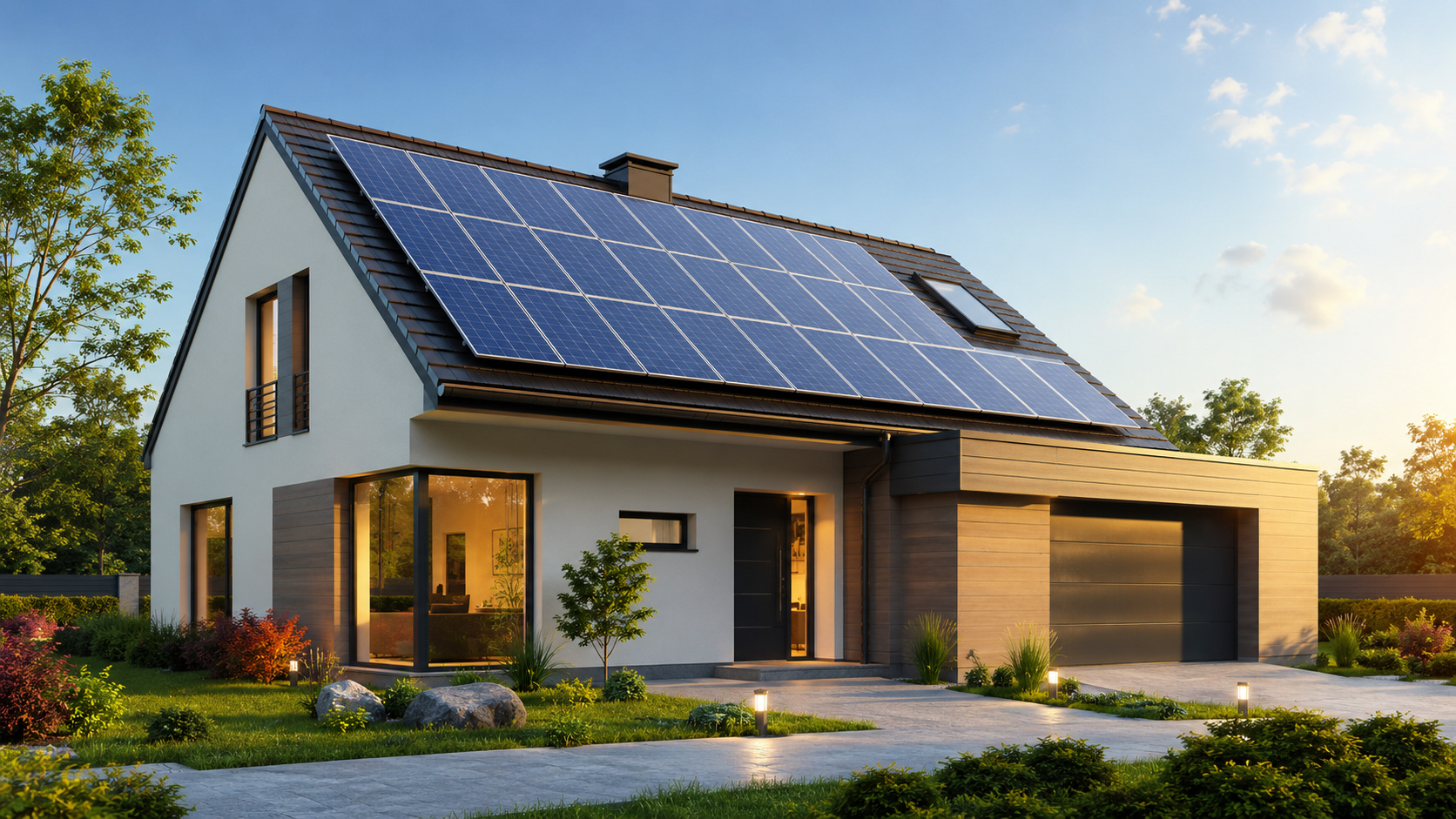

Solar energy is no longer seen just as a way to reduce the electricity bill. Now, it also appears as a factor of property appreciation in the real estate market. According to content published by Gazeta do Povo, in partnership with Amicta Sole, properties with installed photovoltaic systems can register an average appreciation between 4% and 10%, depending on the location, construction standard, and project quality.
Moreover, self-generation of energy increases the property’s attractiveness because it reduces fixed costs, improves financial predictability, and offers protection against tariff adjustments. In this scenario, buyers begin to see the solar system as an asset already incorporated into the property.
Savings on the bill is just the beginning
The reduction in the energy bill is usually the most well-known benefit of solar energy. However, the impact can go beyond monthly savings.
According to Amicta Sole, some clients already seek photovoltaic systems as a strategy for asset protection. This movement appears mainly among investors, commercial property owners, and families planning a future resale.
-
Solar Energy Booms in Brazil: Over $60 Billion Invested, 68.8 GW Capacity, 2 Million Jobs Created, Now Second in National Power Grid

-
Giant Batteries Take Center Stage in Chile Auction as Company Offers 960 GWh of Solar Energy for Nighttime Use, Aiming to Stabilize Solar Power Supply
-
World’s Largest Engie Solar Plant in Brazil Highlights Billion-Dollar Energy Waste Issue: Company Considers Batteries and Bitcoin Mining to Avoid Wasting Production

-
Over 60 Tractors Take to the Streets in Lopera as Solar Parks Compete with Olive Groves, Affecting 13,000 to 100,000 Trees According to Conflicting Reports



Additionally, a property with solar energy tends to offer lower operational costs. Therefore, it can gain an advantage in purchase, sale, or rental negotiations.
Property with solar energy gains competitive edge
The survey cited by Gazeta do Povo indicates that appreciation can vary between 4% and 10%. This difference occurs because the buyer is acquiring more than just the physical structure of the property.
In practice, they also receive a modern energy infrastructure, capable of generating savings for many years. Furthermore, the system offers greater predictability in the monthly budget.
As a result, the property can stand out among other similar options in the market.

Solar energy weighs even more in commercial properties
In commercial properties, the impact can be even more significant.
The reduction of fixed costs improves the operational margin of companies and makes the asset more attractive to investors. Furthermore, businesses that consume a lot of energy can directly benefit from self-generation.
Thus, solar energy ceases to be just a structural improvement. It becomes a strategic negotiation argument.
System can generate savings for decades
A quality photovoltaic system usually has a lifespan of over 25 years, as highlighted by Gazeta do Povo in Amicta Sole’s content. This means that the owner incorporates a long-term productive asset into the property.
Moreover, the financial return does not end after the payback. Once the investment pays off, the system continues to generate savings and add value to the property.
Therefore, the installation can be analyzed as a property decision, not just as an improvement expense.
Sustainability also influences buyers
Consumer behavior has changed in recent years. Today, many buyers evaluate not only price and location but also efficiency, sustainability, and future costs.
Additionally, properties with clean energy can attract individuals and companies interested in reducing emissions and meeting environmental criteria. For companies, this factor can also reinforce commitments related to ESG practices.
In this context, solar energy helps position the property as modern, efficient, and aligned with new market demands.


Technical project makes a difference in the result
The appreciation of the property directly depends on the quality of the installed project.
According to Amicta Sole, feasibility studies, consumption analysis, and financial return simulation help the owner understand the economic impact of the system before installation.
Moreover, poorly designed projects can reduce efficiency and compromise the expected return. Therefore, technical planning and responsibility in execution are essential points.
Solar energy becomes a heritage strategy
Solar energy is gaining ground as a tool for savings, sustainability, and real estate appreciation.
Additionally, the system can strengthen the owner’s bargaining power in a future sale or rental. In a market increasingly attentive to fixed costs and energy efficiency, properties with self-generation tend to attract more attention.
Thus, investing in solar energy can represent not only an immediate reduction in the electricity bill but also a way to protect and enhance the property’s value in the long term.







This is my testimonial about how I finally joined the New World Order—the Illuminati—after more than two years of trying. I had repeatedly fallen victim to theft and scams. I had long wanted to join the Illuminati, but various scammers kept taking my money, until I met Lord Felix Morgan online earlier this year. I contacted him, explained the situation, and he recommended that I apply for membership. I paid the substantial initial fee, was initiated into the New World Order, and received 1,000,000 US dollars following the initiation ceremony. I am overjoyed! And I promise to spread the word about Lord Felix Morgan’s work. If you are interested in joining the Illuminati New World Order today, contact Lord Felix Morgan; this is your best opportunity to obtain the Illuminati membership you have always desired. Contact Lord Felix Morgan via WhatsApp at +4473530027456.