






 Portuguese
  Spanish


Solar purifier created from a childhood question gathers simple materials, sunlight, and pilot project announced for African communities, in a story linked to safe drinking water access.
A sign warning not to drink contaminated water was the starting point for an invention created by Rachel Brouwer in her childhood.
Years later, the idea developed with simple materials, such as pipes, plastic bottles, cotton, charcoal, and soy wax, led to a pilot project announced for communities in Kenya and Gambia, in Africa.
The case is not a recent novelty, but it remains linked to a global issue documented by international organizations.
-
Xiaomi 18 Pro and 18 Pro Max May Debut with Snapdragon 8 Elite Gen 6 Pro, Featuring Dual 200 MP Cameras and 8,500 mAh Battery, Ahead of Competitors

-
ispace Pays SpaceX $50 Million to Hitch a Ride on Starship, Aiming for a Shared Commercial Route to the Moon by 2030

-
Solar-Powered Cell Tower to Connect 10,000 Residents on Remote Brazilian Island, Reducing Diesel Dependence
-
Snowman-shaped asteroid captured by Hayabusa2 probe during flyby just 10 km away


According to a 2025 update from the WHO and UNICEF, with data from 2024, 2.1 billion people still lacked access to safely managed drinking water worldwide.
Brouwer’s proposal, who was born in Bedford, in the Canadian province of Nova Scotia, gained visibility for testing a low-cost purification system.
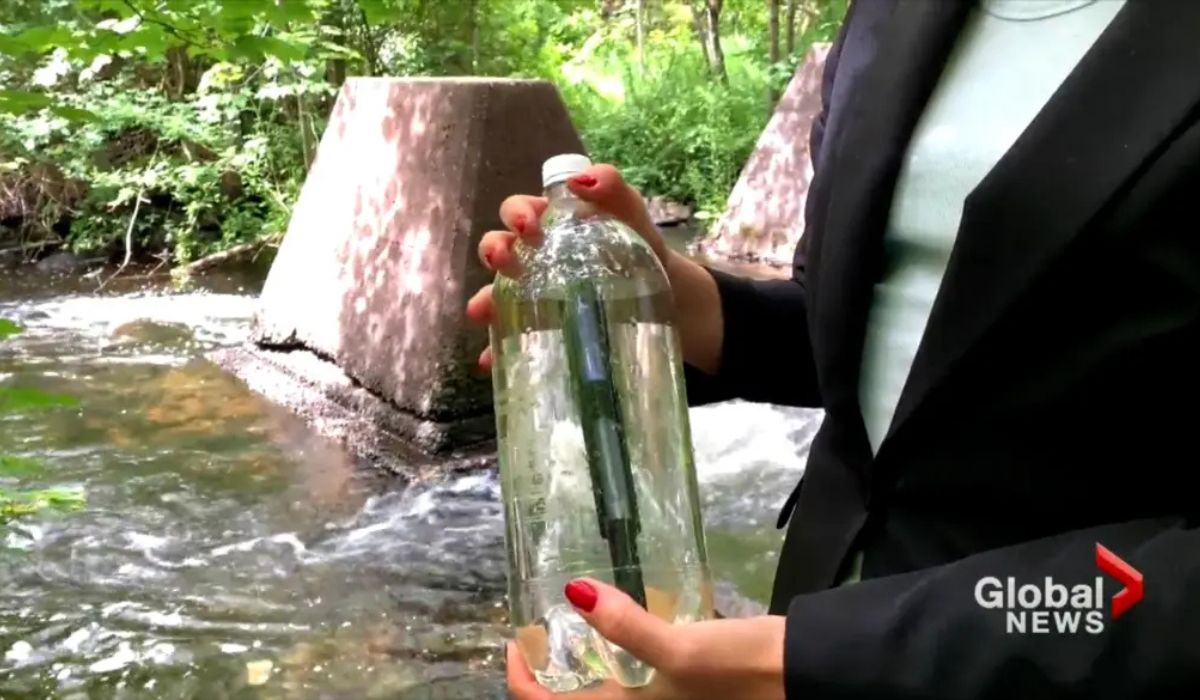
The technology combines simple filtration, solar heating, and a visual indicator to show when the water has reached the established temperature in the process.
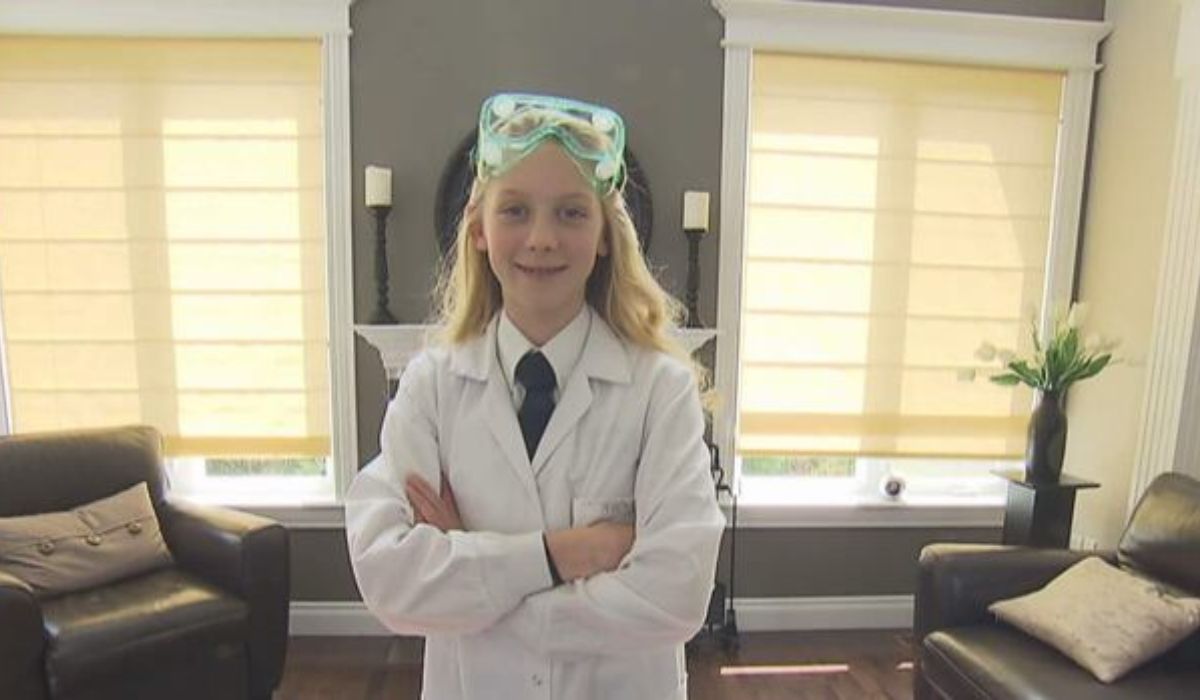
In 2022, when she was 20 years old and studying political science at Dalhousie University, Brouwer founded the organization The Purification Project.
The initiative was announced with the intention of bringing water purification systems to vulnerable communities in Kenya and Gambia living without safe drinking water access.
Solar purifier started with a warning about contaminated water
Rachel Brouwer was 11 years old when she saw, during a walk, a sign with the message: “Caution, do not drink. The water source is contaminated.”
The warning led the student to become interested in the topic of drinkable water and the possibility of seeking a low-cost solution.
In an interview with Global News, Brouwer summarized that moment directly: “I started to think that maybe there was a solution to this.”
From there, she began researching ways to purify water using accessible materials and processes that did not depend on complex infrastructure.
In the following years, the young woman developed a system that combines filtration and solar pasteurization.
The proposal was to create a tool that could be tested with relatively simple items, especially in regions where electricity, expensive equipment, and centralized water treatment are not regularly available.
The invention was presented during adolescence at science fairs.
In 2016, Brouwer received an award at the Intel International Science and Engineering Fair, held in Phoenix, United States, for work focused on water purification.
The recognition gave visibility to the project, but the public revival occurred years later.
During university, Brouwer came into contact with young people from African communities through a program linked to the Sustainable Development Goals.
How the water purification system works
The system developed by Brouwer was described as a two-part solution.
It uses a compact filter and a color indicator manufactured with a 3D printer, in addition to a two-liter plastic bottle, a common item easy to find in different countries.
In the first stage, the water passes through a filter with materials like cotton and charcoal, used to improve turbidity.
In simple language, this phase seeks to reduce visible particles and impurities that make the water cloudy.
After filtering, the water is placed in a transparent plastic bottle and exposed to the sun.
The goal is to perform solar pasteurization, a process in which heating helps reduce microorganisms present in the water.
The visual indicator is a central part of the system described by Brouwer.
Made with soy wax, it changes position or appearance when the water reaches the temperature set for the process.
According to Brouwer, “when the water reaches the desired temperature, the color on the indicator changes place and they know it is safe to drink.”
The statement describes the proposed functioning of the device but does not replace field tests, continuous technical validation, or water quality monitoring in different environments.


Low cost guides proposal for vulnerable communities
The proposal for the solar purifier starts from a practical condition: communities without safe access to water do not always have reliable electricity, industrial filters, treatment networks, or resources to purchase expensive equipment.
In this context, low-cost technologies can be studied as complementary solutions.
They do not replace public sanitation and supply systems, but can be considered in situations of vulnerability, emergency, or lack of infrastructure.
The use of two-liter plastic bottles was also associated with the availability of the material.
According to the original text, this type of container is easily found in developing countries, which could facilitate the reproduction of the system in resource-poor communities.
The adoption of any purification tool, however, depends on technical factors.
The quality of the source water, the type of contamination, the time of exposure to the sun, the temperature reached, and the form of storage influence the safety of consumption.
For this reason, the evolution of the project to a pilot phase is of technical importance.
Before being treated as a ready solution, the technology needs to be tested in real environments, with the involvement of residents, volunteers, and people who know the routine of water use in these communities.
Pilot project announced for Kenya and Gambia
The project returned to the center of Brouwer’s journey during her time at Dalhousie University.
She participated in a program that connected young people from Canada’s maritime provinces to young Africans to discuss community issues related to the Sustainable Development Goals.
According to Brouwer, participants from Kenya and Gambia repeatedly mentioned difficulties related to access to water and food.
They also shared photos of wells and reported how the availability of water influenced the daily life of their communities.
From these conversations, Brouwer presented her work on sanitation and purification to the group.
With the support of the participants, the organization The Purification Project was created, based in Halifax, Canada.
The group brought together volunteers from Gambia, Kenya, and Nova Scotia, all under 25 years old, according to the original text.
The team planned to launch the pilot project and work collectively on adapting the system to local needs.
Brouwer highlighted the participation of African volunteers in building the initiative.
She mentioned, for example, a 17-year-old member located in Gambia and stated that she considered herself “very lucky” to work with the group.
Contaminated water affects health and school routine
Access to potable water affects health, education, and family routine.
In communities where untreated water causes diseases, children may miss school due to symptoms like abdominal pain and diarrhea.
Hassan Hydara, a volunteer in Gambia, stated that access to clean water is a major issue in his country.
According to him, purification systems could help rural communities facing difficulties with unsafe water.
“Students will not have to miss class because they need to deal with stomach aches and diarrhea, problems mainly caused by the unsafe water they drink,” said Hydara, according to the original text.
The statement shows how the project was also associated with education by the volunteers involved.
When the water consumed causes diseases, the impact can reach classroom attendance, academic performance, and the time families spend caring for sick children.
This relationship, however, depends on other factors.
The reduction of water-related diseases involves proper treatment, hygiene, sanitation, safe storage, and local monitoring.
An individual purifier can be part of a response, but it does not solve all risk factors alone.


