Portuguese
  Spanish


Project planned for Taganak brings solar energy to a cell tower, improves communication on isolated islands, reduces diesel use, and helps protect green turtles
A solar cell tower on a remote island in the Philippines is expected to connect about 10,000 residents without relying on diesel transported by boat. The project is located in Taganak, in the Turtle Islands, an isolated region known as a nesting area for green turtles.
The information was released by Globe Telecom, a telecommunications company operating in the Philippines. The publication was released on December 2, 2024 and presents the structure as a project expected to be completed around mid-2025.
The idea draws attention because it addresses three problems in one place: lack of connection, distance from major centers, and fuel dependency. Instead of maintaining diesel generators, the tower is expected to use solar energy to provide mobile signal and internet to a remote community.
-
Snowman-shaped asteroid captured by Hayabusa2 probe during flyby just 10 km away

-
Scientists Discover Clue in Rodent Brains Explaining Why Early Childhood Memories Fade Over Time

-
Revolutionary Fan Model Offers Pedestal or Tabletop Use, Wireless Operation, 20-Meter Airflow, and 24-Hour Battery Life for Indoor and Outdoor Cooling
-
Chinese Scientists Develop Green Technology Turning Agricultural Waste into 50,000 Tons of Biochar Annually, Now Eyeing Aviation Fuel




Remote island with turtle sanctuary to receive solar-powered cell tower
Taganak is located in the Turtle Islands, in Tawi Tawi, Philippines. The region is considered a protected area and also a wildlife sanctuary, important for the reproduction of green turtles.
The cell tower was planned to operate off the common power grid. This means it does not rely on a traditional power connection to operate, which is important on an island where transportation is limited.
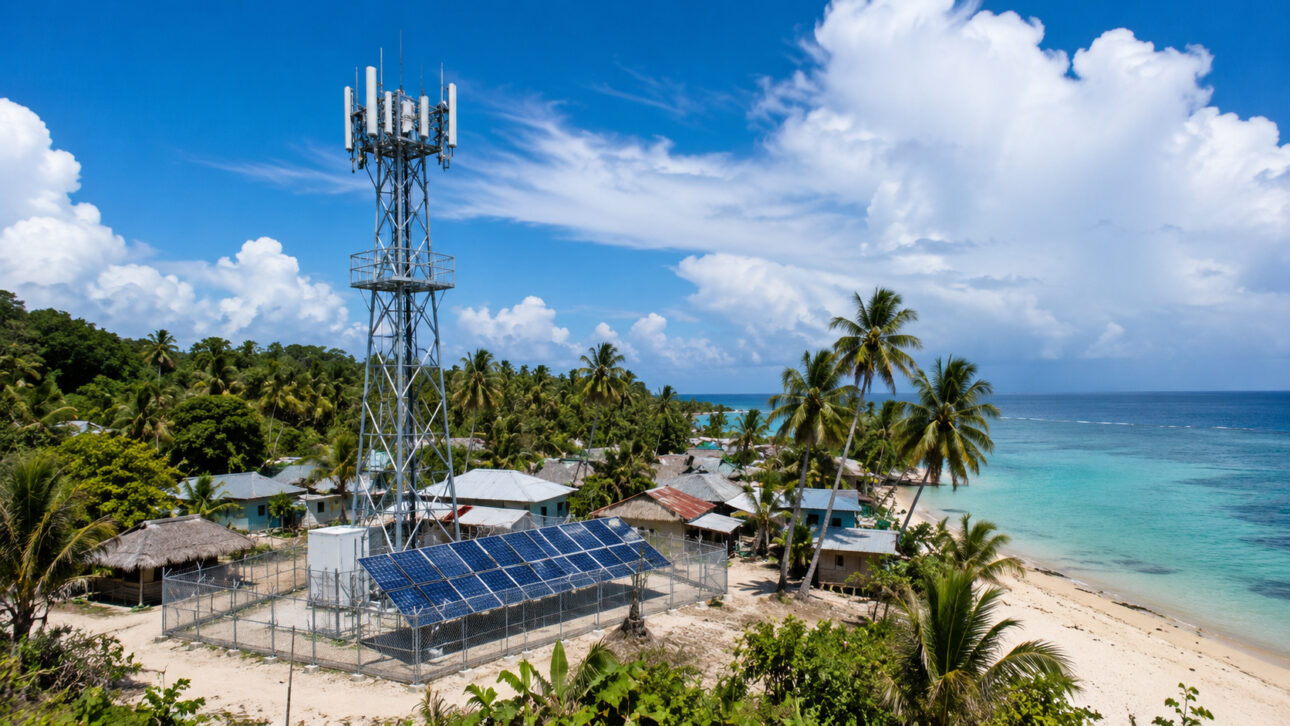
The proposal is to use the sun as a source of electricity. Solar panels capture sunlight and convert this energy into electricity to power communication equipment.
In practice, the solar cell tower can reduce the need for diesel generators, which require fuel to be transported to the island. In remote locations, this type of delivery can be difficult, expensive, and irregular.
Mobile connection can change the routine of 10,000 residents on the Turtle Islands
The structure is expected to serve around 10,000 residents of the isolated islands. For those living far from urban centers, cell signal is not just a comfort. It can help in contacting relatives, at work, in school, in commerce, and in emergency situations.
Mobile connection can also facilitate access to data. In simple terms, this means being able to use the internet on the phone to communicate, search for information, and handle daily tasks.
The project can also benefit visitors to the wildlife sanctuary. In a remote area, staying in touch during the trip helps with safety and navigation.
This is the most practical side of the tower: it is not just for calls. It can bring an isolated community closer to services, information, and opportunities that depend on digital communication.
Solar energy reduces dependence on diesel transported by boat
Globe Telecom, a telecommunications company operating in the Philippines, detailed that the tower is expected to use solar energy, advanced antennas, energy management with artificial intelligence, and remote monitoring.
Energy management with artificial intelligence is a system that helps better control electricity use. Remote monitoring allows part of the operation to be tracked from a distance, without always relying on physical presence on site.
The biggest difference lies in the energy source. Instead of relying on diesel generators, the tower is expected to be powered by solar panels. This reduces the need to transport fuel by boat to a remote area.
The project’s expectation is to avoid approximately 40 metric tons of CO2 equivalent per year. CO2 equivalent is a way of measuring, in a single account, gases that contribute to the planet’s warming.
Cell tower can also help protect green turtles
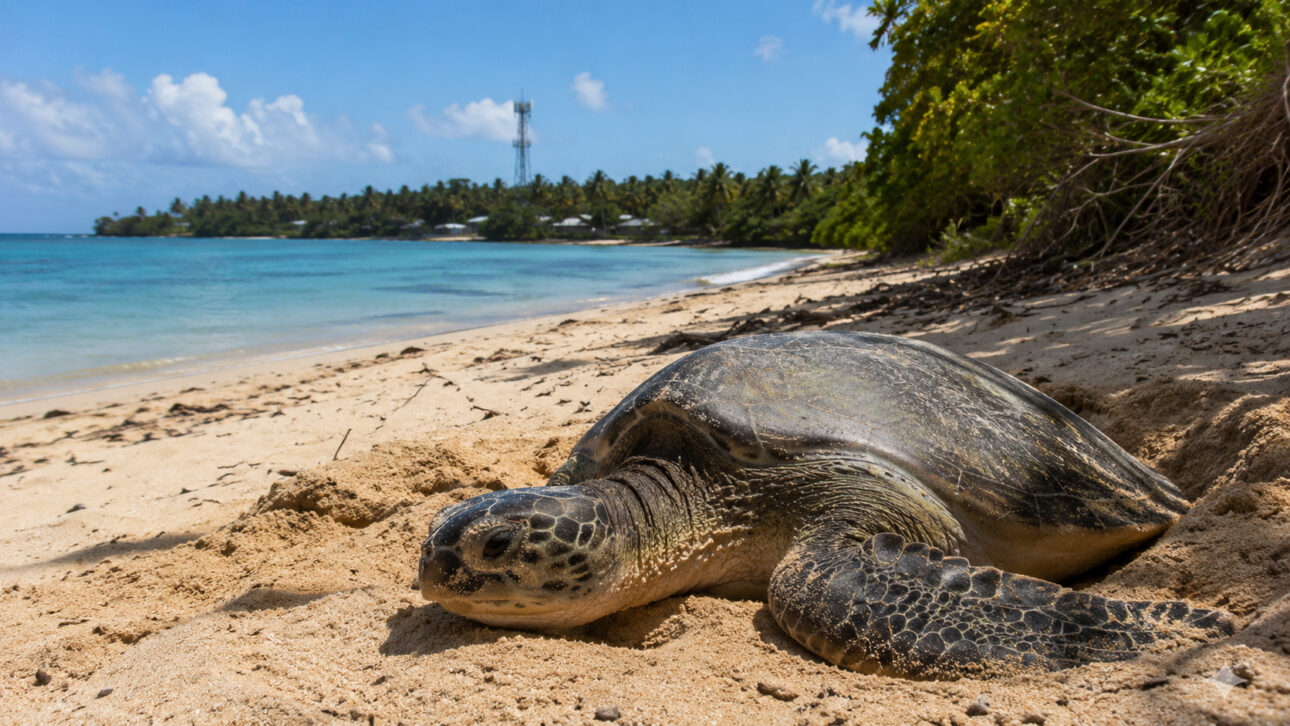
The Turtle Islands are important for the nesting of green turtles. Nesting is the period when these animals make nests and lay their eggs.
With better connection, environmental monitoring actions can gain support. In an isolated area, communicating occurrences, sending information, and quickly mobilizing teams can make a difference in protecting the ecosystem.
The tower was also presented as part of a partnership with the local government and regional leaders. The municipality allocated the land in Taganak for the installation of the structure.
Security, ecological tourism, and communication come together
The solar cell tower is also linked to local security. In remote areas, more stable communication helps authorities, residents, and support teams to act more quickly.
Ecological tourism can also benefit. Visitors arriving on a distant island may depend on a signal for location, contact, and basic information during their trip.
The structure can also support environmental conservation. This happens because communication and monitoring help those who need to oversee a protected area, especially when the location is difficult to access.
The correct status of the project avoids confusion about the solar tower
The solar cell tower was presented on December 2, 2024 as a project expected to be completed around mid-2025. This point is important to avoid treating the installation as a project already proven to be completed.
The reliable data is that the structure was announced for Taganak and is expected to serve about 10,000 residents. There is also a forecast for the use of solar energy to reduce the dependence on diesel transported by boat.
The story draws attention because it places a telecommunications tower within an uncommon reality: a remote island, a green turtle sanctuary, and a community that needs communication without increasing fuel dependency.
In the end, the solar cell tower shows how renewable energy can solve more than one problem at the same time. It can provide mobile signal, reduce diesel, and support environmental protection in one of the most isolated regions of the Philippines.
If a sun-powered tower can connect residents and also help a turtle sanctuary, what other essential structures could also work better away from diesel?